Review
. 2017 Feb 28;18(3):523.
doi: 10.3390/ijms18030523.

Nattokinase: An Oral Antithrombotic Agent for the Prevention of Cardiovascular Disease

Affiliations
Review

Nattokinase: An Oral Antithrombotic Agent for the Prevention of Cardiovascular Disease

Yunqi Weng et al. Int J Mol Sci. .

Abstract

Natto, a fermented soybean product, has been consumed as a traditional food in Japan for thousands of years. Nattokinase (NK), a potent blood-clot dissolving protein used for the treatment of cardiovascular diseases, is produced by the bacterium Bacillus subtilis during the fermentation of soybeans to produce Natto. NK has been extensively studied in Japan, Korea, and China. Recently, the fibrinolytic (anti-clotting) capacity of NK has been recognized by Western medicine. The National Science Foundation in the United States has investigated and evaluated the safety of NK. NK is currently undergoing a clinical trial study (Phase II) in the USA for atherothrombotic prevention. Multiple NK genes have been cloned, characterized, and produced in various expression system studies. Recombinant technology represents a promising approach for the production of NK with high purity for its use in antithrombotic applications. This review covers the history, benefit, safety, and production of NK. Opportunities for utilizing plant systems for the large-scale production of NK, or for the production of edible plants that can be used to provide oral delivery of NK without extraction and purification are also discussed.

Keywords: antithrombotic agent; cardiovascular disease; gene expression; nattokinase; oral; plant molecular farming.


Conflict of interest statement

The authors declare no conflict of interest.

Figures
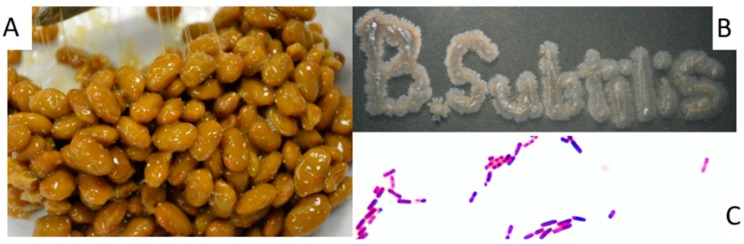
Figure 1
Figure 1
Natto—a traditional Japanese food produced from soybeans fermented by Bacillus subtilis (natto). (A) Natto-Fermented Soy Beans; (B) B. subtilis (natto) isolated from natto; (C) Micrograph of gram stained cells of B. subtilis (natto) (1000×).
Figure 2
Figure 2
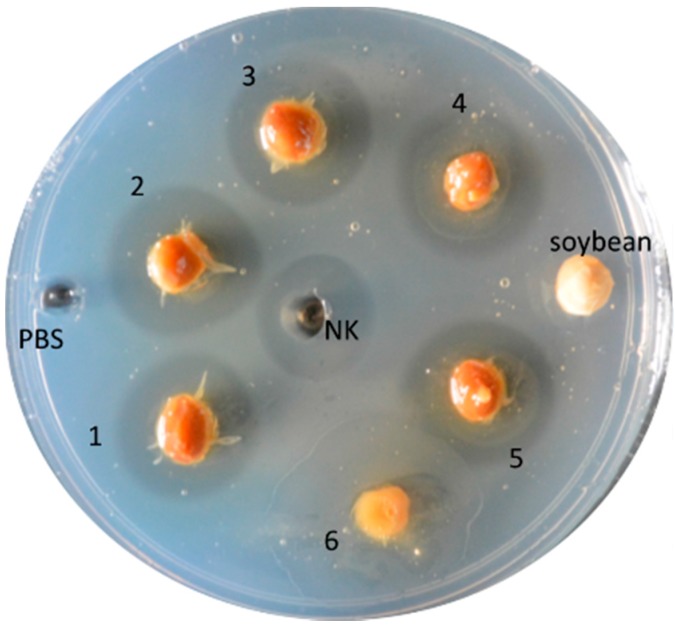
Natto and nattokinase can dissolve fibrin (semi-transparent halo ring). (1–5) Natto-fermented soy beans; (6) Slimy material characteristic of natto; (NK) Commercial nattokinase (100 µg) as a positive control; Non-fermented soybean and PBS (phosphate buffered saline) as negative controls.
Figure 3
Figure 3
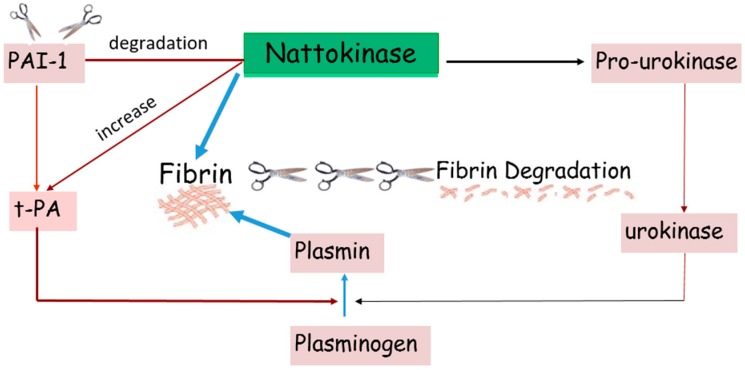
Mechanism of Action. Nattokinase dissolves blood clots by directly hydrolyzing fibrin and plasmin substrate. It converts endogenous prourokinase to urokinase (uPA). It also degrades plasminogen activator inhibitor (PAI-1) and increases the level of tissue plasminogen activator (t-PA).
Figure 4
Figure 4
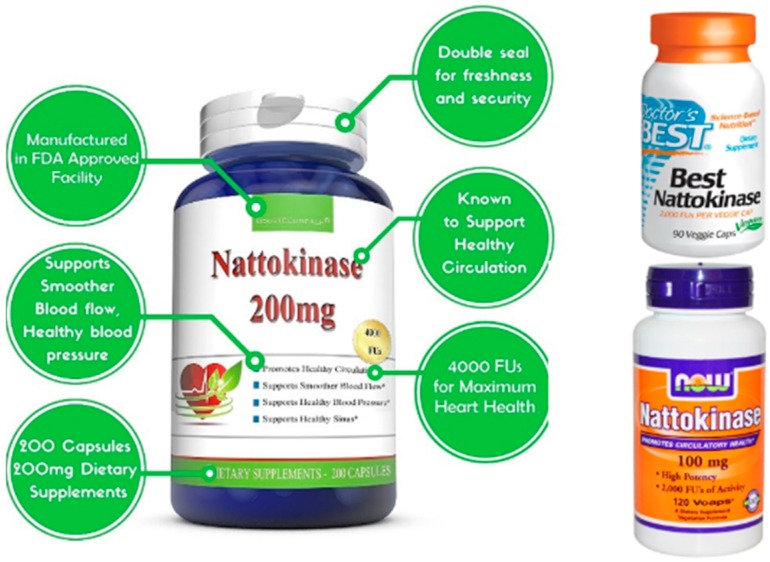
Nattokinase products (Pictures obtained from company websites).
Figure 5
Figure 5
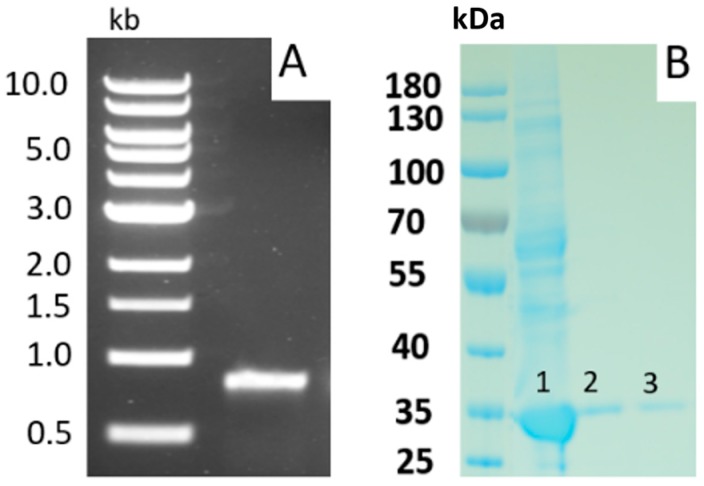
NK gene product and insoluble (inclusion-body) NK protein in Escherichia coli. (A) PCR-derived NK gene product from B. subtilis (natto); (B) Lane 1: NK protein present in crude medium extract; Lane 2 and 3: NK protein purified using a Ni-NTA (nickel-charged affinity nitrilotriacetic acid) column.
Figure 6
Figure 6
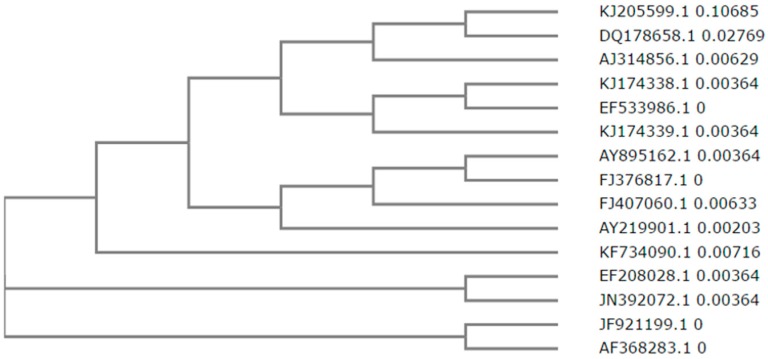
Phylogeny of NK sequences. Predicted NK protein sequences were generated using DNA to PROTEIN software (available at: http://web.expasy.org/translate/). Sequence analysis, multiple sequence alignment, and phylogenetic analysis were conducted using ClustalW2 (available at: http://www.ebi.ac.uk/Tools/msa/clustalw2/) software. A total of 16 NK gene sequences were deposited in the NCBI Genbank. Fifteen mature protein sequences were subjected to a phylogenetic analysis. HM068963.1 is only represented by a partial sequence and as a result, was not included in the phylogenetic analysis.
Figure 7
Figure 7
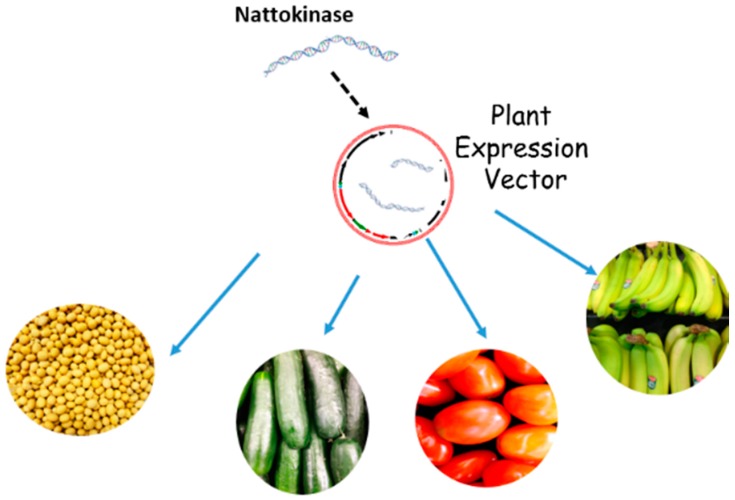
Plants as potential factories for NK production.

References

    1. Sumi H., Hamada H., Tsushima H., Mihara H., Muraki H. A novel fibrinolytic enzyme (nattokinase) in the vegetable cheese Natto; a typical and popular soybean food in the Japanese diet. Experientia. 1987;43:1110–1111. doi: 10.1007/BF01956052. - DOI - PubMed
    1. Yatagai C., Maruyama M., Kawahara T., Sumi H. Nattokinase promoted tissue plasminogen activator release from human cells. Pathophysiol. Haemost. Thromb. 2008;36:227–232. doi: 10.1159/000252817. - DOI - PubMed
    1. Fujita M., Hong K., Ito Y., Misawa S., Takeuchi N., Kariya K., Nishimuro S. Transport of nattokinase across the rat intestinal tract. Biol. Pharm. Bull. 1995;18:1194–1196. doi: 10.1248/bpb.18.1194. - DOI - PubMed
    1. Fujita M., Ohnishi K., Takaoka S., Ogasawara K., Fukuyama R., Nakamuta H. Antihypertensive effects of continuous oral administration of nattokinase and its fragments in spontaneously hypertensive rats. Biol. Pharm. Bull. 2011;34:1696–1701. doi: 10.1248/bpb.34.1696. - DOI - PubMed
    1. Nagata C., Wada K., Tamura T., Konishi K., Goto Y., Koda S., Kawachi T., Tsuji M., Nakamura K. Dietary soy and natto intake and cardiovascular disease mortality in Japanese adults: The Takayama study. Am. J. Clin. Nutr. 2016 doi: 10.3945/ajcn.116.137281. - DOI - PubMed

MeSH terms

LinkOut - more resources