


Global Longitudinal Strain by Echocardiography Predicts Long-Term Risk of Cardiovascular Morbidity and Mortality in a Low-Risk General Population: The Copenhagen City Heart Study
- PMID: 28264868
- PMCID: PMC5363277
- DOI: 10.1161/CIRCIMAGING.116.005521
Global Longitudinal Strain by Echocardiography Predicts Long-Term Risk of Cardiovascular Morbidity and Mortality in a Low-Risk General Population: The Copenhagen City Heart Study
Abstract
Background: Global longitudinal strain (GLS) is prognostic of adverse cardiovascular outcomes in various patient populations, but the prognostic utility of GLS for long-term cardiovascular morbidity and mortality in the general population is unknown.
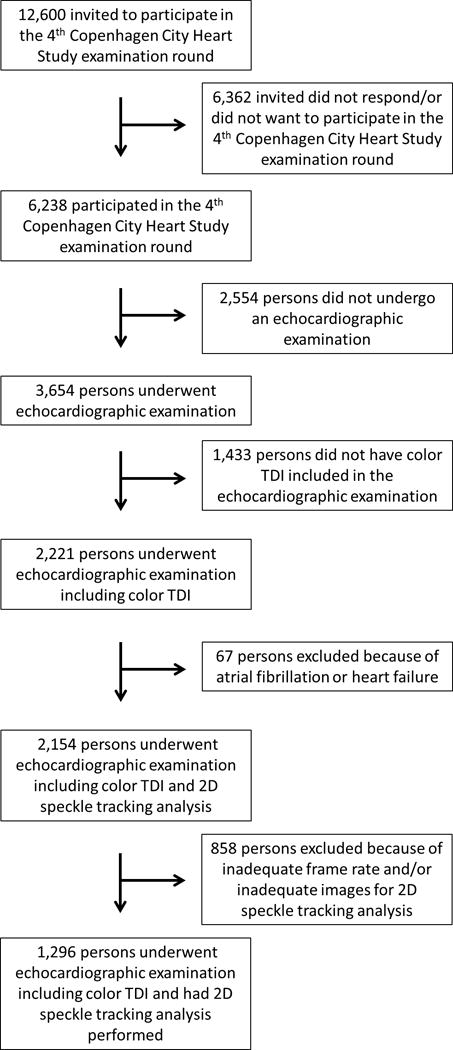
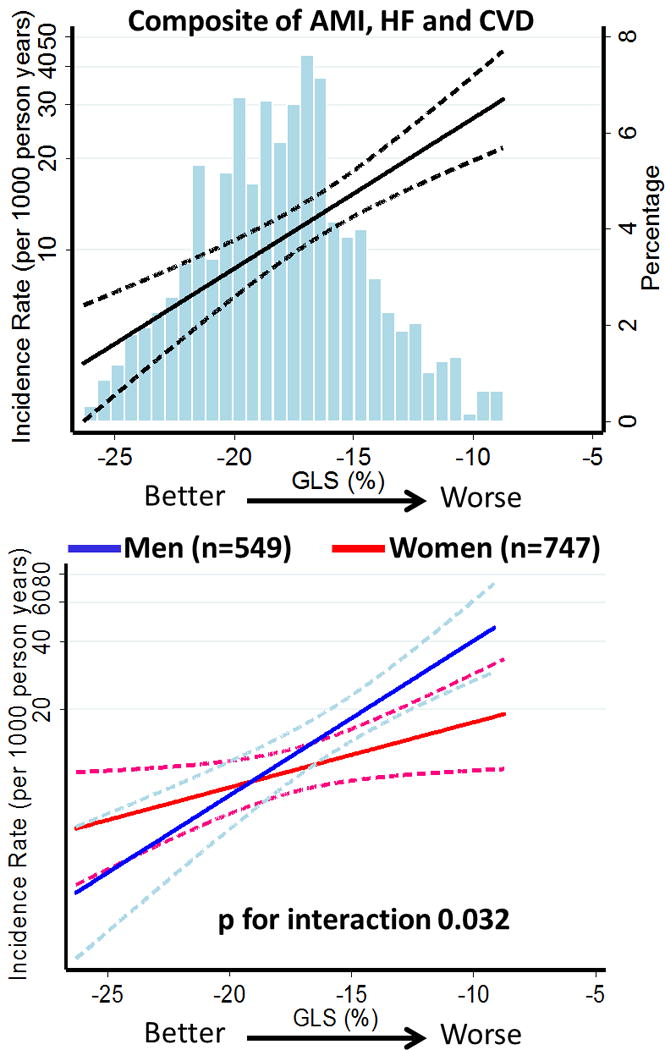
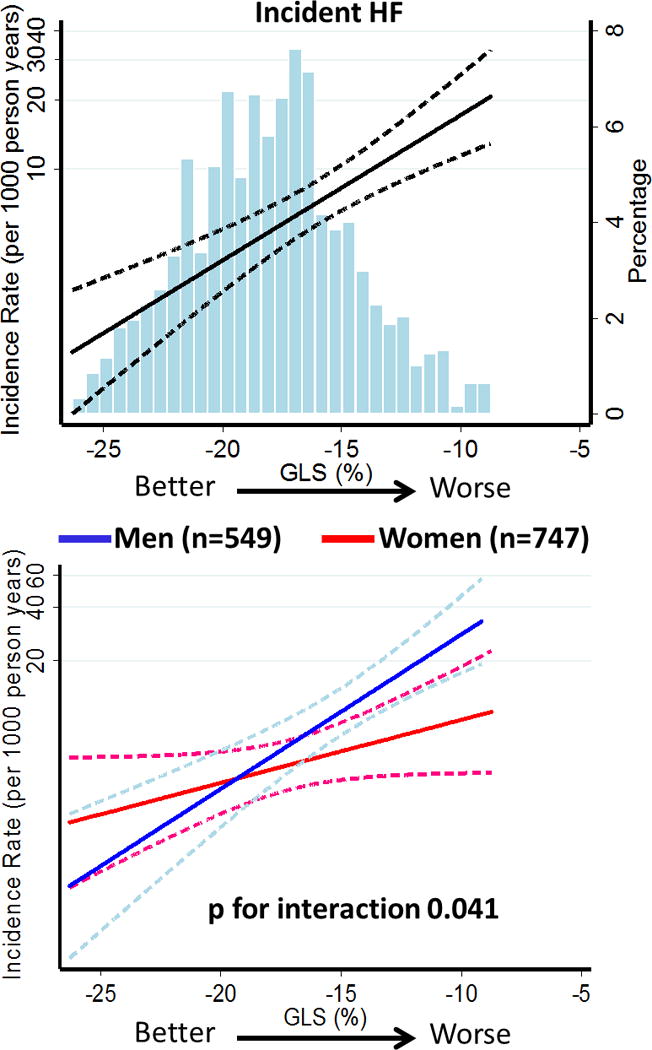
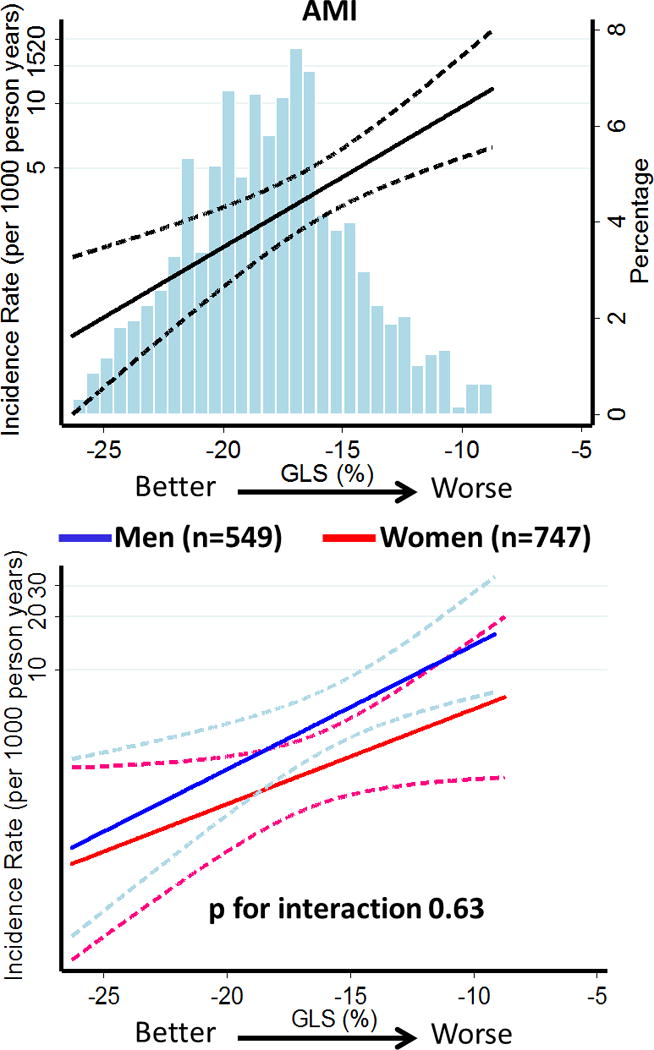
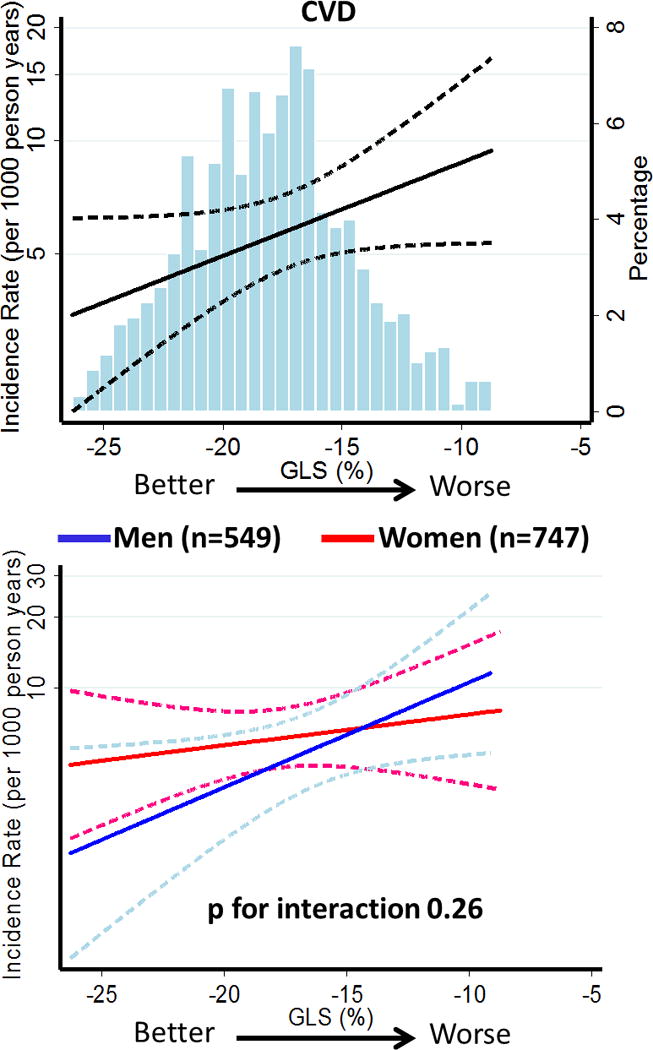
Methods and results: A total of 1296 participants in a general population study underwent a health examination, including echocardiography measurement of GLS. The primary end point was the composite of incident heart failure, acute myocardial infarction, or cardiovascular death. During a median follow-up of 11 years, 149 (12%) participants were diagnosed with heart failure, acute myocardial infarction, or cardiovascular death. Lower GLS was associated with a higher risk of the composite end point (hazard ratio, 1.12; 95% confidence interval, 1.08-1.17; P<0.001 per 1% decrease), an association that persisted after multivariable adjustment for age, sex, heart rate, hypertension, systolic blood pressure, left ventricular ejection fraction, left ventricular mass index, left ventricular dimension, deceleration time, left atrium dimension, E/e', and pro B-type natriuretic peptide (hazard ratio, 1.05; 95% confidence interval, 1.00-1.11; P=0.045 per 1% decrease). GLS provided incremental prognostic information beyond the Framingham Risk Score, the Systemic Coronary Evaluation risk chart, and the modified American College of Cardiology/American Heart Association Pooled Cohort Equation for the composite outcome and incident heart failure. Sex modified the relationship between GLS and outcome such that after multivariable adjustment, GLS was an independent predictor of outcomes in men but not in women (hazard ratio, 1.14; 95% confidence interval, 1.06-1.24; P=0.001, and hazard ratio, 0.99; 95% confidence interval, 0.92-1.07; P=0.81, respectively; P for interaction =0.032).
Conclusions: In the general population, GLS provides independent and incremental prognostic information regarding long-term risk of cardiovascular morbidity and mortality. GLS seems to be a stronger prognosticator in men than in women.
Keywords: 2-dimensional speckle tracking echocardiography; general population; long-term outcome; longitudinal strain; sex.
© 2017 American Heart Association, Inc.
Figures
References
-
- WHO. Cardiovascular diseases (CVDs) [Internet] WHO; [cited 2016 Mar 26];Available from: http://www.who.int/mediacentre/factsheets/fs317/en/
-
- Biering-Sørensen T, Solomon SD. Assessing Contractile Function When Ejection Fraction Is Normal: A Case for Strain Imaging. Circ Cardiovasc Imaging. 2015;8:e004181. - PubMed
-
- Kuznetsova T, Herbots L, Richart T, D’hooge J, Thijs L, Fagard RH, Herregods M-C, Staessen JA. Left ventricular strain and strain rate in a general population. Eur Heart J. 2008;29:2014–2023. - PubMed
-
- Narayanan A, Aurigemma GP, Chinali M, Hill JC, Meyer TE, Tighe DA. Cardiac mechanics in mild hypertensive heart disease: a speckle-strain imaging study. Circ Cardiovasc Imaging. 2009;2:382–390. - PubMed
-
- Jensen MT, Sogaard P, Andersen HU, Bech J, Fritz Hansen T, Biering-Sørensen T, Jørgensen PG, Galatius S, Madsen JK, Rossing P, Jensen JS. Global Longitudinal Strain Is Not Impaired in Type 1 Diabetes Patients Without Albuminuria. JACC Cardiovasc Imaging. 2015;8:400–410. - PubMed
Publication types
MeSH terms
Grants and funding
LinkOut - more resources
Full Text Sources
Other Literature Sources
Medical
Miscellaneous
