


APP-A Novel Player within the Presynaptic Active Zone Proteome
- PMID: 28265241
- PMCID: PMC5316543
- DOI: 10.3389/fnmol.2017.00043
APP-A Novel Player within the Presynaptic Active Zone Proteome
Abstract
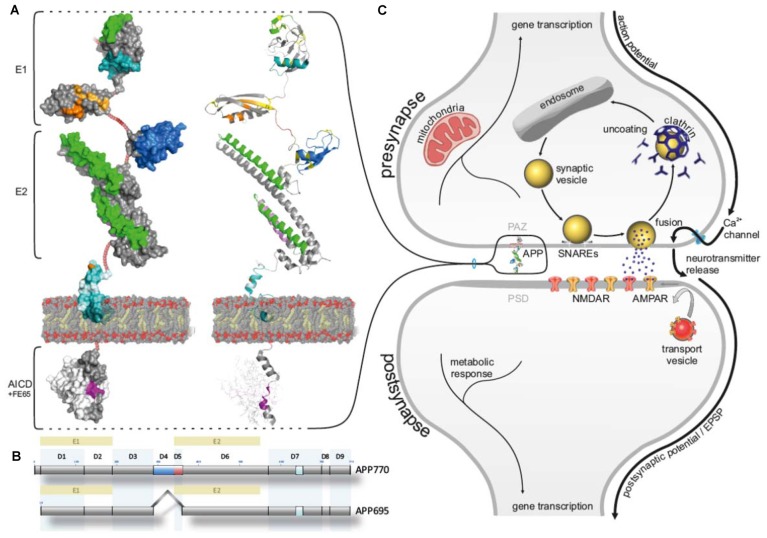
The amyloid precursor protein (APP) was discovered in the 1980s as the precursor protein of the amyloid A4 peptide. The amyloid A4 peptide, also known as A-beta (Aβ), is the main constituent of senile plaques implicated in Alzheimer's disease (AD). In association with the amyloid deposits, increasing impairments in learning and memory as well as the degeneration of neurons especially in the hippocampus formation are hallmarks of the pathogenesis of AD. Within the last decades much effort has been expended into understanding the pathogenesis of AD. However, little is known about the physiological role of APP within the central nervous system (CNS). Allocating APP to the proteome of the highly dynamic presynaptic active zone (PAZ) identified APP as a novel player within this neuronal communication and signaling network. The analysis of the hippocampal PAZ proteome derived from APP-mutant mice demonstrates that APP is tightly embedded in the underlying protein network. Strikingly, APP deletion accounts for major dysregulation within the PAZ proteome network. Ca2+-homeostasis, neurotransmitter release and mitochondrial function are affected and resemble the outcome during the pathogenesis of AD. The observed changes in protein abundance that occur in the absence of APP as well as in AD suggest that APP is a structural and functional regulator within the hippocampal PAZ proteome. Within this review article, we intend to introduce APP as an important player within the hippocampal PAZ proteome and to outline the impact of APP deletion on individual PAZ proteome subcommunities.
Keywords: amyloid precursor protein; hippocampus; neuronal network; presynaptic active zone; synapse.
Figures
References
-
- Cannon W. B. (1932). The Wisdom of the Body. New York, NY: W W Norton and Co.
Publication types
LinkOut - more resources
Full Text Sources
Other Literature Sources
Miscellaneous
