


The science of salt: A regularly updated systematic review of salt and health outcomes (December 2015-March 2016)
- PMID: 28266792
- PMCID: PMC8030800
- DOI: 10.1111/jch.12970
The science of salt: A regularly updated systematic review of salt and health outcomes (December 2015-March 2016)
Abstract
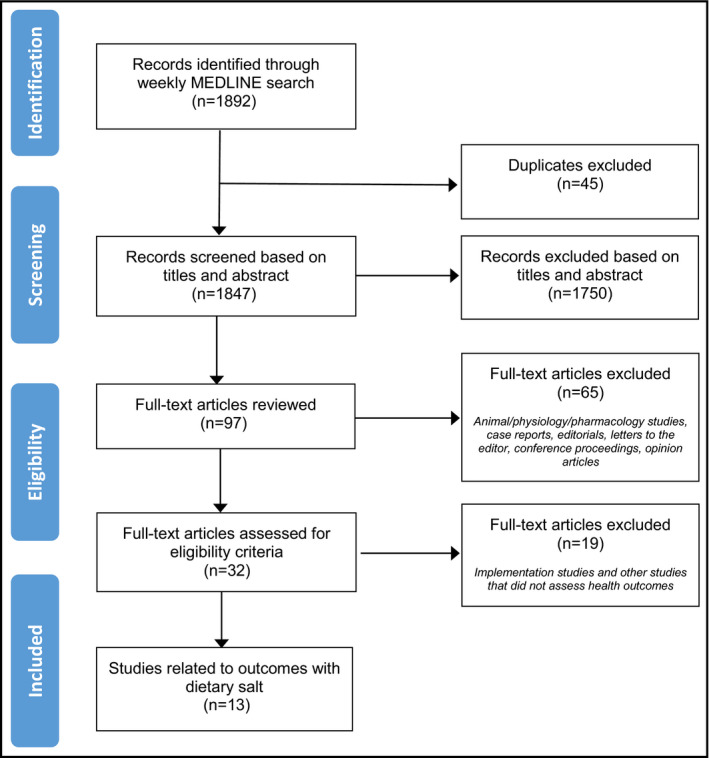
The purpose of this review was to identify, summarize, and critically appraise studies on dietary salt relating to health outcomes that were published from December 2015 to March 2016. The search strategy was adapted from a previous systematic review on dietary salt and health. Overall, 13 studies were included in the review: one study assessed cardiovascular events, nine studies assessed prevalence or incidence of blood pressure or hypertension, one study assessed kidney disease, and two studies assessed other health outcomes (obesity and nonalcoholic fatty liver disease). Four studies were selected for detailed appraisal and commentary. One study met the minimum methodologic criteria and found an increased risk associated with lower sodium intake in patients with heart failure. All other studies identified in this review demonstrated positive associations between dietary salt and adverse health outcomes.
Keywords: diet/nutrition/hypertension; hypertension-general; outcomes of care; sodium.
© 2017 Wiley Periodicals, Inc.
Conflict of interest statement
NC is a member of World Action on Salt and Health (a dietary salt reduction organization) but has no financial interests to declare. JA and AAL have no conflicts of interest to declare. MMYW is a research consultant with Arbor Research Collaborative for Health. JW is the Director of the World Health Organization (WHO) Collaborating Centre on Population Salt Reduction.
Figures
References
-
- Mozaffarian D, Fahimi S, Singh GM, et al. Global sodium consumption and death from cardiovascular causes. N Engl J Med. 2014;371:624–634. - PubMed
-
- World Health Organization . A global brief on hypertension. 2013. http://ish-world.com/downloads/pdf/global_brief_hypertension.pdf. Accessed October 31, 2016.
-
- World Health Organization . Guideline: Sodium intake for adults and children. 2012. http://www.who.int/nutrition/publications/guidelines/sodium_intake_print.... Accessed October 31, 2016. - PubMed
-
- World Health Organization . Report of the Formal Meeting of Member States to conclude the work on the comprehensive global monitoring framework, including indicators, and a set of voluntary global targets for the prevention and control of noncommunicable diseases. Report, 1–6. 2012. Geneva, Switzerland, World Health Organization.
Publication types
MeSH terms
Substances
LinkOut - more resources
Full Text Sources
Other Literature Sources
Medical
Miscellaneous
