


Maternal exposure to low levels of corticosterone during lactation protects adult rat progeny against TNBS-induced colitis: A study on GR-mediated anti-inflammatory effect and prokineticin system
- PMID: 28267767
- PMCID: PMC5340375
- DOI: 10.1371/journal.pone.0173484
Maternal exposure to low levels of corticosterone during lactation protects adult rat progeny against TNBS-induced colitis: A study on GR-mediated anti-inflammatory effect and prokineticin system
Abstract
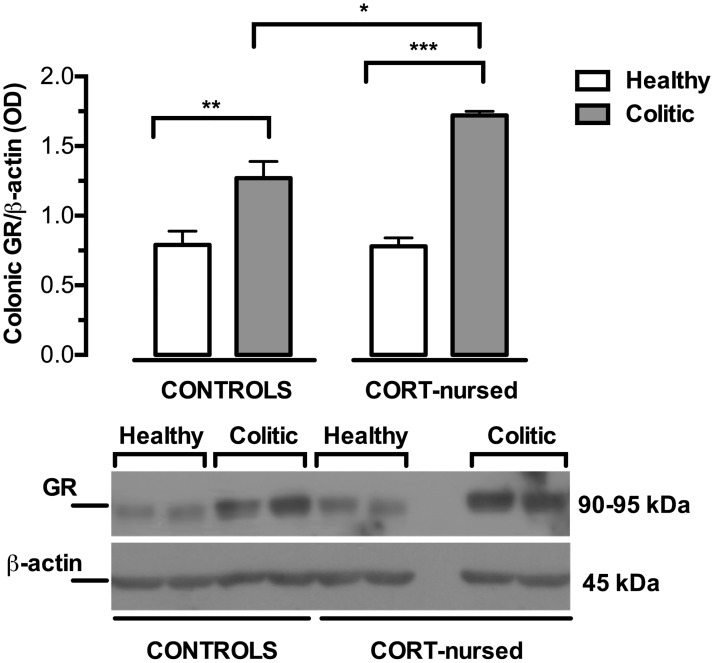
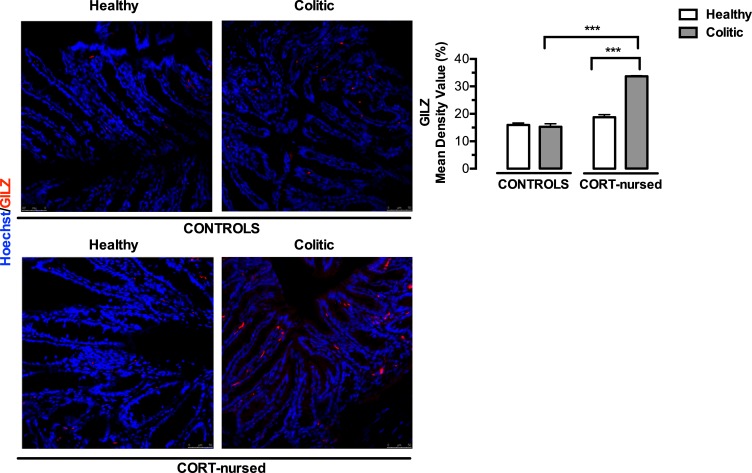
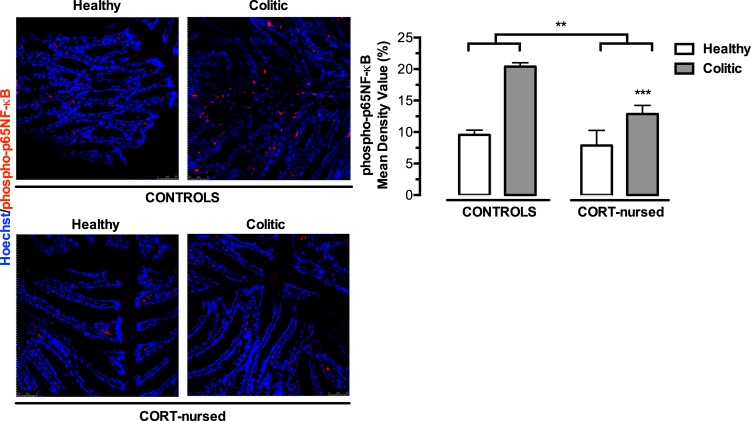
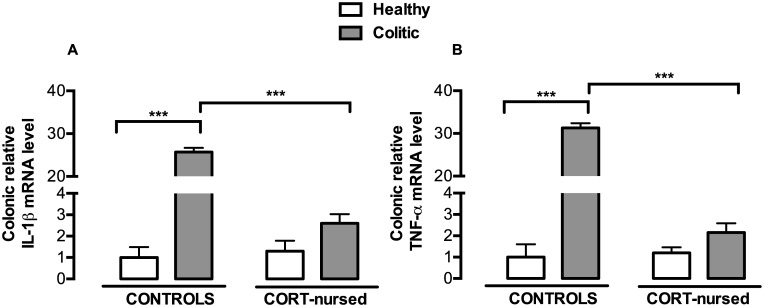
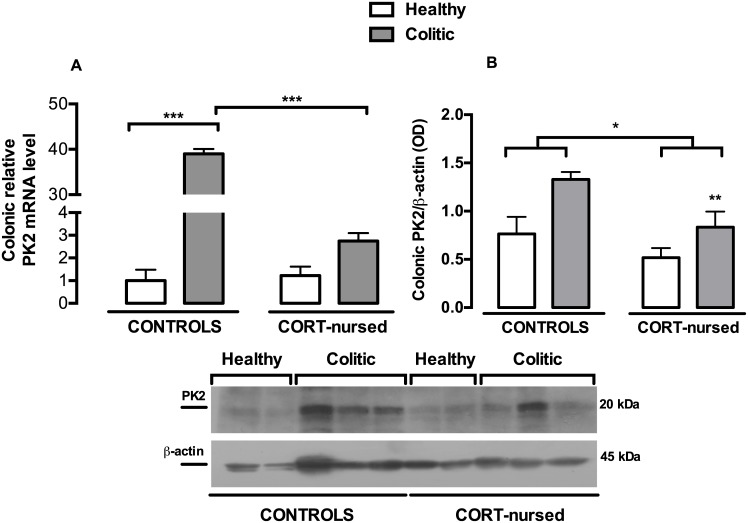
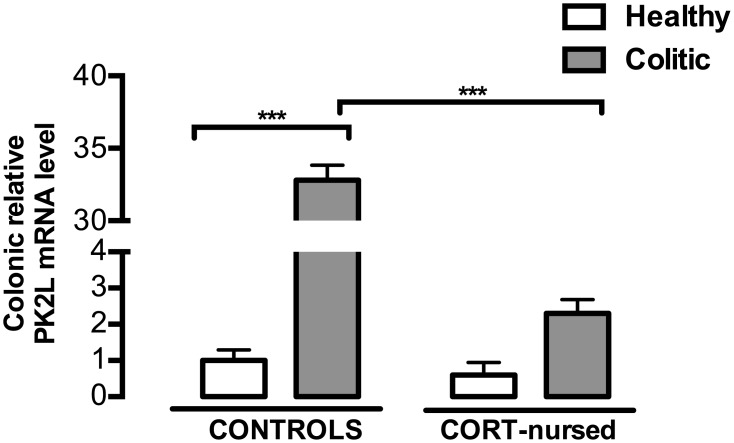
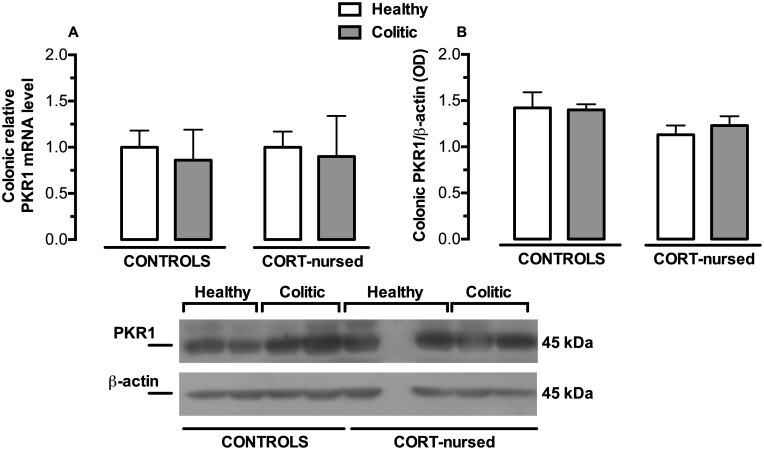
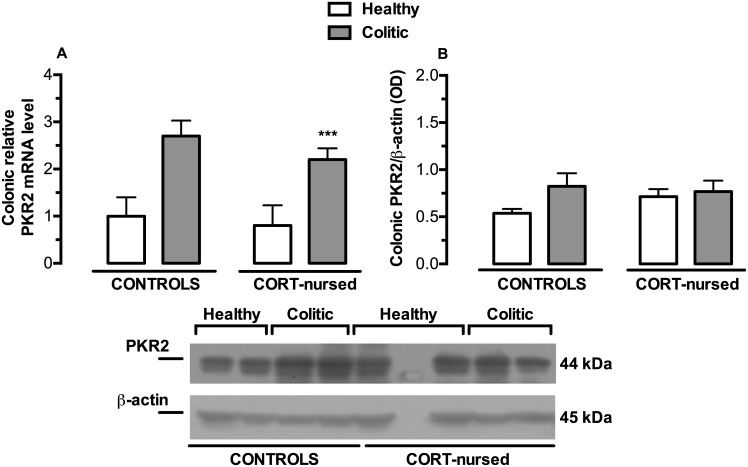
The early phase of life represents a critical period for the development of an organism. Interestingly, early life experiences are able to influence the development of the gastrointestinal tract and the reactivity to colonic inflammatory stress. We recently demonstrated that adult male rats exposed to low doses of corticosterone during lactation (CORT-nursed rats) are protected against experimental colitis induced by the intracolonic infusion of 2,4,6-trinitrobenzenesulfonic acid (TNBS). Based on these interesting results, we wanted to better investigate which cellular actors could be involved in the protection of CORT-nursed rats from TNBS-induced experimental colitis. Therefore, in the present work, we focused our attention on different factors implicated in GR-mediated anti-inflammatory effect. To address this issue, colonic tissues, collected from control and CORT-nursed healthy animals and from control and CORT-nursed colitic rats, were processed and the following inflammatory factors were evaluated: the expression of (i) glucocorticoid receptors (GR), (ii) glucocorticoid-induced leucine zipper (GILZ), (iii) phospho-p65NF-κB, (iv) the pro-inflammatory cytokines IL-1β and TNF-α, (v) the prokineticins PK2 and PK2L and (vi) their receptors PKR1 and PKR2. We found that adult CORT-nursed rats, in comparison to controls, showed increased expression of colonic GR and reduced expression of pro-inflammatory molecules (IL-1β, TNF-α, PK2 and PK2L) in response to inflammatory colitis. The observed changes were associated with an increase in GILZ colonic expression and with a reduction in phospo-p65NF-κB colonic expression.
Conflict of interest statement
Figures
References
-
- Ahmad T, Tamboli CP, Jewell D, Colombel J-F. Clinical relevance of advances in genetics and pharmacogenetics of IBD. Gastroenterology. 2004. May;126(6):1533–49. - PubMed
-
- Shanahan F. Inflammatory bowel disease: Immunodiagnostics, immunotherapeutics, and ecotherapeutics. Gastroenterology. 2001. February;120(3):622–35. - PubMed
-
- Collins SM. Stress and the Gastrointestinal Tract IV. Modulation of intestinal inflammation by stress: basic mechanisms and clinical relevance. Am J Physiol Gastrointest Liver Physiol. 2001. March;280(3):G315–318. - PubMed
-
- Fava GA, Pavan L. Large bowel disorders. I. Illness configuration and life events. Psychother Psychosom. 1976 1977;27(2):93–9. - PubMed
MeSH terms
Substances
LinkOut - more resources
Full Text Sources
Other Literature Sources
Medical
