


The Hospital at Home program: no place like home
- PMID: 28270721
- PMCID: PMC5330625
- DOI: 10.3747/co.24.3326
The Hospital at Home program: no place like home
Abstract
Background: The treatment of children with cancer is associated with significant burden for the entire family. Frequent clinic visits and extended hospital stays can negatively affect quality of life for children and their families.
Methods: Here, we describe the development of a Hospital at Home program (H@H) that delivers therapy to pediatric hematology, oncology, and blood and marrow transplant (bmt) patients in their homes. The services provided include short infusions of chemotherapy, supportive-care interventions, antibiotics, post-chemotherapy hydration, and teaching.
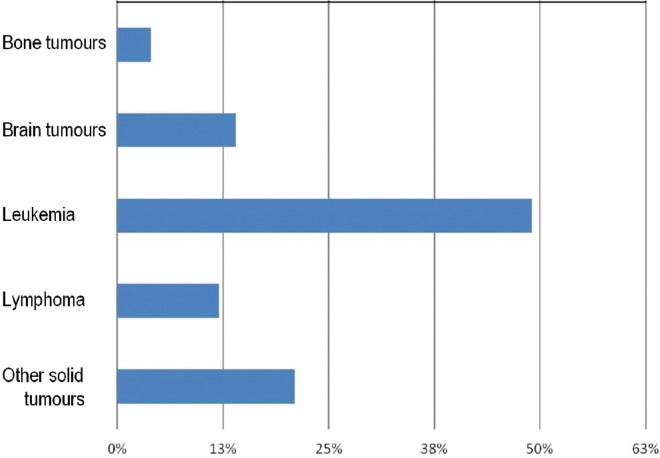
Results: From 2013 to 2015, the H@H program served 136 patients, making 1701 home visits, for patients mainly between the ages of 1 and 4 years. Referrals came from oncology in 82% of cases, from hematology in 11%, and from bmt in 7%. Since inception of the program, no adverse events have been reported. Family surveys suggested less disruption in daily routines and appreciation of specialized care by hematology and oncology nurses. Staff surveys highlighted a perceived benefit of H@H in contributing to early discharge of patients by supporting out-of-hospital monitoring and teaching.
Conclusions: The development of a H@H program dedicated to the pediatric hematology, oncology, or bmt patient appears feasible. Our pilot program offers a potential contribution to improvement in patient quality of life and in cost-benefit for parents and the health care system.
Keywords: Pediatrics; chemotherapy; hematology; home care; program development.
Figures
References
LinkOut - more resources
Full Text Sources
Other Literature Sources
