


A Quasi-Experiment to Assess the Impact of a Scalable, Community-Based Weight Loss Program: Combining Reach, Effectiveness, and Cost
- PMID: 28271423
- PMCID: PMC5359160
- DOI: 10.1007/s11606-016-3971-0
A Quasi-Experiment to Assess the Impact of a Scalable, Community-Based Weight Loss Program: Combining Reach, Effectiveness, and Cost
Abstract
Background: Primary care addresses obesity through physician oversight of intensive lifestyle interventions or referral to external programs with demonstrated efficacy. However, limited information exists on community program reach, effectiveness, and costs across different groups of participants.
Objective: To evaluate a scalable, community weight loss program using reach, effectiveness, and cost metrics.
Design: Longitudinal pre-post quasi-experiment without control.
Participants: Enrolled participants in Weigh and Win (WAW), a community-based weight loss program.
Intervention: A 12-month program with daily social cognitive theory-based email and/or text support, online access to health coaches, objective weight assessment through 83 community-based kiosks, and modest financial incentives to increase program reach.
Main measures: Number of participants, representativeness, weight loss achievement (3%, 5% of initial weight lost), and cost of implementation.
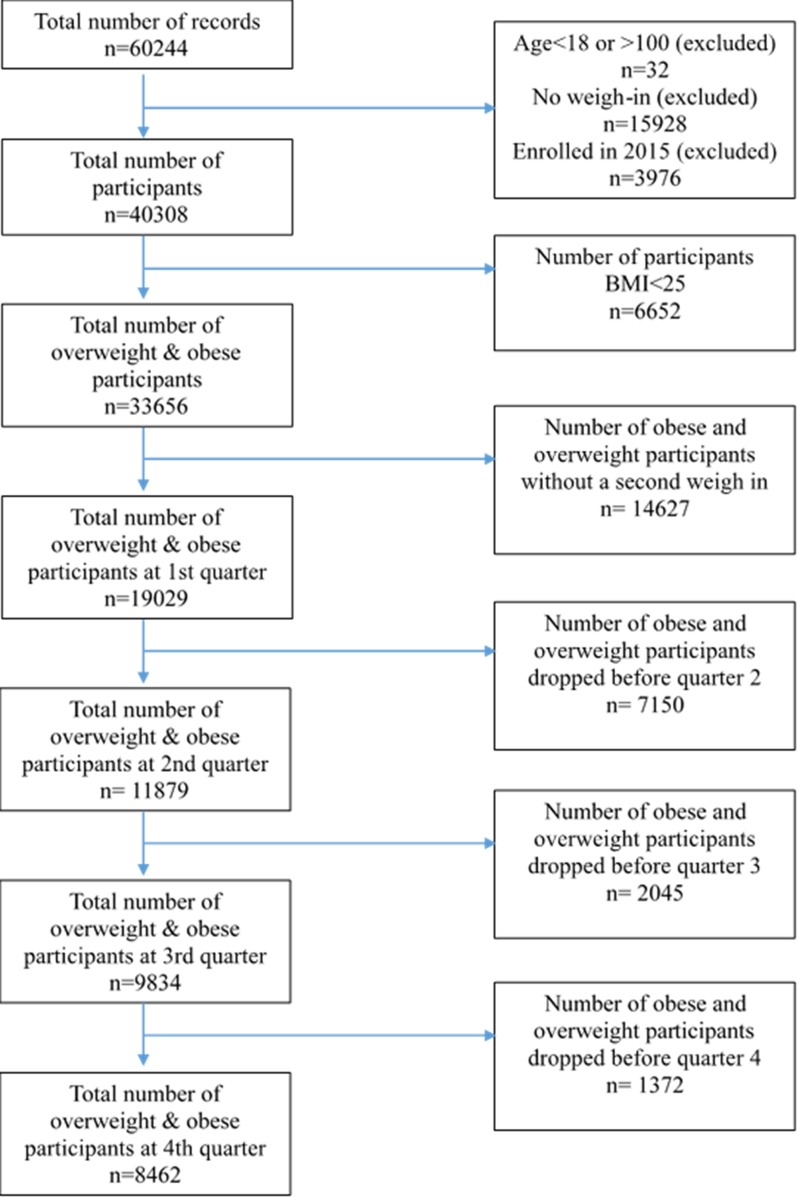
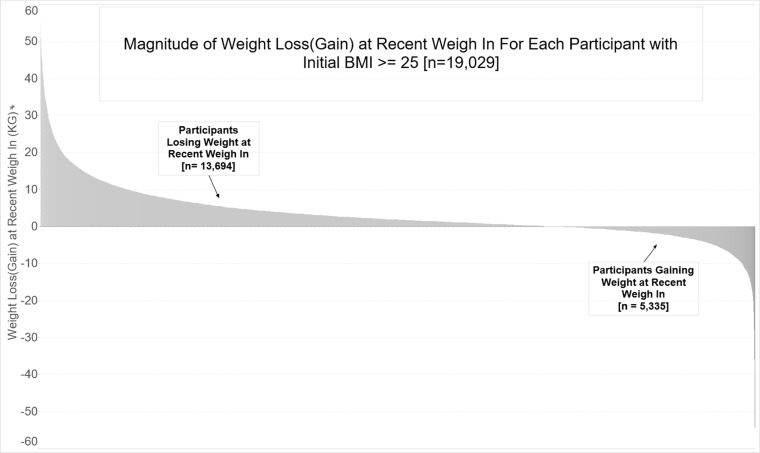
Key results: A total of 40,308 adults (79% women; 73% white; BMI = 32.3 ± 7.44, age = 43.9 ± 13.1 years) enrolled in WAW. Women were more likely than men to enroll in the program and continue engagement beyond an initial weigh-in (57% vs. 53%). Based on census data, African Americans were over-represented in the sample. Among participants who engaged in the program beyond an initial weigh-in (n = 19,029), 47% and 34% of participants lost 3% and 5% of their initial body weight, respectively. The average duration for those who achieved 5% weight loss was 1.7 ± 1.3 years. African American participants were more likely to achieve 5% weight loss and remain enrolled in the program longer compared to non-African American participants (2.0 ± 1.3 vs. 1.6 ± 1.2 years). Implementation costs were $2,822,698. Cost per clinically meaningful weight loss for African Americans ($257.97/3% loss; $335.96/5% loss) was lower than that for Hispanics ($318.62; $431.10) and Caucasians ($313.65; $441.87), due to the higher success rate of that subgroup of participants.
Conclusions: Weigh and Win is a scalable technology-supported and community-based weight loss program that reaches a large number of participants and may contribute to reducing health disparities.
Keywords: behavioral weight Loss; cost; impact; incentives; public health.
Conflict of interest statement
Lia Schoepke is employed by IncentaHEALTH LLC. Todd McGuire is employed by, holds the patent to, and is a part owner of IncentaHEALTH LLC. All other authors declare that they have no conflict of interest.
Figures
References
-
- Jensen MD, Ryan DH, Apovian CM, et al. 2013 AHA/ACC/TOS Guideline for the Management of Overweight and Obesity in Adults: A Report of the American College of Cardiology/American Heart Association Task Force on Practice Guidelines and The Obesity Society. Journal of the American College of Cardiology 2013. - PubMed
-
- The Community Guide: Obesity prevention and control: Technology supported multicomponent coaching or counseling interventions to reduce weight and maintain weight loss. 2010. (Accessed July 10, 2016, at http://www.thecommunityguide.org/obesity/TechnologicalCoaching.html.)
MeSH terms
Grants and funding
LinkOut - more resources
Full Text Sources
Other Literature Sources
Medical
Miscellaneous
