


Toxic Dimethylarginines: Asymmetric Dimethylarginine (ADMA) and Symmetric Dimethylarginine (SDMA)
- PMID: 28272322
- PMCID: PMC5371847
- DOI: 10.3390/toxins9030092
Toxic Dimethylarginines: Asymmetric Dimethylarginine (ADMA) and Symmetric Dimethylarginine (SDMA)
Abstract
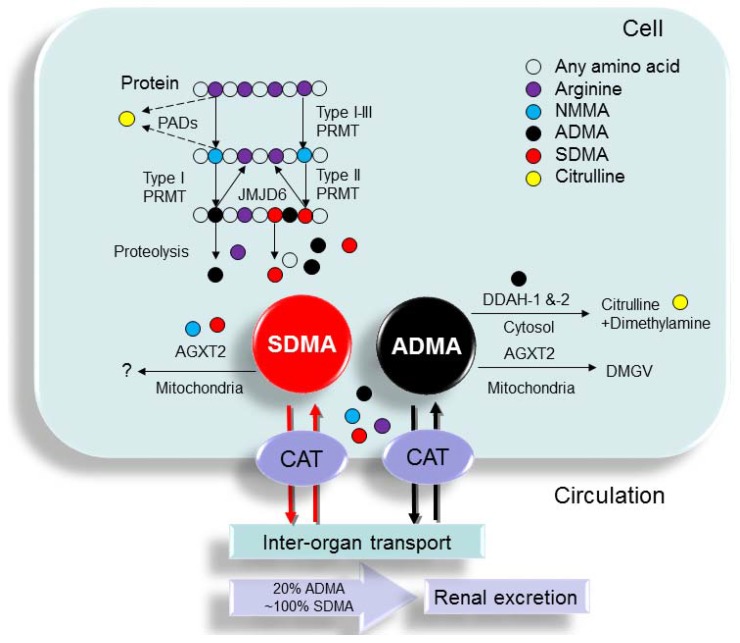
Asymmetric and symmetric dimethylarginine (ADMA and SDMA, respectively) are toxic, non-proteinogenic amino acids formed by post-translational modification and are uremic toxins that inhibit nitric oxide (NO) production and play multifunctional roles in many human diseases. Both ADMA and SDMA have emerged as strong predictors of cardiovascular events and death in a range of illnesses. Major progress has been made in research on ADMA-lowering therapies in animal studies; however, further studies are required to fill the translational gap between animal models and clinical trials in order to treat human diseases related to elevated ADMA/SDMA levels. Here, we review the reported impacts of ADMA and SDMA on human health and disease, focusing on the synthesis and metabolism of ADMA and SDMA; the pathophysiological roles of these dimethylarginines; clinical conditions and animal models associated with elevated ADMA and SDMA levels; and potential therapies against ADMA and SDMA. There is currently no specific pharmacological therapy for lowering the levels and counteracting the deleterious effects of ADMA and SDMA. A better understanding of the mechanisms underlying the impact of ADMA and SDMA on a wide range of human diseases is essential to the development of specific therapies against diseases related to ADMA and SDMA.
Keywords: alanine‐glyoxylate aminotransferase‐2; chronic kidney disease; dimethylarginine dimethylaminohydrolase; nitric oxide; nonproteinogenic amino acid; asymmetric dimethylarginine; cardiovascular disease; protein arginine methyltransferase; symmetric dimethylarginine; uremic toxins.
Conflict of interest statement
The authors declare no conflict of interest.
Figures
References
-
- Kakimoto Y., Akazawa S. Isolation and identification of NG,NG- and NG,N'G-dimethyl-arginine, Nε-mono-, di-, and trimethyllysine, and glucosylgalactosyl- and galactosyl-δ-hydroxylysine from human urine. J. Biol. Chem. 1970;245:5751–5758. - PubMed
-
- Vanholder R., De Smet R., Glorieux G., Argilés A., Baurmeister U., Brunet P., Clark W., Cohen G., De Deyn P.P., Deppisch R., et al. Review on uremic toxins: Classification, concentration, and interindividual variability. Kidney Int. 2003;63:1934–1943. doi: 10.1046/j.1523-1755.2003.00924.x. - DOI - PubMed
-
- Vallance P., Leone A., Calver A., Collier J., Moncada S. Accumulation of an endogenous inhibitor of nitric oxide synthesis in chronic renal failure. Lancet. 1992;339:572–575. - PubMed
Publication types
MeSH terms
Substances
LinkOut - more resources
Full Text Sources
Other Literature Sources
Miscellaneous
