Review
. 2017 Mar 7;6(1):18.
doi: 10.3390/biology6010018.

Ornithine Aminotransferase, an Important Glutamate-Metabolizing Enzyme at the Crossroads of Multiple Metabolic Pathways

Affiliations
Review

Ornithine Aminotransferase, an Important Glutamate-Metabolizing Enzyme at the Crossroads of Multiple Metabolic Pathways

Antonin Ginguay et al. Biology (Basel). .

Abstract

Ornithine δ-aminotransferase (OAT, E.C. 2.6.1.13) catalyzes the transfer of the δ-amino group from ornithine (Orn) to α-ketoglutarate (aKG), yielding glutamate-5-semialdehyde and glutamate (Glu), and vice versa. In mammals, OAT is a mitochondrial enzyme, mainly located in the liver, intestine, brain, and kidney. In general, OAT serves to form glutamate from ornithine, with the notable exception of the intestine, where citrulline (Cit) or arginine (Arg) are end products. Its main function is to control the production of signaling molecules and mediators, such as Glu itself, Cit, GABA, and aliphatic polyamines. It is also involved in proline (Pro) synthesis. Deficiency in OAT causes gyrate atrophy, a rare but serious inherited disease, a further measure of the importance of this enzyme.

Keywords: glutamate; gyrate atrophy; ornithine; ornithine aminotransferase.


Conflict of interest statement

The authors declare no conflict of interest.

Figures
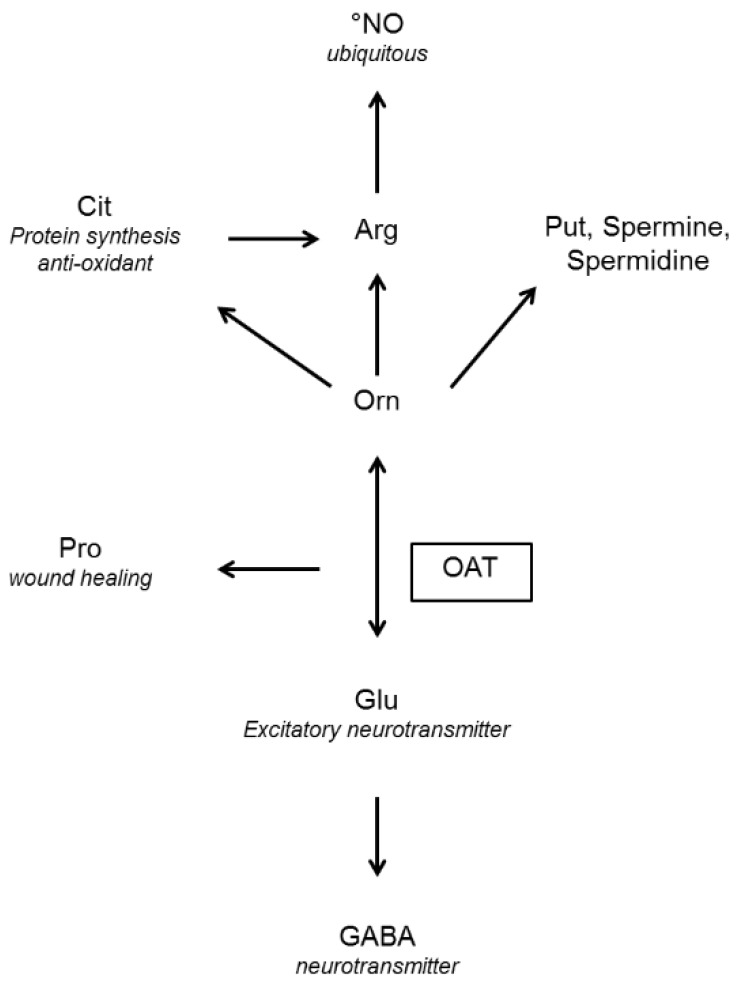
Figure 1
Figure 1
End products of the reaction mediated by ornithine (Orn) aminotransferase (OAT) and their functions (in italics) GABA: γ-aminobutyric acid, Glu: glutamate, Pro: proline, Arg: arginine, Cit: citrulline, Put: putrescine, NO: nitric oxide.
Figure 2
Figure 2
Overview of the reaction catalyzed by OAT.
Figure 3
Figure 3
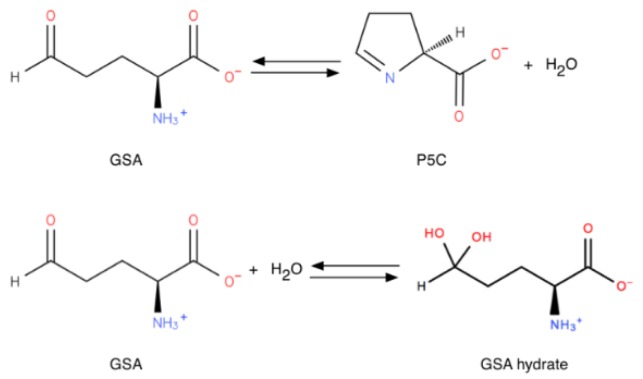
Cyclization and hydration of glutamate-5-semi-aldehyde (GSA). P5C: pyrroline-5-carboxylate.
Figure 4
Figure 4
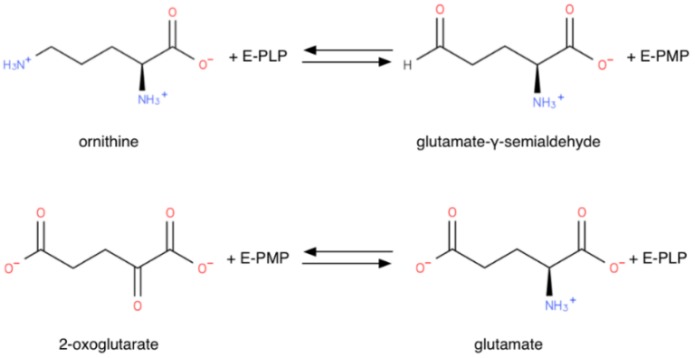
“Ping-pong” mechanism half-reactions of OAT (E-PLP: OAT PLP adduct; E-PMP: OAT PMP adduct).
Figure 5
Figure 5
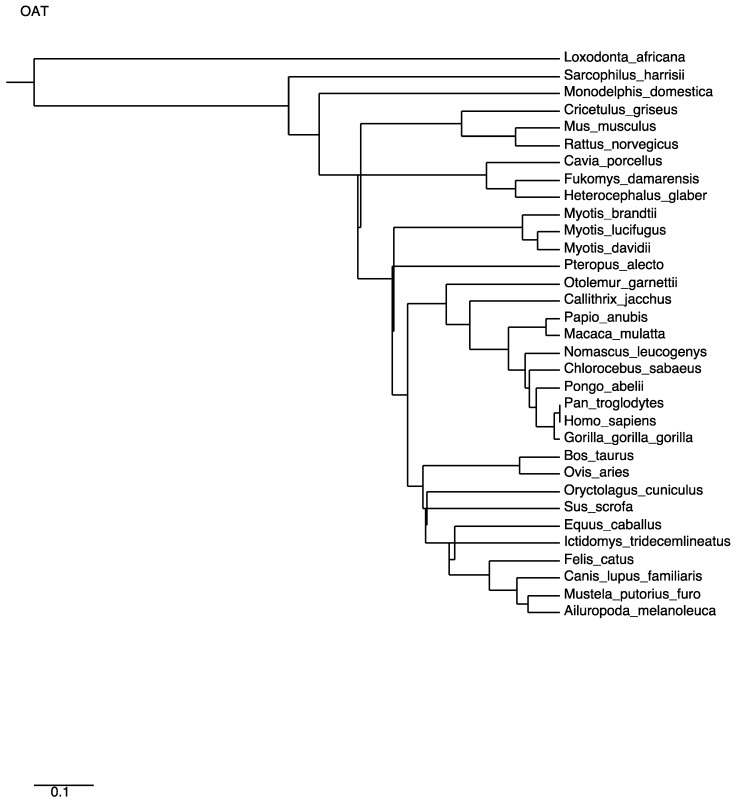
Phylogenetic tree computed from multiple alignment distances of mammalian OAT sequences.
Figure 6
Figure 6
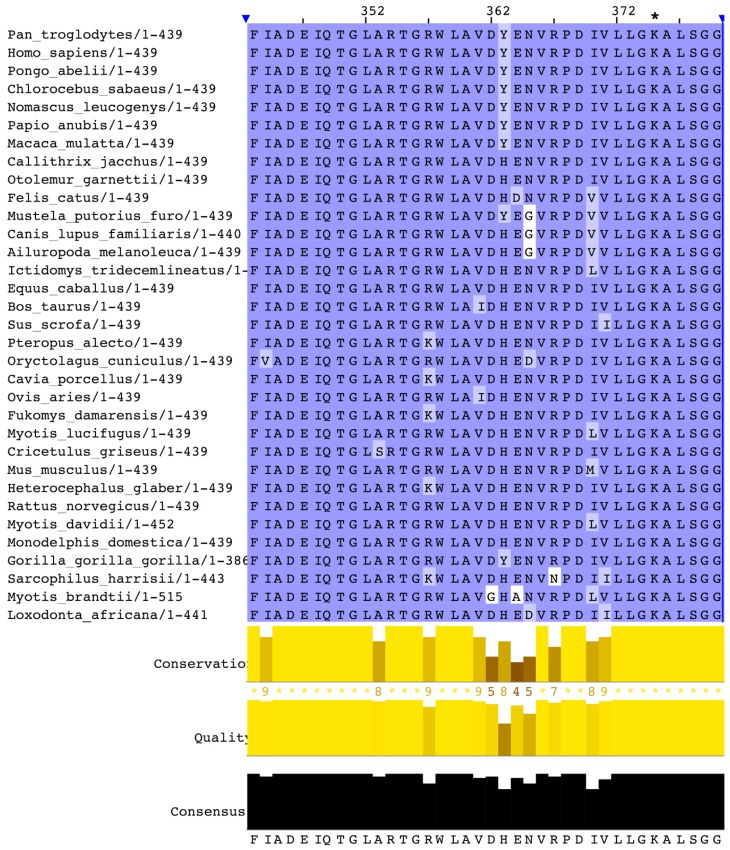
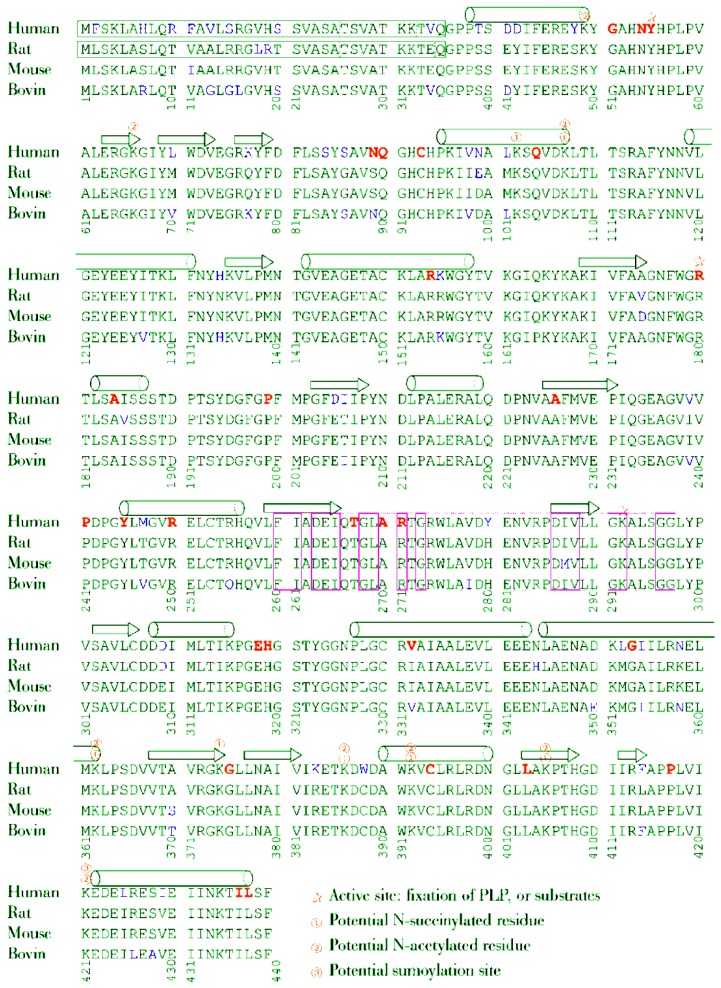
Close-up of the Prosite consensus pattern region of the Clustal multiple alignment of mammalian OAT sequences. The pyridoxal 5-phosphate (PLP) attachment site is the conserved lysine residue in column 375 of the alignment (denoted by an asterisk), which corresponds to residue 292 in the human sequence.
Figure 7
Figure 7
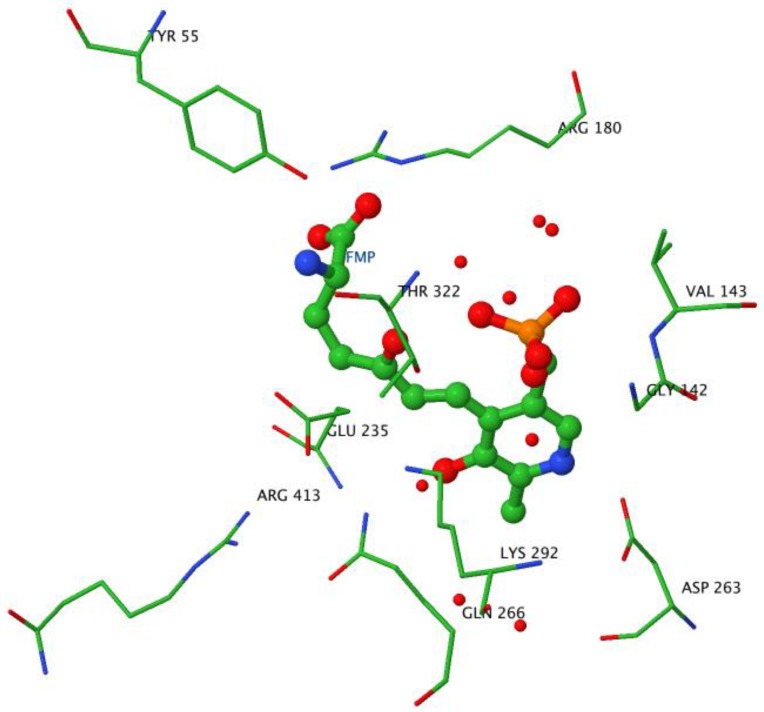
Active site geometry. Image created with JMol using the OAT-5FMOrn crystal structure coordinates. The ball and stick structure shows the adduct formed by the reaction of 5FMOrn with PLP. The wireframe structures indicate the residues stabilizing the adduct in the active site in particular Y55, R180, K292, and the shielding of R413 by E235.
Figure 8
Figure 8
Amino acid sequence alignment of human, rat, mouse and ox OAT.
Figure 9
Figure 9
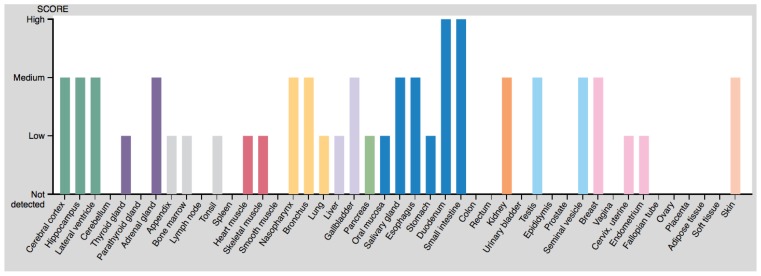
Protein expression scores from the Human Protein Atlas.
Figure 10
Figure 10
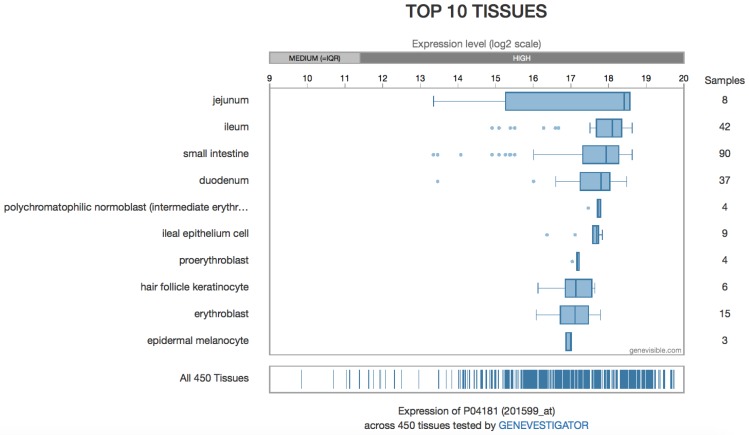
Protein expression levels from microarray data.
Figure 11
Figure 11
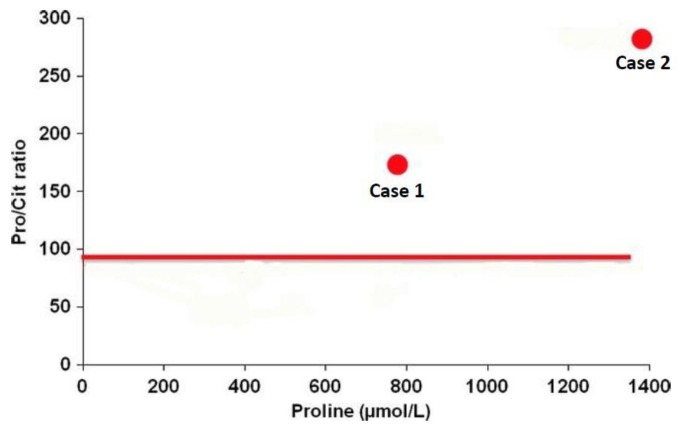
Proline/citrulline ratio and proline concentration in the neonatal dried blood spot of two affected patients with OAT deficiency (case 1 and case 2). The solid line indicates the 99 percentile (97.6) of > 450,000 blood spot samples analyzed as part of the Minnesota NBS program. Adapted from de Sain-van der Velden et al. [229].

References

    1. Yasuo W. The Glutamate Crossway. In: Cynober L.A., editor. Metabolic and Therapeutic Aspects of Amino Acids in Clinical Nutrition. CRC Press; Boca Raton, FL, USA: 2004. pp. 135–152.
    1. Morris S.M. Arginine: Beyond protein. Am. J. Clin. Nutr. 2006;83:508S–512S. - PubMed
    1. Melis G.C., Ter Wengel N., Boelens P.G., Van Leeuwen P.A.M. Glutamine: Recent developments in research on the clinical significance of glutamine. Curr. Opin. Clin. Nutr. Metab. Care. 2004;7:59–70. doi: 10.1097/00075197-200401000-00011. - DOI - PubMed
    1. Breuillard C., Cynober L., Moinard C. Citrulline and nitrogen homeostasis: An overview. Amino Acids. 2015;47:685–691. doi: 10.1007/s00726-015-1932-2. - DOI - PubMed
    1. Ramani D., De Bandt J.P., Cynober L. Aliphatic polyamines in physiology and diseases. Clin. Nutr. 2014;33:14–22. doi: 10.1016/j.clnu.2013.09.019. - DOI - PubMed