


Cancer Chemoprevention by Phytochemicals: Nature's Healing Touch
- PMID: 28273819
- PMCID: PMC6155418
- DOI: 10.3390/molecules22030395
Cancer Chemoprevention by Phytochemicals: Nature's Healing Touch
Abstract
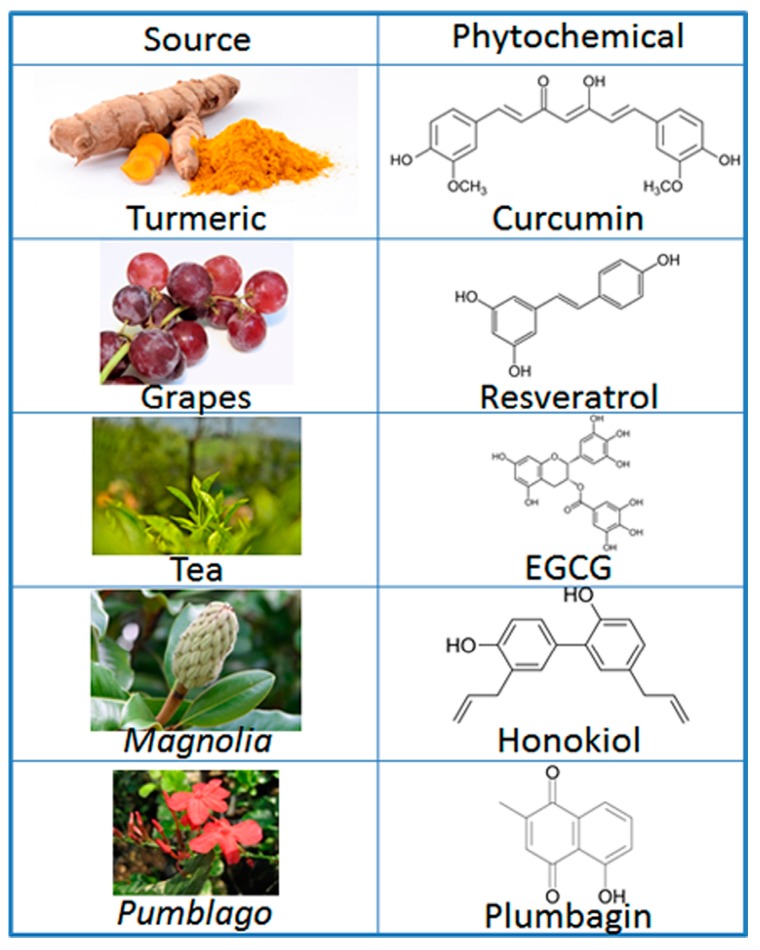
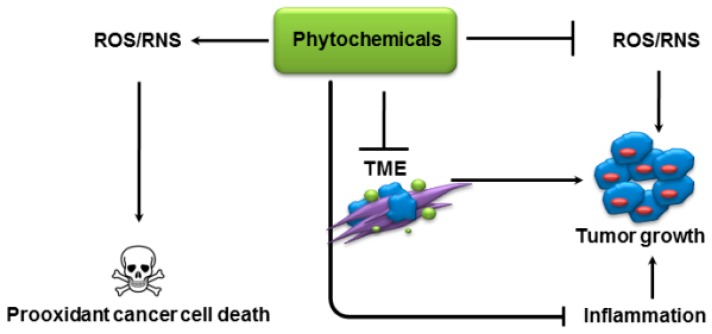
Phytochemicals are an important part of traditional medicine and have been investigated in detail for possible inclusion in modern medicine as well. These compounds often serve as the backbone for the synthesis of novel therapeutic agents. For many years, phytochemicals have demonstrated encouraging activity against various human cancer models in pre-clinical assays. Here, we discuss select phytochemicals-curcumin, epigallocatechin-3-gallate (EGCG), resveratrol, plumbagin and honokiol-in the context of their reported effects on the processes of inflammation and oxidative stress, which play a key role in tumorigenesis. We also discuss the emerging evidence on modulation of tumor microenvironment by these phytochemicals which can possibly define their cancer-specific action. Finally, we provide recent updates on how low bioavailability, a major concern with phytochemicals, is being circumvented and the general efficacy being improved, by synthesis of novel chemical analogs and nanoformulations.
Keywords: cancer chemoprevention; inflammation; nanotechnology; phytochemicals; pro-oxidant; tumor microenvironment.
Conflict of interest statement
The authors declare no conflict of interest. The founding sponsors had no role in the design of the study or the writing of manuscript.
Figures
References
-
- Krepler C., Xiao M., Sproesser K., Brafford P.A., Shannan B., Beqiri M., Liu Q., Xu W., Garman B., Nathanson K.L., et al. Personalized preclinical trials in braf inhibitor-resistant patient-derived xenograft models identify second-line combination therapies. Clin. Cancer Res. 2016;22:1592–1602. doi: 10.1158/1078-0432.CCR-15-1762. - DOI - PMC - PubMed
Publication types
MeSH terms
Substances
Grants and funding
LinkOut - more resources
Full Text Sources
Other Literature Sources
