


Trait self-consciousness predicts amygdala activation and its functional brain connectivity during emotional suppression: an fMRI analysis
- PMID: 28273918
- PMCID: PMC5428331
- DOI: 10.1038/s41598-017-00073-3
Trait self-consciousness predicts amygdala activation and its functional brain connectivity during emotional suppression: an fMRI analysis
Abstract
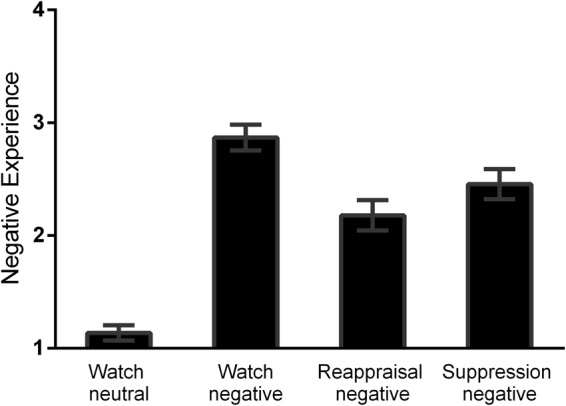
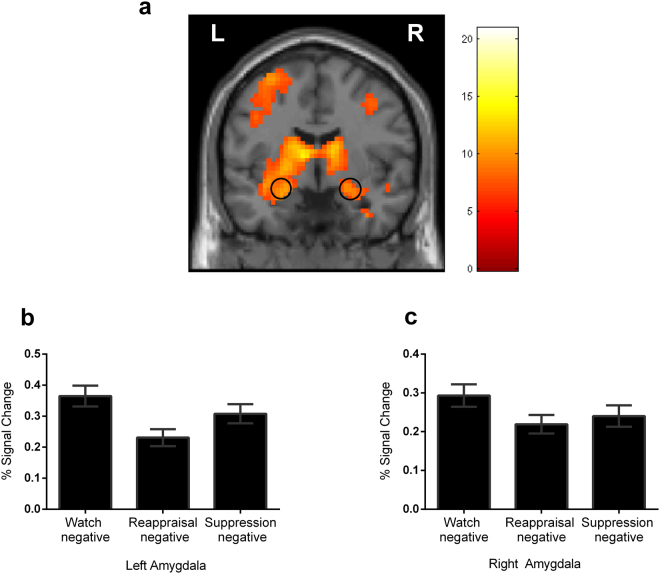
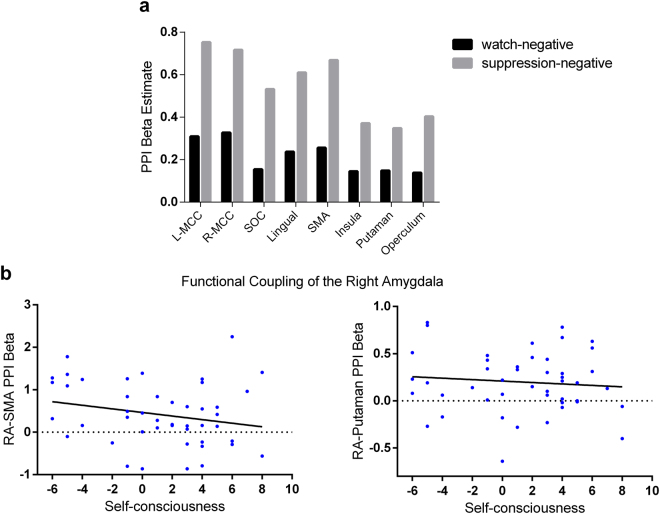
The present functional magnetic resonance imaging study investigated how trait neuroticism and its heterogeneous subdimensions are related to the emotional consequences and neural underpinnings of emotion regulation. Two levels of neuroticism assessments were conducted with 47 female subjects, who were required to attend to, suppress emotion displays to, or cognitively reappraise the meanings of negative images. The results showed reduced emotional experience and bilateral amygdala activation during reappraisal, and this regulation effect is unaffected by individual differences in neuroticism and its subdimensions. By contrast, the emotion downregulation effect of suppression in the right amygdala is compromised with increasing self-consciousness but not overall neuroticism dimension. This association holds robust after controlling the potential contribution of habitual suppression. Moreover, the psychophysiological interaction (PPI) analysis revealed that self-consciousness predicts weaker functional coupling of the right amygdala to supplementary motor area and putamen during expressive suppression, two regions mediating the control and execution of motor actions. These findings suggest that self-consciousness predicts increased difficulty in emotional regulation using expressive suppression; and that the heterogeneous nature of trait neuroticism needs to be considered in exploring the association of neuroticism and emotion regulation.
Conflict of interest statement
The authors declare that they have no competing interests.
Figures

References
-
- Gross JJ. The emerging field of emotion regulation: an integrative review. Review of general psychology. 1998;2:271. doi: 10.1037/1089-2680.2.3.271. - DOI
-
- Gross, J. J. Handbook of emotion regulation. (Guilford publications, 2007).
-
- Gross JJ, Muñoz RF. Emotion regulation and mental health. Clinical psychology: Science and practice. 1995;2:151–164.
Publication types
MeSH terms
LinkOut - more resources
Full Text Sources
Other Literature Sources
