


Prosthetic joint infection development of an evidence-based diagnostic algorithm
- PMID: 28274250
- PMCID: PMC5343418
- DOI: 10.1186/s40001-017-0245-1
Prosthetic joint infection development of an evidence-based diagnostic algorithm
Abstract
Background: Increasing rates of prosthetic joint infection (PJI) have presented challenges for general practitioners, orthopedic surgeons and the health care system in the recent years. The diagnosis of PJI is complex; multiple diagnostic tools are used in the attempt to correctly diagnose PJI. Evidence-based algorithms can help to identify PJI using standardized diagnostic steps.
Methods: We reviewed relevant publications between 1990 and 2015 using a systematic literature search in MEDLINE and PUBMED. The selected search results were then classified into levels of evidence. The keywords were prosthetic joint infection, biofilm, diagnosis, sonication, antibiotic treatment, implant-associated infection, Staph. aureus, rifampicin, implant retention, pcr, maldi-tof, serology, synovial fluid, c-reactive protein level, total hip arthroplasty (THA), total knee arthroplasty (TKA) and combinations of these terms.
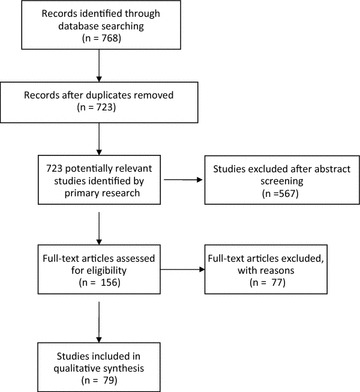
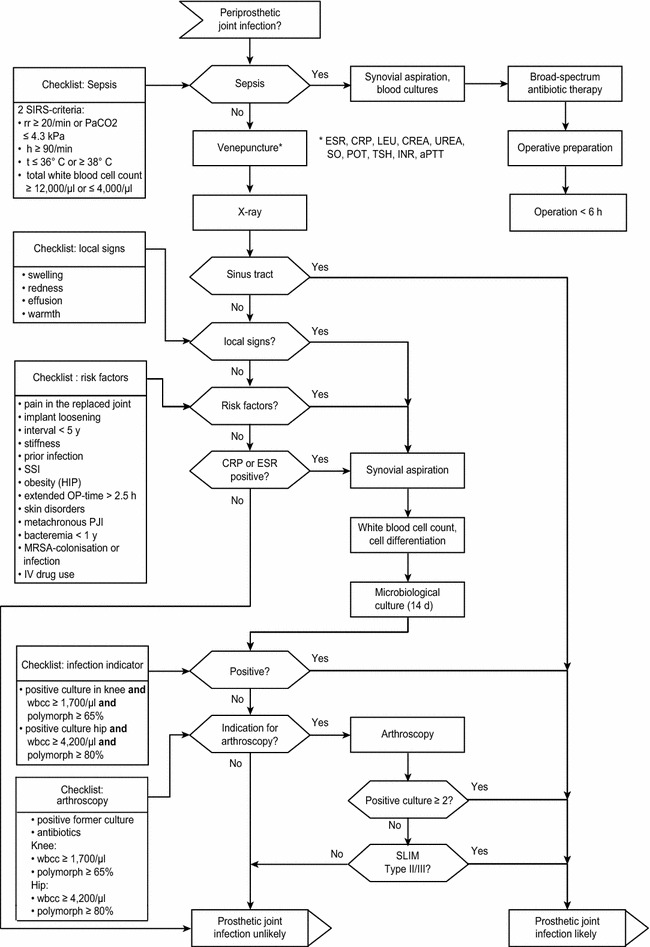
Results: From an initial 768 publications, 156 publications were stringently reviewed. Publications with class I-III recommendations (EAST) were considered. We developed an algorithm for the diagnostic approach to display the complex diagnosis of PJI in a clear and logically structured process according to ISO 5807.
Conclusions: The evidence-based standardized algorithm combines modern clinical requirements and evidence-based treatment principles. The algorithm provides a detailed transparent standard operating procedure (SOP) for diagnosing PJI. Thus, consistently high, examiner-independent process quality is assured to meet the demands of modern quality management in PJI diagnosis.
Keywords: Algorithm; Prosthetic joint infection; Revision surgery; THA; TKA; Total joint replacement.
Figures
References
-
- Kurtz S. Projections of primary and revision hip and knee arthroplasty in the United States from 2005 to 2030. J Bone Joint Surg Am. 2007;89:780. - PubMed
Publication types
MeSH terms
LinkOut - more resources
Full Text Sources
Other Literature Sources
Medical
Research Materials
