


The altered gut microbiota in adults with cystic fibrosis
- PMID: 28279152
- PMCID: PMC5345154
- DOI: 10.1186/s12866-017-0968-8
The altered gut microbiota in adults with cystic fibrosis
Erratum in
-
Erratum to: The altered gut microbiota in adults with cystic fibrosis.BMC Microbiol. 2017 Apr 27;17(1):102. doi: 10.1186/s12866-017-1006-6. BMC Microbiol. 2017. PMID: 28449644 Free PMC article. No abstract available.
Abstract
Background: Cystic Fibrosis (CF) is an autosomal recessive disease that affects the function of a number of organs, principally the lungs, but also the gastrointestinal tract. The manifestations of cystic fibrosis transmembrane conductance regulator (CFTR) dysfunction in the gastrointestinal tract, as well as frequent antibiotic exposure, undoubtedly disrupts the gut microbiota. To analyse the effects of CF and its management on the microbiome, we compared the gut microbiota of 43 individuals with CF during a period of stability, to that of 69 non-CF controls using 454-pyrosequencing of the 16S rRNA gene. The impact of clinical parameters, including antibiotic therapy, on the results was also assessed.
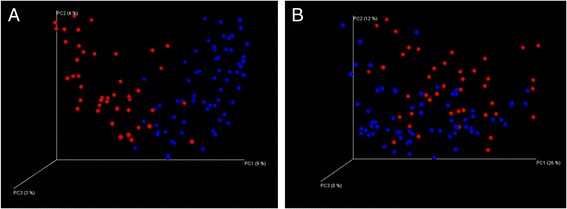
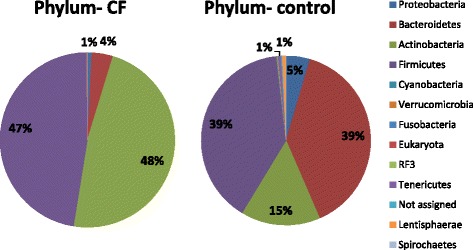
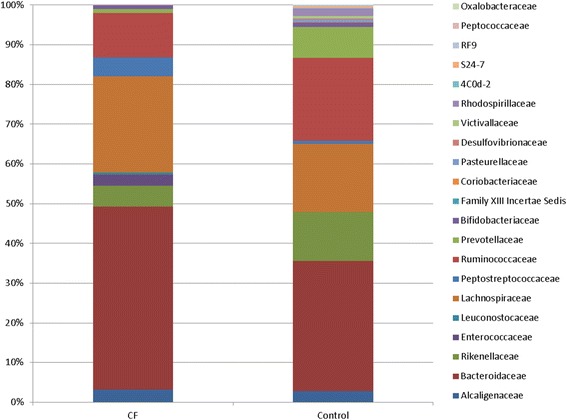
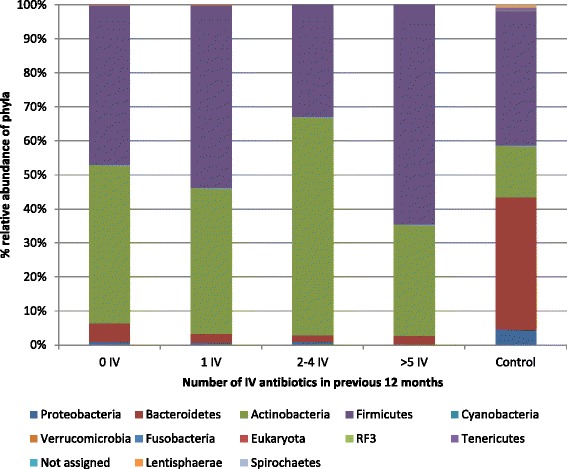
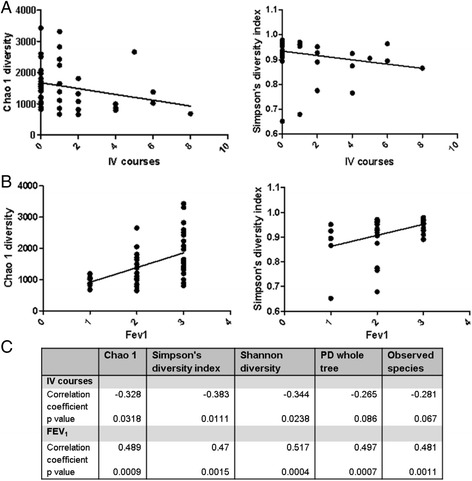
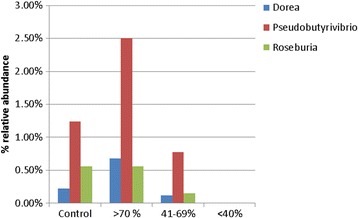
Results: The CF-associated microbiome had reduced microbial diversity, an increase in Firmicutes and a reduction in Bacteroidetes compared to the non-CF controls. While the greatest number of differences in taxonomic abundances of the intestinal microbiota was observed between individuals with CF and the healthy controls, gut microbiota differences were also reported between people with CF when grouped by clinical parameters including % predicted FEV1 (measure of lung dysfunction) and the number of intravenous (IV) antibiotic courses in the previous 12 months. Notably, CF individuals presenting with severe lung dysfunction (% predicted FEV1 ≤ 40%) had significantly (p < 0.05) reduced gut microbiota diversity relative to those presenting with mild or moderate dysfunction. A significant negative correlation (-0.383, Simpson's Diversity Index) was also observed between the number of IV antibiotic courses and gut microbiota diversity.
Conclusions: This is one of the largest single-centre studies on gut microbiota in stable adults with CF and demonstrates the significantly altered gut microbiota, including reduced microbial diversity seen in CF patients compared to healthy controls. The data show the impact that CF and it's management have on gut microbiota, presenting the opportunity to develop CF specific probiotics to minimise microbiota alterations.
Keywords: 454-pyrosequencing; Antibiotic therapy; Cystic fibrosis; Gut microbiota; Microbial diversity.
Figures
References
-
- Kassinen A, Krogius-Kurikka L, Mäkivuokko H, Rinttilä T, Paulin L, Corander J, Malinen E, Apajalahti J, Palva A. The fecal microbiota of irritable bowel syndrome patients differs significantly from that of healthy subjects. Gastroenterology. 2007;133(1):24–33. doi: 10.1053/j.gastro.2007.04.005. - DOI - PubMed
-
- Malinen E, Rinttila T, Kajander K, Matto J, Kassinen A, Krogius L, Saarela M, Korpela R, Palva A. Analysis of the fecal microbiota of irritable bowel syndrome patients and healthy controls with real-time PCR. Am J Gastroenterol. 2005;100(2):373–82. doi: 10.1111/j.1572-0241.2005.40312.x. - DOI - PubMed
Publication types
MeSH terms
Substances
LinkOut - more resources
Full Text Sources
Other Literature Sources
Medical
