


Effectiveness of surgical and non-surgical management of crouch gait in cerebral palsy: A systematic review
- PMID: 28279852
- PMCID: PMC9619302
- DOI: 10.1016/j.gaitpost.2017.02.024
Effectiveness of surgical and non-surgical management of crouch gait in cerebral palsy: A systematic review
Abstract
Background: Cerebral palsy (CP) is a prevalent group of neuromotor disorders caused by early injury to brain regions or pathways that control movement. Patients with CP exhibit a range of functional motor disabilities and pathologic gait patterns. Crouch gait, characterized by increased knee flexion throughout stance, is a common gait pattern in CP that increases energy costs of walking and contributes to ambulatory decline. Our aim was to perform the first systematic literature review on the effectiveness of interventions utilized to ameliorate crouch gait in CP.
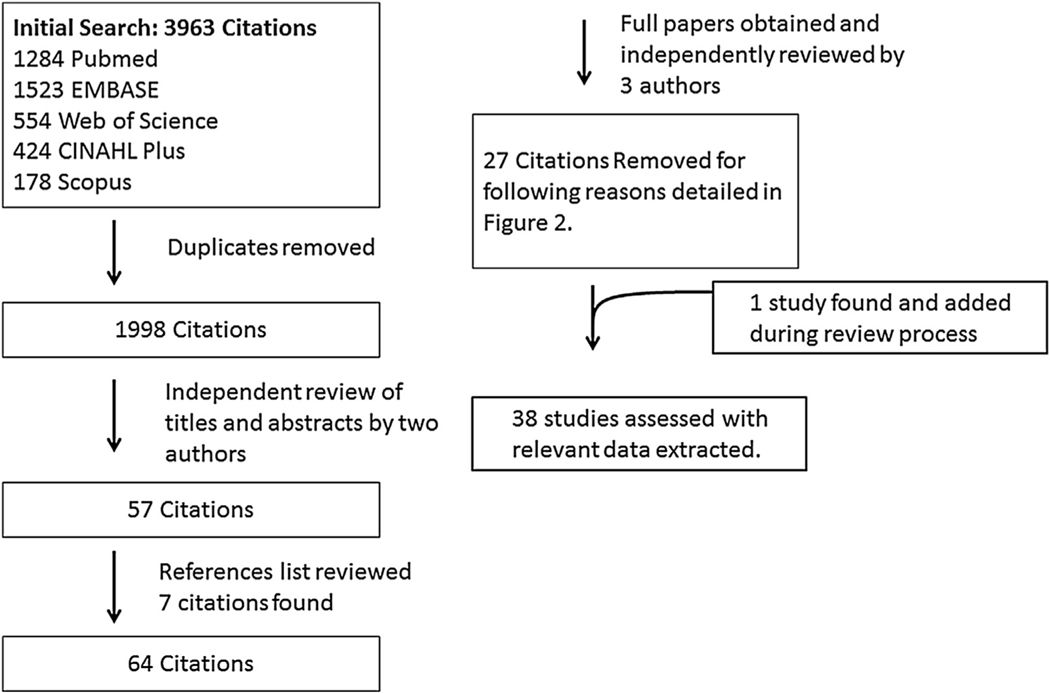
Methods: Comprehensive searches of five medical databases yielded 38 papers with 30 focused on orthopaedic management.
Results: Evidence supports the use of initial hamstring lengthenings and rectus femoris transfers, where indicated, for improving objective gait measures with limited data on improving gait speed or gross motor function. In contrast, evidence argues against hamstring transfers and revision hamstring lengthening, with recent interest in more technically demanding corrective procedures. Only eight studies evaluated alternatives to surgery, specifically strength training, botulinum toxin or orthoses, with inconsistent and/or short-lived results.
Conclusions: Although crouch in CP is recognized clinically as a complex multi-joint, multi-planar gait disorder, this review largely failed to identify interventions beyond those which directly address sagittal plane knee motion, indicating a major knowledge gap. Quality of existing data was notably weak, with few studies properly controlled or adequately sized. Outcomes from specific procedures are confounded by multilevel surgeries. Successful longer term strategies to prevent worsening of crouch and subsequent functional decline are needed.
Level of evidence: Systematic review.
Keywords: Cerebral palsy; Crouch gait; Hamstring lengthening; Knee flexion; Pediatric orthopedics.
Copyright © 2017. Published by Elsevier B.V.
Conflict of interest statement
Conflict of interest statement
The authors have no conflicts of interest to report.
Figures
References
-
- Rosenbaum P, Paneth N, Leviton A, Goldstein M, Bax M, Damiano D, Dan B, Jacobsson B, A report: the definition and classification of cerebral palsy April 2006, Dev. Med. Child Neurol. Suppl 109 (2007) 8–14. - PubMed
-
- Wren TAL, Rethlefsen SP, Kay RM, Prevalence of specific gait abnormalities in children with cerebral palsy: influence of cerebral palsy subtype, age, and previous surgery, J. Pediatr. Orthop 25 (2005) 79–83. - PubMed
Publication types
MeSH terms
Substances
Grants and funding
LinkOut - more resources
Full Text Sources
Other Literature Sources
Medical
Research Materials
Miscellaneous
