Lower levels of vitamin A are associated with increased gastrointestinal graft-versus-host disease in children
- PMID: 28279965
- PMCID: PMC5766846
- DOI: 10.1182/blood-2017-02-765826
Lower levels of vitamin A are associated with increased gastrointestinal graft-versus-host disease in children
Abstract
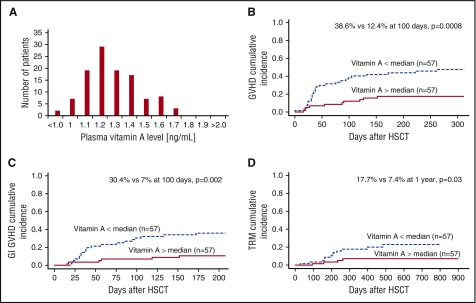
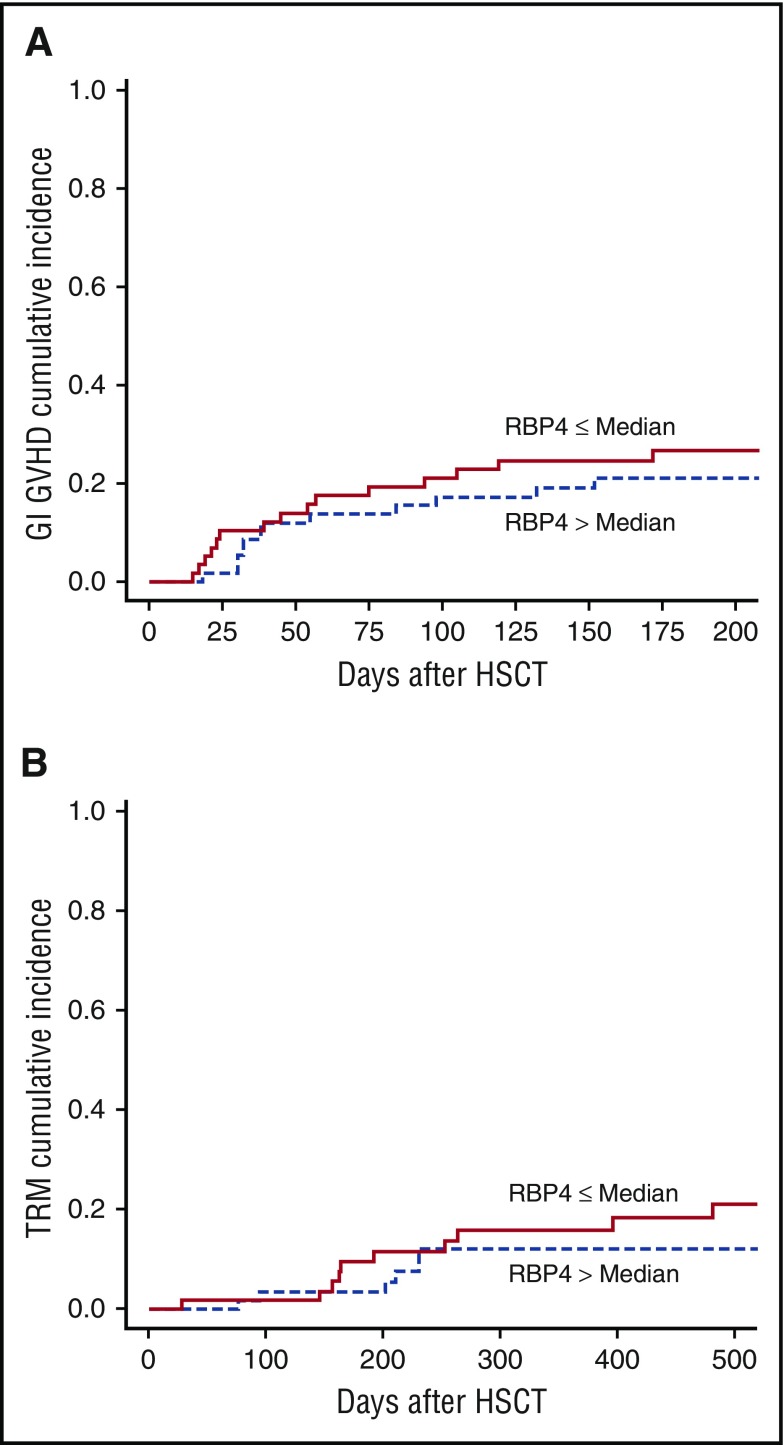
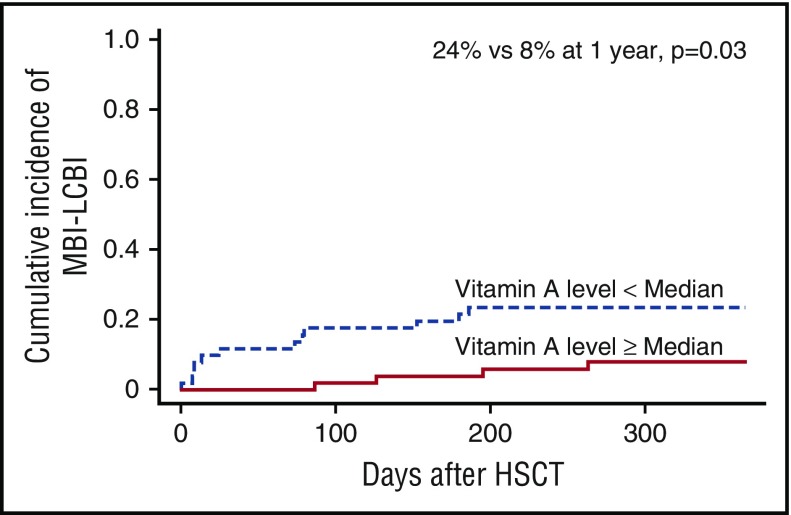
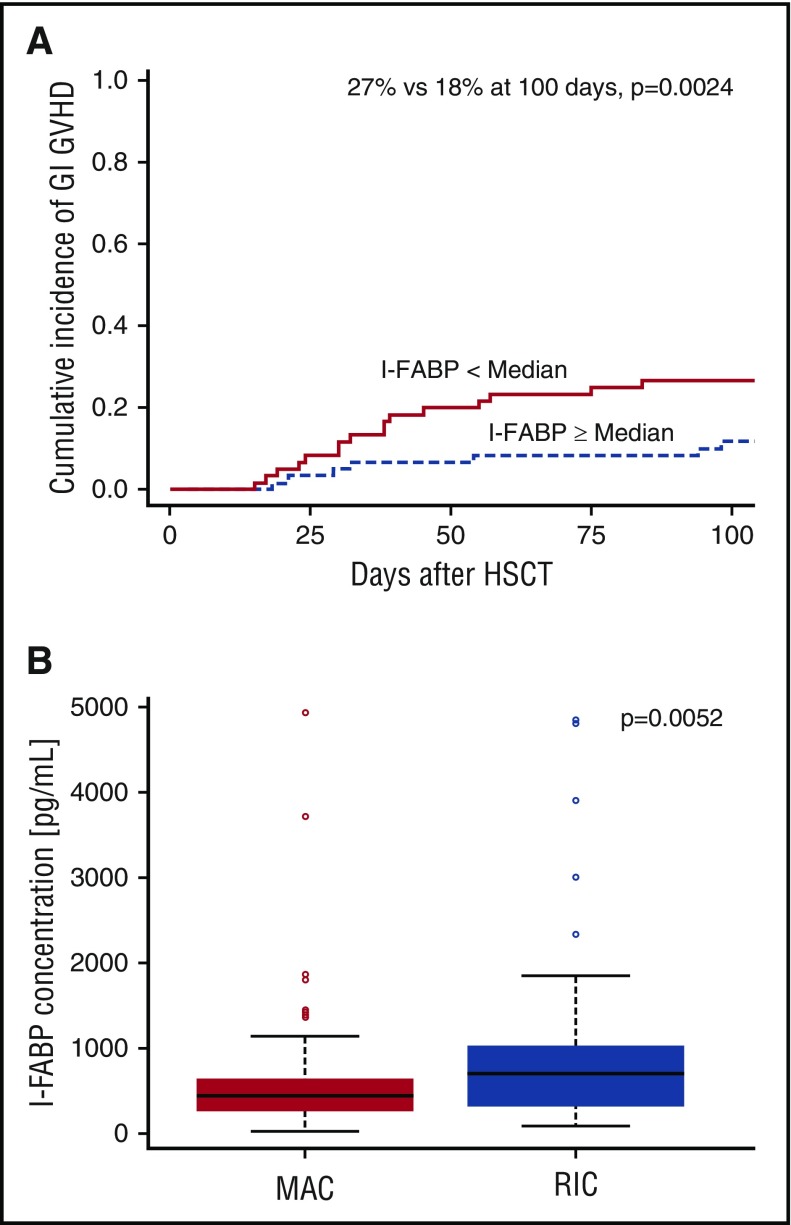
Vitamin A promotes development of mucosal tolerance and enhances differentiation of regulatory T cells. Vitamin A deficiency impairs epithelial integrity, increasing intestinal permeability. We hypothesized that higher vitamin A levels would reduce the risk of graft-versus-host disease (GVHD) through reduced gastrointestinal (GI) permeability, reduced mucosal injury, and reduced lymphocyte homing to the gut. We tested this hypothesis in a cohort study of 114 consecutive patients undergoing allogeneic stem cell transplant. Free vitamin A levels were measured in plasma at day 30 posttransplant. GI GVHD was increased in patients with vitamin A levels below the median (38% vs 12.4% at 100 days, P = .0008), as was treatment-related mortality (17.7% vs 7.4% at 1 year, P = .03). Bloodstream infections were increased in patients with vitamin A levels below the median (24% vs 8% at 1 year, P = .03), supporting our hypothesis of increased intestinal permeability. The GI mucosal intestinal fatty acid-binding protein was decreased after transplant, confirming mucosal injury, but was not correlated with vitamin A levels, indicating that vitamin A did not protect against mucosal injury. Expression of the gut homing receptor CCR9 on T-effector memory cells 30 days after transplant was increased in children with vitamin A levels below the median (r = -0.34, P = .03). Taken together, these data support our hypothesis that low levels of vitamin A actively promote GI GVHD and are not simply a marker of poor nutritional status or a sicker patient. Vitamin A supplementation might improve transplant outcomes.
© 2017 by The American Society of Hematology.
Figures
Comment in
-
Vitamin A to reduce gut leak and GVHD?Blood. 2017 May 18;129(20):2715-2717. doi: 10.1182/blood-2017-03-773226. Blood. 2017. PMID: 28522464 No abstract available.
References
-
- Lima AAM, Soares AM, Lima NL, et al. Effects of vitamin A supplementation on intestinal barrier function, growth, total parasitic, and specific Giardia spp infections in Brazilian children: a prospective randomized, double-blind, placebo-controlled trial. J Pediatr Gastroenterol Nutr. 2010;50(3):309-315. - PMC - PubMed
-
- McCullough FS, Northrop-Clewes CA, Thurnham DI. The effect of vitamin A on epithelial integrity. Proc Nutr Soc. 1999;58(2):289-293. - PubMed
MeSH terms
Substances
LinkOut - more resources
Full Text Sources
Other Literature Sources
Medical
Miscellaneous