


Ecological Momentary Assessment of Dietary Lapses Across Behavioral Weight Loss Treatment: Characteristics, Predictors, and Relationships with Weight Change
- PMID: 28281136
- PMCID: PMC5591758
- DOI: 10.1007/s12160-017-9897-x
Ecological Momentary Assessment of Dietary Lapses Across Behavioral Weight Loss Treatment: Characteristics, Predictors, and Relationships with Weight Change
Abstract
Background: Adherence to dietary prescriptions is critical for successful weight loss and weight loss maintenance. However, research on specific instances of inadherence (lapses) is limited, and findings regarding the frequency, nature, and causes of lapses are mixed. Additionally, no studies have examined lapses over the course of a weight loss program.
Purpose: In the context of a reduced calorie diet prescribed as part of a behavioral treatment, we aimed to characterize lapse occurrence, examine lapse frequency across treatment, examine predictors of lapses, and assess the relationship between lapses and weight loss.
Methods: Adults (n = 189) enrolled in a 12-month behavioral weight loss program completed ecological momentary assessment (EMA) at baseline, mid-treatment, and end of treatment. At each EMA survey, participants indicated whether a lapse had occurred, and responded to questions assessing situational, environmental, and affective states.
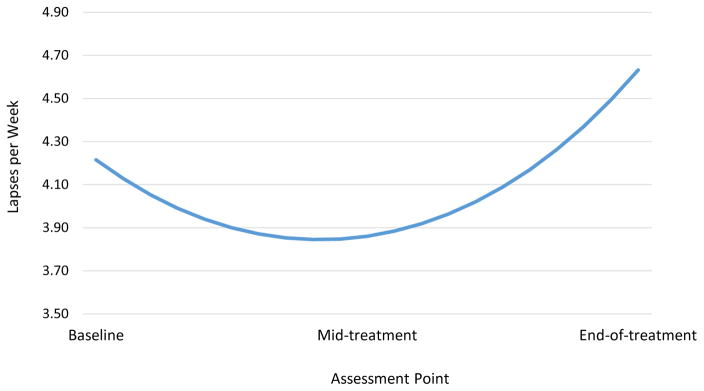
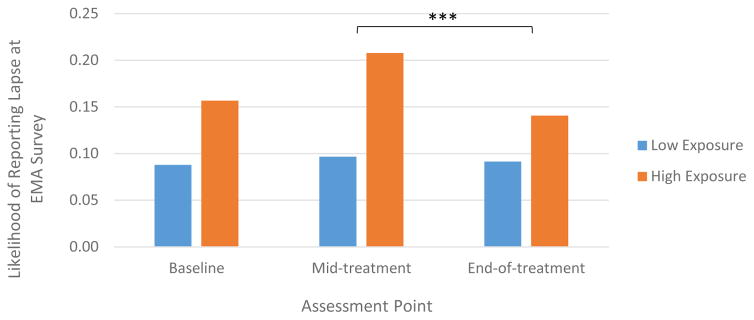
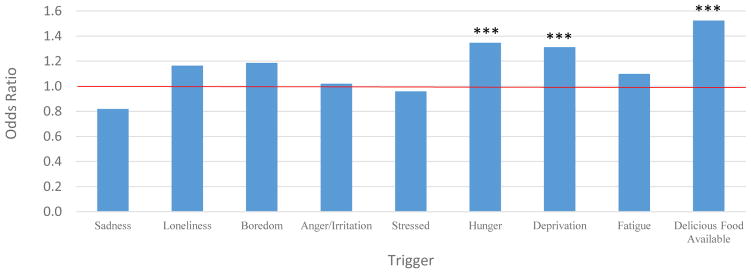
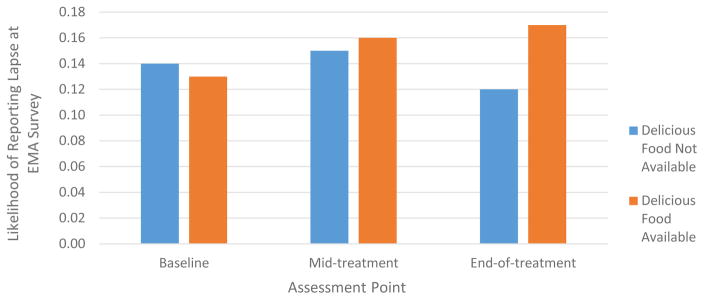
Results: Lapse frequency showed a curvilinear relationship over time, such that frequency first decreased and then increased. Lapse frequency at baseline was negatively associated with early and overall weight loss. Lapses most often occurred at home, in the evenings, on the weekends, and entailed eating a forbidden food. Greater overall levels of assessed affective and environmental triggers predicted lapses, and greater momentary hunger and deprivation, and the presence of palatable food, also prospectively predicted lapses.
Conclusions: In addition to characterizing lapse frequency, the current study identified prospective predictors of lapses across treatment. These findings support the importance of lapses to weight control and provide insight for potential targets of intervention to prevent lapse occurrence.
Keywords: Adherence; Behavioral weight loss; Dietary lapses; EMA; Ecological momentary assessment; Overweight.
Conflict of interest statement
Figures
References
-
- Yaemsiri S, Slining MM, Agarwal SK. Perceived weight status, overweight diagnosis, and weight control among US adults: the NHANES 2003–2008 Study. International Journal of Obesity. 2011;35:1063–1070. - PubMed
-
- Weinsier RL, Nagy TR, Hunter GR, et al. Do adaptive changes in metabolic rate favor weight regain in weight-reduced individuals? An examination of the set-point theory. The American journal of clinical nutrition. 2000;72:1088–1094. - PubMed
-
- Lowe MR. Self-Regulation of Energy Intake in the Prevention and Treatment of Obesity: Is It Feasible? Obesity research. 2003;11:44S–59S. - PubMed
-
- Brownell KD, Jeffery RW. Improving long-term weight loss: pushing the limits of treatment. Behavior Therapy. 1987;18:353–374.
MeSH terms
Grants and funding
LinkOut - more resources
Full Text Sources
Other Literature Sources
Medical
Research Materials
