


Incidence and outcomes of uterine rupture among women with prior caesarean section: WHO Multicountry Survey on Maternal and Newborn Health
- PMID: 28281576
- PMCID: PMC5345021
- DOI: 10.1038/srep44093
Incidence and outcomes of uterine rupture among women with prior caesarean section: WHO Multicountry Survey on Maternal and Newborn Health
Abstract
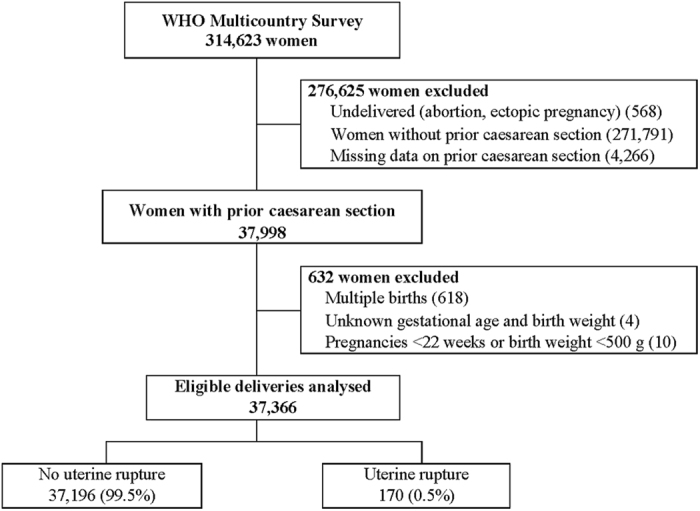
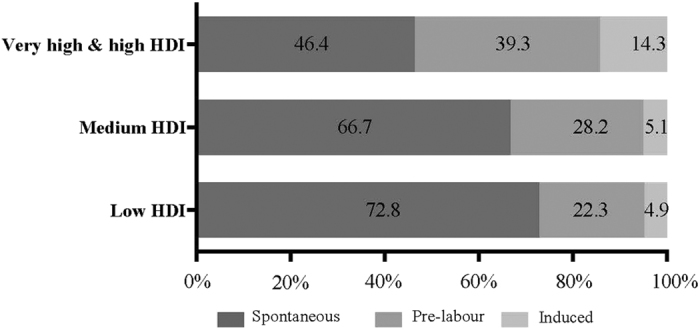
Caesarean section (CS) is increasing globally, and women with prior CS are at higher risk of uterine rupture in subsequent pregnancies. However, little is known about the incidence, risk factors, and outcomes of uterine rupture in women with prior CS, especially in developing countries. To investigate this, we conducted a secondary analysis of the World Health Organization Multicountry Survey on Maternal and Newborn Health, which included data on delivery from 359 facilities in 29 countries. The incidence of uterine rupture among women with at least one prior CS was 0.5% (170/37,366), ranging from 0.2% in high-Human Development Index (HDI) countries to 1.0% in low-HDI countries. Factors significantly associated with uterine rupture included giving birth in medium- or low-HDI countries (adjusted odds ratio [AOR] 2.0 and 3.88, respectively), lower maternal educational level (≤6 years) (AOR 1.71), spontaneous onset of labour (AOR 1.62), and gestational age at birth <37 weeks (AOR 3.52). Women with uterine rupture had significantly higher risk of maternal death (AOR 4.45) and perinatal death (AOR 33.34). Women with prior CS, especially in resource-limited settings, are facing higher risk of uterine rupture and subsequent adverse outcomes. Further studies are needed for prevention/management strategies in these settings.
Conflict of interest statement
The authors declare no competing financial interests.
Figures
References
Publication types
MeSH terms
Grants and funding
LinkOut - more resources
Full Text Sources
Other Literature Sources
Medical
