


Membrane vesicle-mediated bacterial communication
- PMID: 28282039
- PMCID: PMC5437348
- DOI: 10.1038/ismej.2017.13
Membrane vesicle-mediated bacterial communication
Abstract
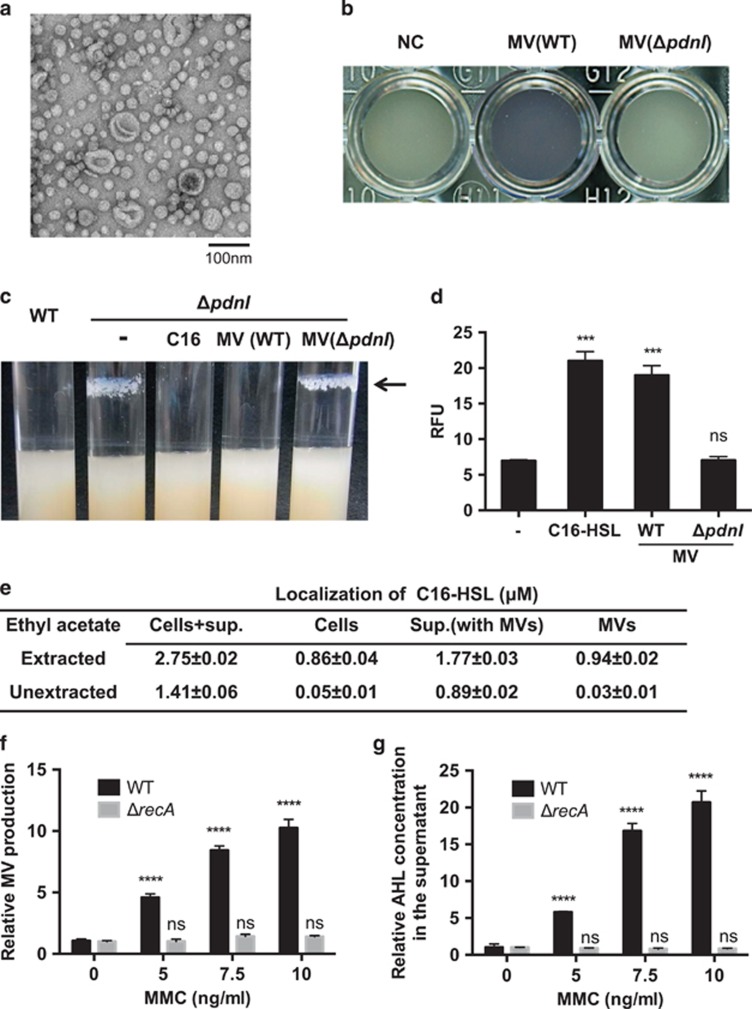
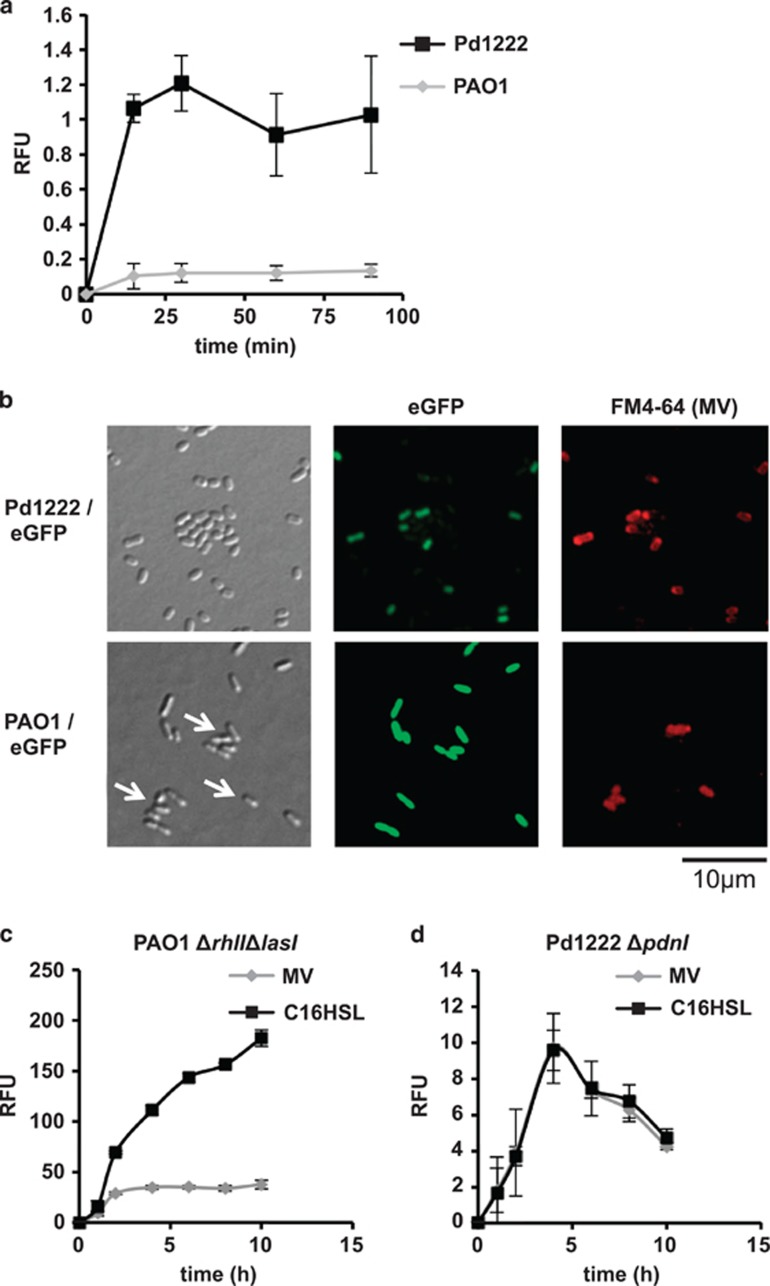
The classical quorum-sensing (QS) model is based on the assumption that diffusible signaling molecules accumulate in the culture medium until they reach a critical concentration upon which expression of target genes is triggered. Here we demonstrate that the hydrophobic signal N-hexadecanoyl-L-homoserine lactone, which is produced by Paracoccus sp., is released from cells by the aid of membrane vesicles (MVs). Packed into MVs, the signal is not only solubilized in an aqueous environment but is also delivered with varying propensities to different bacteria. We propose a novel MV-based mechanism for binary trafficking of hydrophobic signal molecules, which may be particularly relevant for bacteria that live in open aqueous environments.
Conflict of interest statement
The authors declare no conflict of interest.
Figures
References
-
- Biller SJ, Schubotz F, Roggensack SE, Thompson AW, Summons RE, Chisholm SW. (2014). Bacterial vesicles in marine ecosystems. Science 343: 183–186. - PubMed
-
- Buddrus-Schiemann K, Rieger M, Mühlbauer M, Barbarossa MV, Kuttler C, Hense BA et al. (2014). Analysis of N-acylhomoserine lactone dynamics in continuous cultures of Pseudomonas putida IsoF by use of ELISA and UHPLC/qTOF-MS-derived measurements and mathematical models. Anal Bioanal Chem 406: 6373–6383. - PubMed
MeSH terms
Substances
LinkOut - more resources
Full Text Sources
Other Literature Sources
