. 2017 Mar 10;13(3):e1006669.
doi: 10.1371/journal.pgen.1006669. eCollection 2017 Mar.

The transjugation machinery of Thermus thermophilus: Identification of TdtA, an ATPase involved in DNA donation

Affiliations

The transjugation machinery of Thermus thermophilus: Identification of TdtA, an ATPase involved in DNA donation

Alba Blesa et al. PLoS Genet. .

Abstract

In addition to natural competence, some Thermus thermophilus strains show a high rate of DNA transfer via direct cell-to-cell contact. The process is bidirectional and follows a two-step model where the donor cell actively pushes out DNA and the recipient cell employs the natural competence system to take up the DNA, in a hybrid transformation-dependent conjugation process (transjugation). While the DNA uptake machinery is well known as in other bacterial species that undergo transformation, the pushing step of transjugation remains to be characterized. Here we have searched for hypothetical DNA translocases putatively involved in the pushing step of transjugation. Among candidates encoded by T. thermophilus HB27, the TdtA protein was found to be required for DNA pushing but not for DNA pulling during transjugation, without affecting other cellular processes. Purified TdtA shows ATPase activity and oligomerizes as hexamers with a central opening that can accommodate double-stranded DNA. The tdtA gene was found to belong to a mobile 14 kbp-long DNA element inserted within the 3' end of a tRNA gene, flanked by 47 bp direct repeats. The insertion also encoded a homolog of bacteriophage site-specific recombinases and actively self-excised from the chromosome at high frequency to form an apparently non-replicative circular form. The insertion also encoded a type II restriction endonuclease and a NurA-like nuclease, whose activities were required for efficient transjugation. All these data support that TdtA belongs to a new type of Integrative and Conjugative Element which promotes the generalized and efficient transfer of genetic traits that could facilitate its co-selection among bacterial populations.


Conflict of interest statement

The authors have declared that no competing interests exist.

Figures
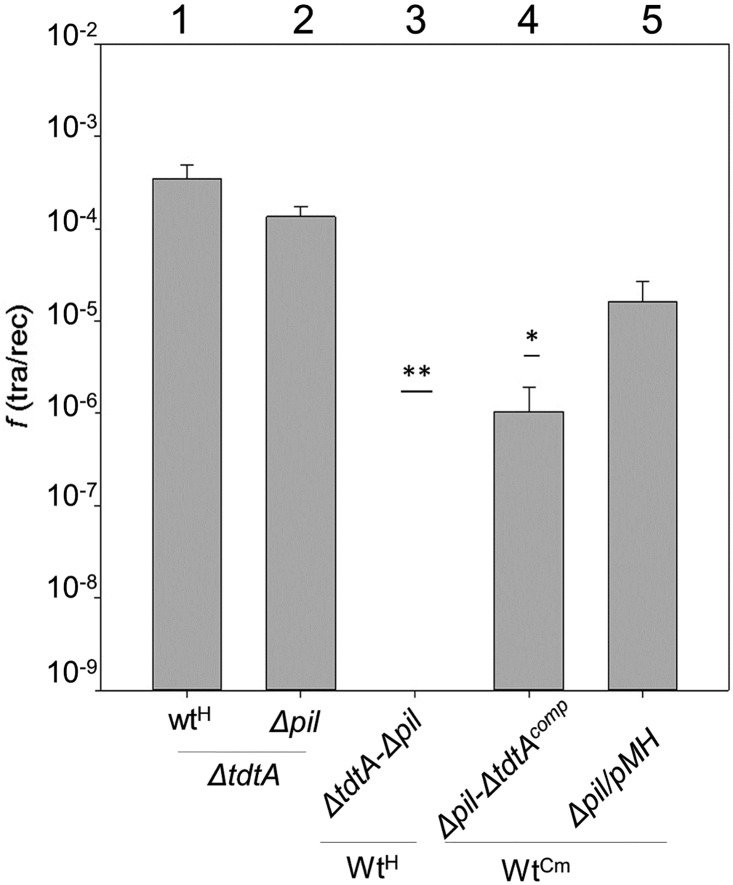
Fig 1
Fig 1. The product of TTC1879 (TdtA) is required for transjugation.
Transfer frequencies are expressed as the ratio of transjugant: wild type CFU. Bars 1 and 2 correspond to matings between a tdtA mutant (ΔtdtA) and a Hygr wild type strain (wtH) (1) or a ΔpilA4 competence mutant (Δpil) (2). Mating between the wtH strain and a double tdtA and ΔpilA4 mutant (ΔtdtA-ΔpilA) rendered no transjugants (3). The expression of TdtA from a plasmid in this double mutant (Δpil-ΔtdtAcomp) allowed for the generation of transjugants in matings with a Cmr wild type (wtCm) (4). Control matings between the same wtCm strain and a single ΔpilA4 mutant carrying the empty plasmid (Δpil/pMH) showed a 10-fold higher transjugation frequency (5). ANOVA tests showed significant differences among frequencies of transfer of all the derivatives plotted (p-value< 0.001) and post-hoc Holm Sidak tests proved that absence of tdtA has an effect on transjugation (n = 8). Asterisks indicate significant statistical differences compared to the wild type (*: p-value>0.05;**p-value<0.001).
Fig 2
Fig 2. TdtA is required in the donor strain for transjugation.
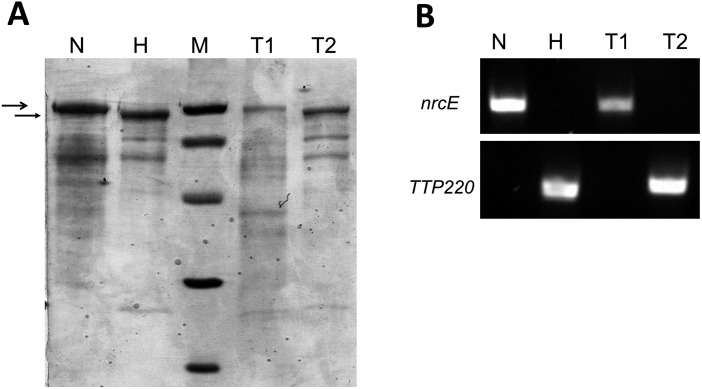
(A) SDS-PAGE electrophoresis showing membrane protein profiles. Patterns corresponding to the ΔtdtA::kat mutants derived from NAR1 (N) and HB27 (H) and the corresponding patterns after transjugation between NAR1-ΔtdtA and HB27-Wt (T1) and between HB27-ΔtdtA and NAR1-Wt (T2). Lane M shows protein molecular standards at 97.4, 66.2, 45, 31, and 21.5 kDa. Large and small arrowheads signal the S layer proteins of 100 kDa and 97 kDa corresponding to the NAR1 and HB27 strains, respectively, used as main strain identification marker. Note the similarities between lanes N and T1, and between lanes H and T2, supporting that transjugants derive from the respective tdtA mutant in the matings. (B) Agarose gel electrophoresis showing PCR amplicons of nrcE (upper panel), specific to the NAR1 strain, and ttp0220 (lower panel), specific to the HB27 strain using DNA extracted from ΔtdtA::kat mutants derived from NAR1 (N) and HB27 (H), the transjugants pool from mating experiments between NAR1-ΔtdtA and HB27-Wt (T1), and the transjugants pool of the reciprocal mating between HB27-ΔtdtA and NAR1-Wt (T2). Oligonucleotide sequences are shown in S2 Table.
Fig 3
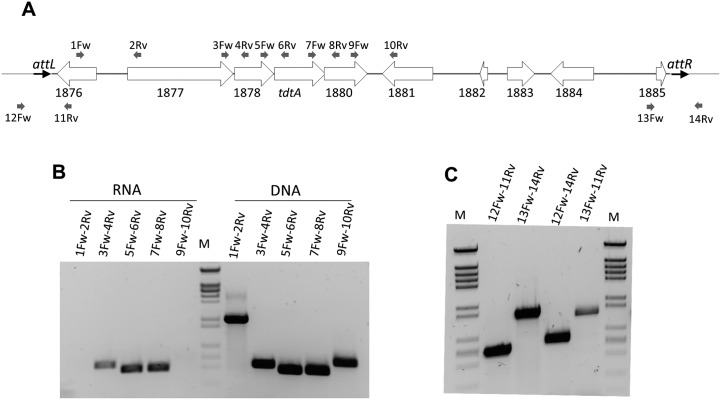
Fig 3. TdtA is encoded within an active ICE-like element.
(A) Scheme showing the context of tdtA in the HB27 chromosome. White arrows represent ORFs encoded by the genes indicated underneath and are scaled proportionally to their size. The thick grey line is also proportional to the length of the whole ICEth1. Small grey arrows represent the relative position of primers employed in RT-PCR assays shown in panel B. (B) RT-PCR assays with the indicated primer pairs were conducted to amplify the intergenic regions between the genes TTC1877-1878-tdtA-1880. Parallel control PCRs performed on genomic DNA are shown at the right. (C) Agarose gel showing PCR amplification from genomic DNA of exponential cultures of T. thermophilus HB27 with the indicated primers to detect the ends of the ICEth1 in its integrated form (12Fw-11Rv and 13Fw-14Rv), the DNA scar produced by it excision (12Fw-14Rv), and the excised circular form (13Fw-11Rv).
Fig 4
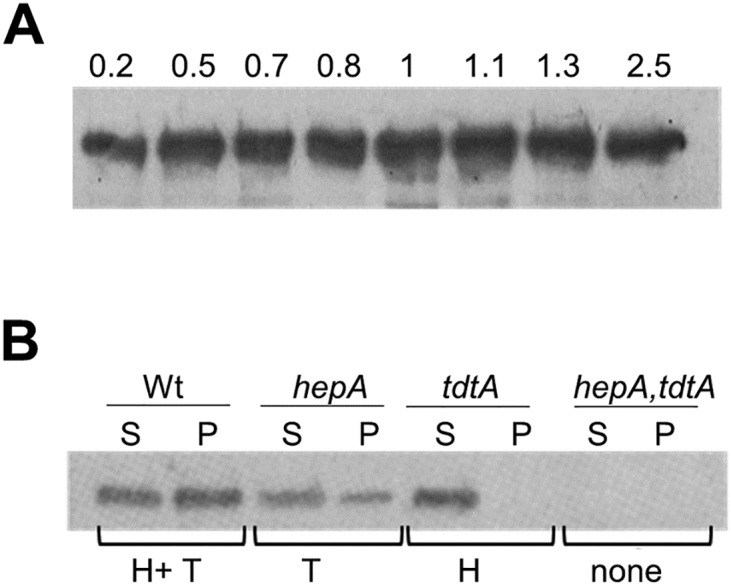
Fig 4. Expression and subcellular localization of TdtA.
(A) The expression of the TdtA-YFP fusion from its native promoter in the chromosome was followed by western blot with anti-GFP antiserum throughout growth at 60°C. Identical cell mass was analyzed at the indicated optical densities at 550 nm (B) Western blot with an antiserum that cross-reacts with both TdtA and a HerA-like protein (product of TTC0147 baptized as HepA) was used to localize the proteins in soluble (S) and non-soluble (P) fractions from the following strains of T. thermophilus HB27: wild type (Wt), ΔhepA::kat (hepA), ΔtdtA::kat (tdtA) and ΔtdtA::kat, hepA::hyg (hepA,tdtA). The proteins detected in each case are indicated underneath: TdtA (T) and HepA (H).
Fig 5
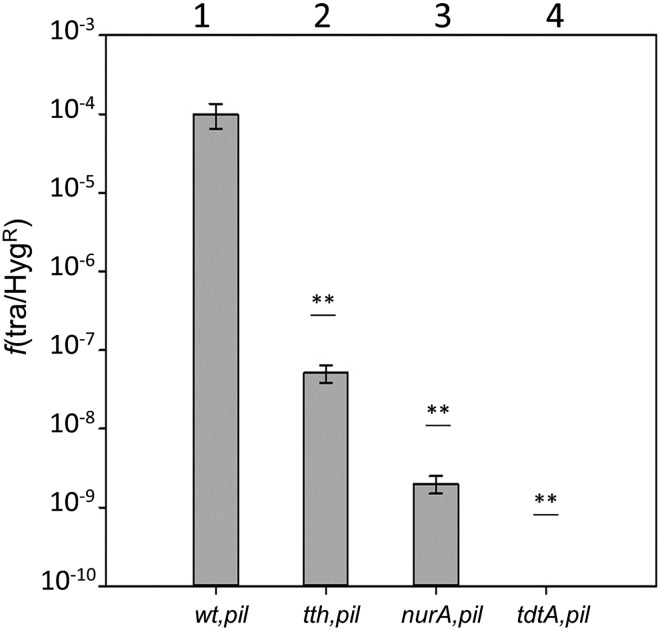
Fig 5. Effects of the NurA-homolog and Tth111II on transjugation.
The frequencies of transjugation assays between pilA mutants labeled with kanamycin at the gdh (wt,pil) locus (1), or at the genes encoding Tth111II (tth,pil) (2), NurA-like (nurA,pil) (3) or TdtA (tdtA,pilA) (4) and a wild type strain labeled with Hygr are shown. Asterisks indicate significant statistical differences compared to the wild type (p-value<0.001) (n = 6).
Fig 6
Fig 6. Transjugation is associated with presence of ICEth1.
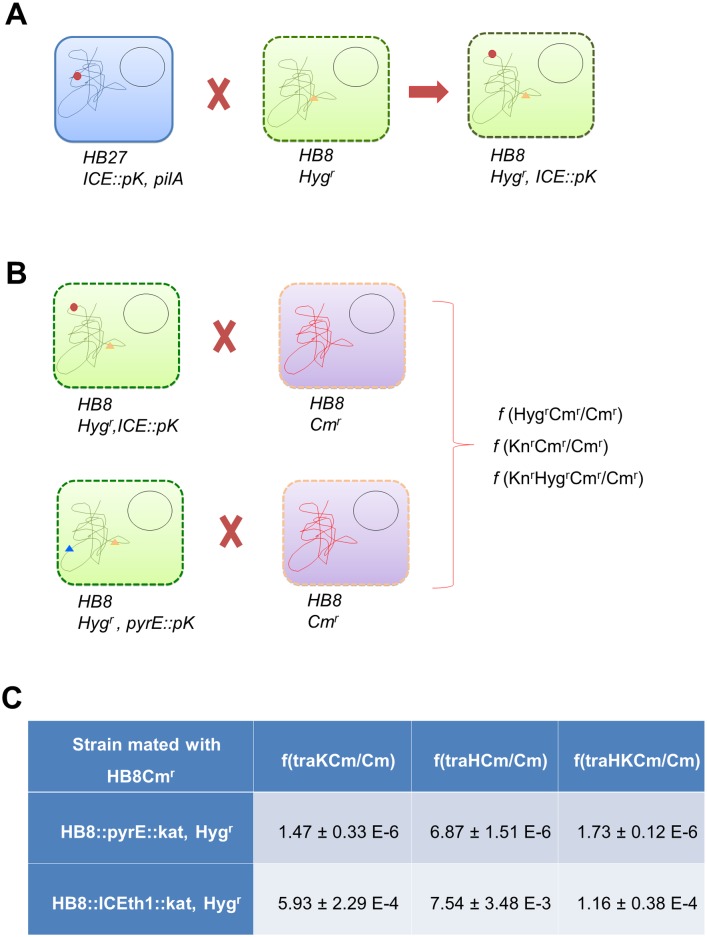
Scheme of the experimental design followed to unequivocally associate ICEth1 and transjugation efficiency. (A) ICEth1 (red dot) was labeled with Kmr (ICEth1::pK) in a HB27ΔpilA4 background and transjugated into an HB8 strain labeled with Hygr (orange triangle), which naturally lacks this element. (B) The HB8 containing ICEth1 (Hygr, Kmr) was mated with a Cmr derivative of HB8, using a Hygr, pyrE::pK (blue triangle) strain as a control. (C) Transfer frequencies detected for the matings described in B above. Frequencies of the ICEth1-containing strain are the average value from 7 donor clones in three independent experiments. A similar number of assays were carried out for the strain lacking ICEth1.
Fig 7
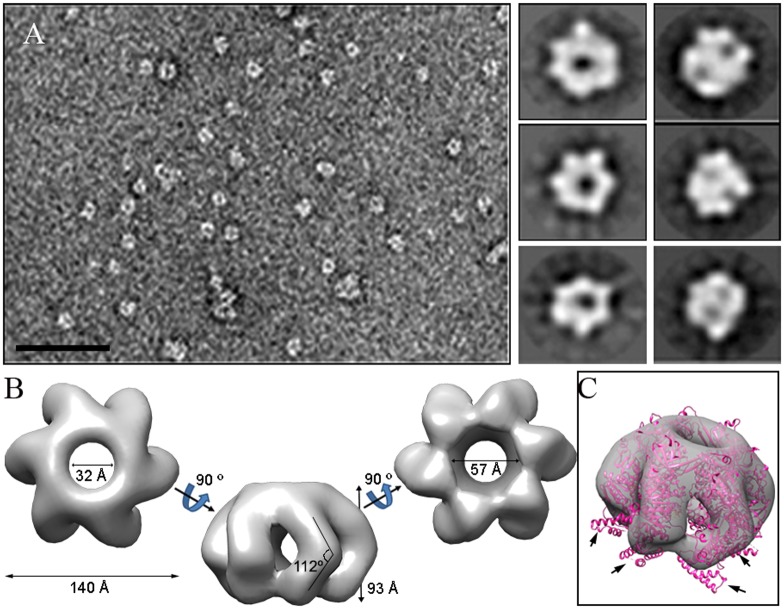
Fig 7. TdtA single-particle electron microscopy reconstruction.
(A) Representative electron micrograph of a negatively stained TdtA sample; bar = 50 nm. Six two-dimensional averaged classes of the oligomeric TdtA are shown (right). (B) Three-dimensional reconstruction of the hexameric TdtA. (C) Semitransparent model of the hexameric TdtA with the fitted atomic model of the hexameric HerA from S. solfataricus (pink). Arrows indicate the HerA region (residues 216–289), which remains outside the TdtA ring.
Fig 8
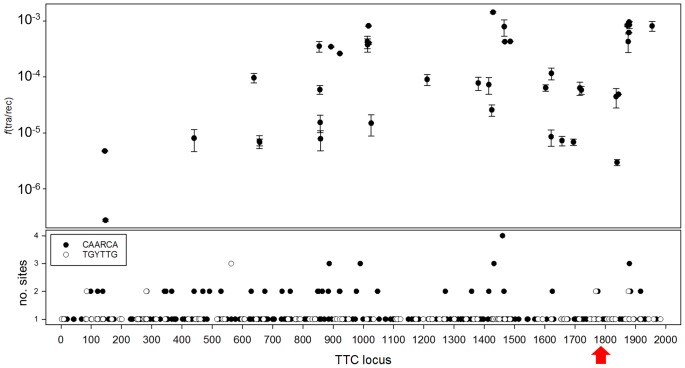
Fig 8. Distribution of Tth111II recognition sites and transjugation efficiencies in the HB27 chromosome.
The bottom panel shows the gene locus linear map representation of the HB27 chromosome (TTC locus 1 to 1988) and the number of Tth111II recognition sites per gene found on the top (black circles) or bottom strand (empty circles). The upper panel shows the transjugation frequencies for 42 chromosomal genes (TTC::kat mutants described in Table 2) represented at their corresponding position in the linear map of the chromosome (n = 3). Note how the transjugation frequencies are higher in regions with greater presence of Tth111II recognition sites. The red arrow indicates the position of ICEth1.

References

    1. Ochman H, Lawrence JG, Groisman EA (2000) Lateral gene transfer and the nature of bacterial innovation. Nature 405: 299–304. 10.1038/35012500 - DOI - PubMed
    1. Smillie C, Garcillan-Barcia MP, Francia MV, Rocha EP, de la Cruz F (2010) Mobility of plasmids. Microbiol Mol Biol Rev 74: 434–452. 10.1128/MMBR.00020-10 - DOI - PMC - PubMed
    1. Thomas CM, Nielsen KM (2005) Mechanisms of, and barriers to, horizontal gene transfer between bacteria. Nat Rev Microbiol 3: 711–721. 10.1038/nrmicro1234 - DOI - PubMed
    1. Nelson K, Clayton R, Gill S, Gwinn M, Dodson R, et al. (1999) Evidence for lateral gene transfer between Archaea and bacteria from genome sequence of Thermotoga maritima. Nature 399: 323–329. 10.1038/20601 - DOI - PubMed
    1. Lanka E, Wilkins BM (1995) DNA Processing Reactions in Bacterial Conjugation. Annual Review of Biochemistry 64: 141–169. 10.1146/annurev.bi.64.070195.001041 - DOI - PubMed

MeSH terms