


Assessment of 105 Patients with Angiotensin Converting Enzyme-Inhibitor Induced Angioedema
- PMID: 28286522
- PMCID: PMC5329677
- DOI: 10.1155/2017/1476402
Assessment of 105 Patients with Angiotensin Converting Enzyme-Inhibitor Induced Angioedema
Erratum in
-
Corrigendum to "Assessment of 105 Patients with Angiotensin Converting Enzyme-Inhibitor Induced Angioedema".Int J Otolaryngol. 2018 Mar 1;2018:9169414. doi: 10.1155/2018/9169414. eCollection 2018. Int J Otolaryngol. 2018. PMID: 29686707 Free PMC article.
Abstract
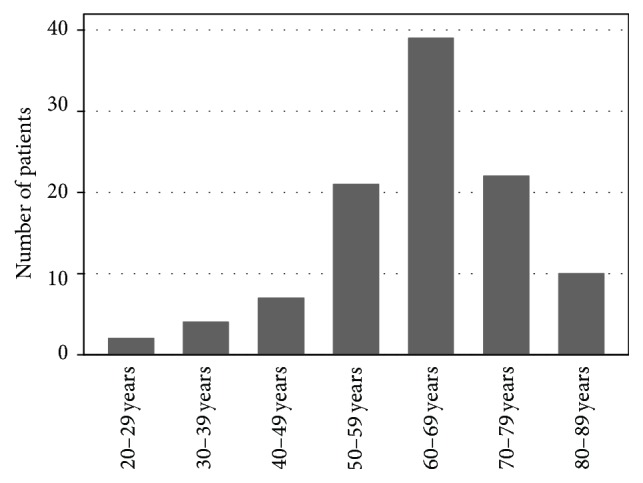
Objective. To asses a cohort of 105 consecutive patients with angiotensin converting enzyme-inhibitor induced angioedema with regard to demographics, risk factors, family history of angioedema, hospitalization, airway management, outcome, and use of diagnostic codes used for the condition. Study Design. Cohort study. Methods. This was a retrospective cohort study of 105 patients with angiotensin converting enzyme-inhibitor induced angioedema in the period 1995-2014. Results. The cohort consisted of 67 females and 38 males (F : M ratio 1.8), with a mean age of 63 [range 26-86] years. Female gender was associated with a significantly higher risk of angiotensin converting enzyme-inhibitor induced angioedema. 6.7% had a positive family history of angioedema. Diabetes seemed to be a protective factor with regard to angioedema. 95% experienced angioedema of the head and neck. 4.7% needed intubation or tracheostomy. 74 admissions took place during the study period with a total of 143 days spent in the hospital. The diagnosis codes most often used for this condition were "DT783 Quincke's oedema" and "DT78.4 Allergy unspecified". Complement C1 inhibitor was normal in all tested patients. Conclusion. Female gender predisposes to angiotensin converting enzyme-inhibitor induced angioedema, whereas diabetes seems to be a protective factor.
Conflict of interest statement
Dr. Eva Rye Rasmussen has previously collaborated with Shire®, MSD Norway®, CSL Behring®, and Viropharma® regarding research and teaching within the field of hereditary and pharmacologically induced angioedema. Anette Bygum has received research grant support and/or speaker/consultancy fees from CSL Behring, Viropharma, and Shire/Jerini AG and participated in a clinical trial for Jerini AG and BioCryst. She is an advisor for the HAE Scandinavian Patient Organization. She is a member of the IOS Steering Committee and participates in a clinical study in collaboration with BioCryst. Viropharma is now part of the Shire group of companies. Shire® has previously supported Dr. Eva Rye Rasmussen with a research grant for her studies on other skin manifestations in angioedema patients.
References
-
- Holm J. P. Y., Ovesen T. Increasing rate of angiotensin-converting enzyme inhibitor-related upper airway angio-oedema. Danish Medical Journal. 2012;59(6)A4449 - PubMed
LinkOut - more resources
Full Text Sources
Other Literature Sources
