


A novel combination of four flavonoids derived from Astragali Radix relieves the symptoms of cyclophosphamide-induced anemic rats
- PMID: 28286727
- PMCID: PMC5337903
- DOI: 10.1002/2211-5463.12146
A novel combination of four flavonoids derived from Astragali Radix relieves the symptoms of cyclophosphamide-induced anemic rats
Abstract
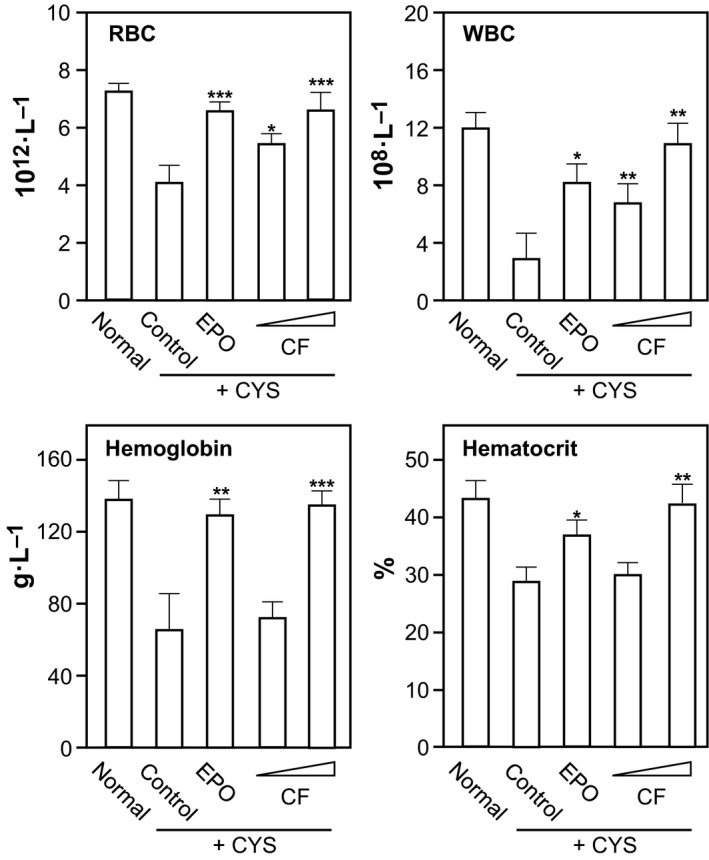
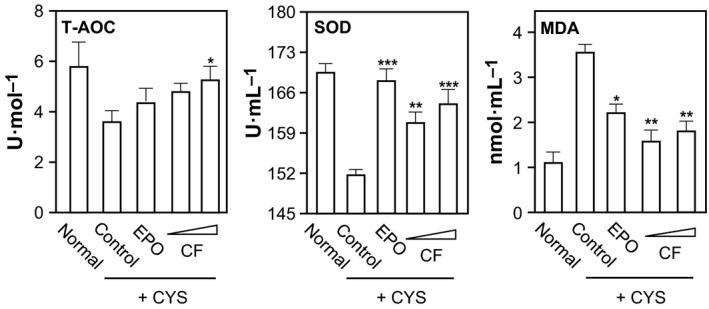
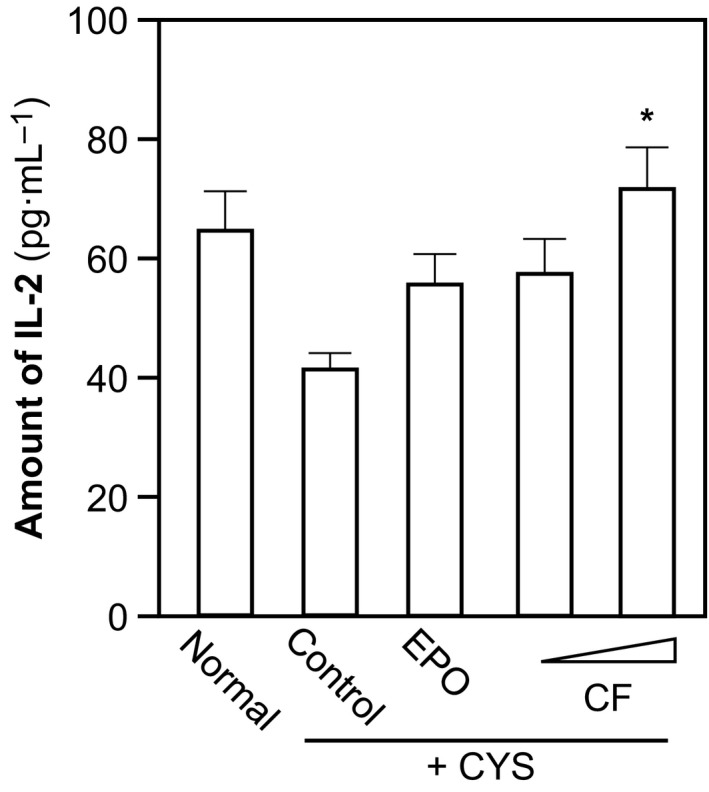
By using a feedback system control scheme, the best combination of formononetin, ononin, calycosin, and calycosin-7-O-β-d-glucoside derived from Astragali Radix was shown to activate a hypoxia response element, a regulator for erythropoietin (EPO) transcription, in kidney fibroblast. In cyclophosphamide-induced anemic rats, the treatment of combined flavonoids, or EPO, improved the levels of red blood cells, white blood cells, hemoglobin, and hematocrit. In addition, the altered levels of antioxidant capacity, super oxidase dismutase, and malondialdehyde, triggered in anemic rats, were restored to control levels by the treatment of flavonoids. Here, we proposed a possible therapy by using the common flavonoids in treating anemia.
Keywords: feedback system control; flavonoids combination; hematological parameters.
Figures
References
-
- Borrows R, Loucaidou M, Chusney G, Borrows S, Tromp JV, Cairns T, Griffith M, Hakim N, McLean A, Palmer A et al (2008) Anaemia and congestive heart failure early post‐renal transplantation. Nephrol Dial Transplant 23, 1728–1734. - PubMed
-
- Dunne JR, Malone D, Tracy JK, Gannon C and Napolitano LM (2002) Perioperative anemia: an independent risk factor for infection, mortality, and resource utilization in surgery. J Surg Res 102, 237–244. - PubMed
-
- Gianni L, Cole BF, Panzini I, Snyder R, Holmberg SB, Byrne M, Crivellari D, Colleoni M, Aebi S, Simoncini E et al (2008) Anemia during adjuvant non‐taxane chemotherapy for early breast cancer: incidence and risk factors from two trials of the International Breast Cancer Study Group. Support Care Cancer 16, 67–74. - PubMed
-
- Claster S (2002) Biology of anemia, differential diagnosis, and treatment options in human immunodeficiency virus infection. J Infect Dis 185, 105–109. - PubMed
-
- Sloand E, Kumar P, Klein HG, Merritt S and Sacher R (1994) Transfusion of blood components to persons infected with human immunodeficiency virus type 1: relationship to opportunistic infection. Transfusion 34, 48–53. - PubMed
LinkOut - more resources
Full Text Sources
Other Literature Sources
Research Materials
