


Effect of dabigatran on a prothrombinase-based assay for detecting activated protein C resistance: an ex vivo and in vitro study in normal subjects and factor V Leiden carriers
- PMID: 28287382
- PMCID: PMC5649966
- DOI: 10.2450/2017.0199-16
Effect of dabigatran on a prothrombinase-based assay for detecting activated protein C resistance: an ex vivo and in vitro study in normal subjects and factor V Leiden carriers
Abstract
Background: The aim of this study was to evaluate ex vivo and in vitro interference of a direct factor IIa inhibitor, dabigatran, on a prothrombinase-based assay to detect activated protein C resistance.
Materials and methods: An ex vivo study was performed in six heterozygous factor V Leiden carriers and 12 normal subjects without the factor V Leiden mutation who were treated with dabigatran. An in vitro study was also performed considering 12 plasma samples (six from normal subjects and six from heterozygous factor V Leiden carriers) spiked with dabigatran. The dabigatran concentration was evaluated using a diluted thrombin time assay, activated protein C resistance was evaluated using a prothrombinase-based assay.
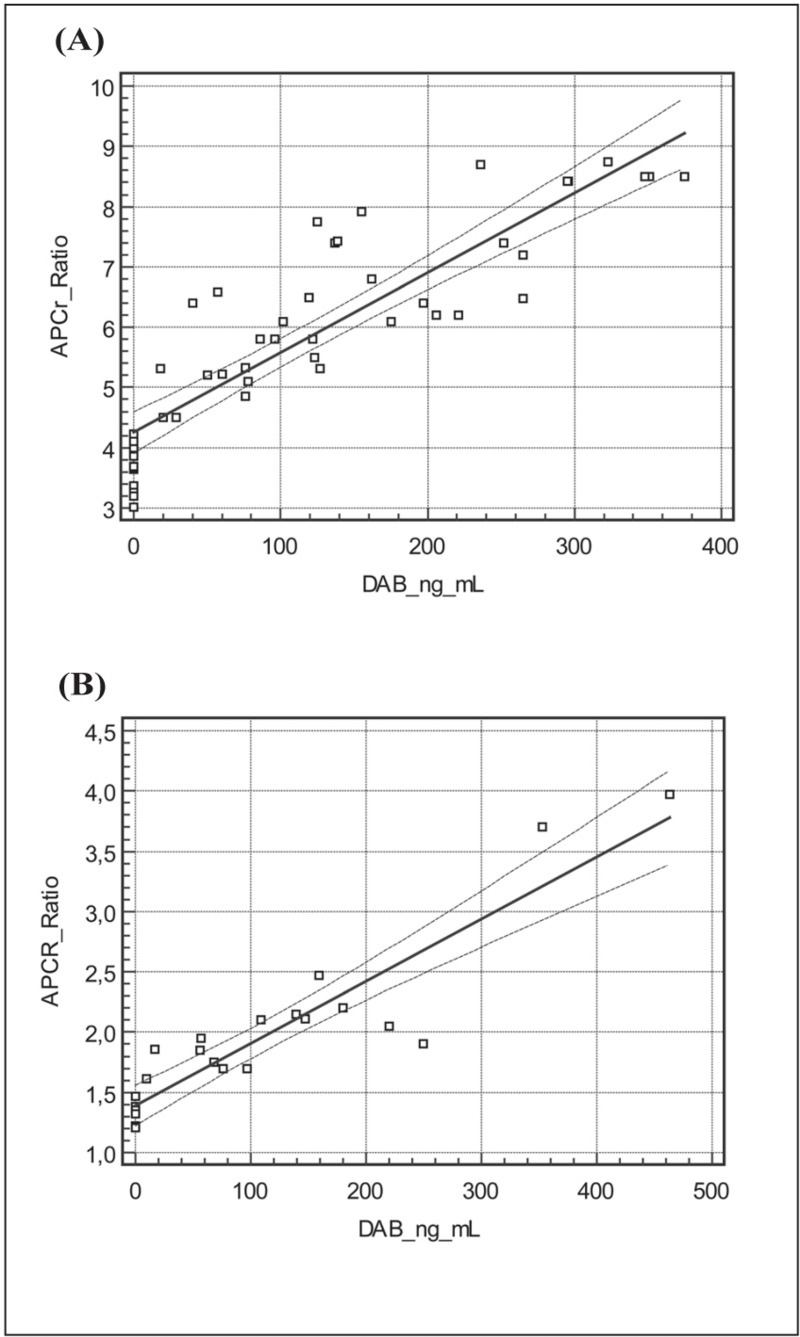
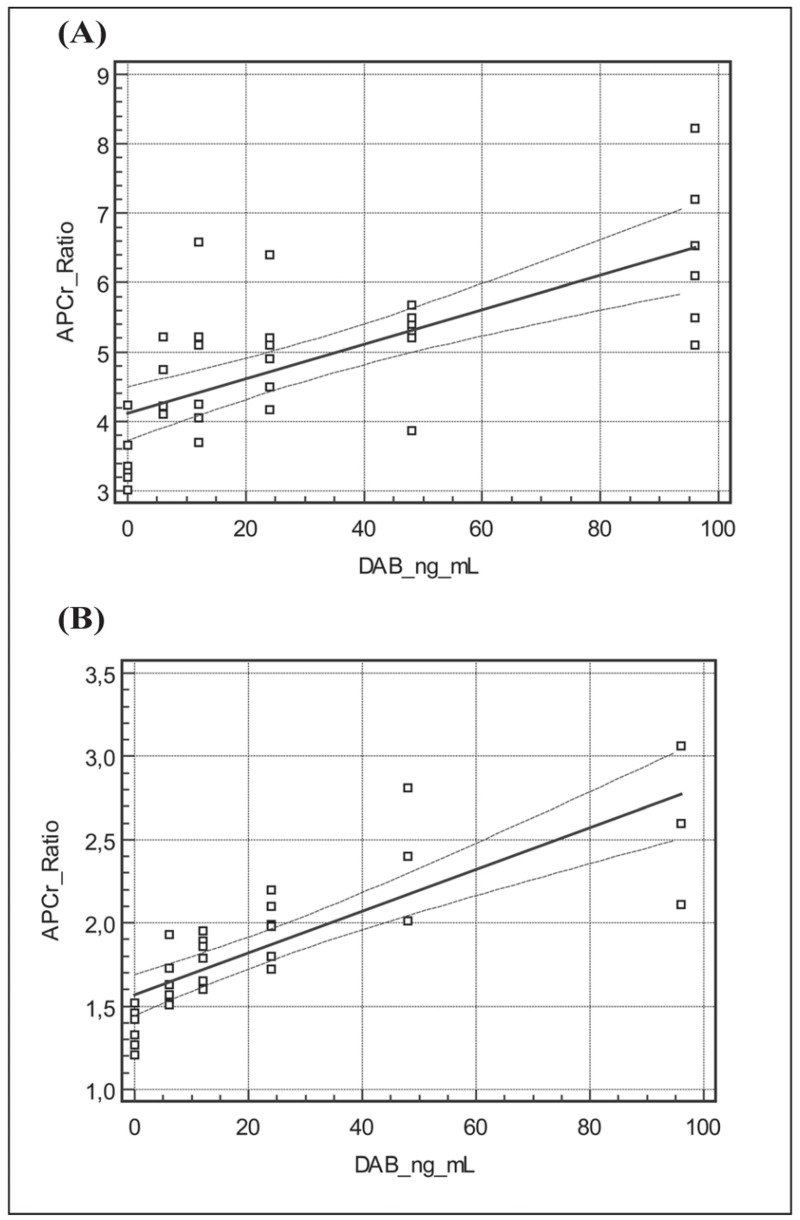
Results: In both the ex vivo and in vitro studies dabigatran interfered significantly with activated protein C resistance ratios observed in normal subjects and in factor V Leiden heterozygous carriers.
Discussion: The results reported in this paper seem to confirm that dabigatran is able to interfere with the Penthafarm prothrombinase-based assay used to study activated protein C resistance, significantly increasing observed ratios. This effect appears to be present already at low concentrations of dabigatran (6 ng/mL) and affects both normal subjects and heterozygous carriers of factor V Leiden. In this group of patients, dabigatran, at concentrations in the therapeutic range (100-200 ng/mL), could markedly increase the activated protein C resistance ratio, bringing it up to within the reference range for normal subjects, thus potentially leading to misclassification of patients.
Conflict of interest statement
GG, SV, LV, FG and RV are employers of Italian National Health Service. PC is an employee of DASIT SpA.
Figures
Comment in
-
Interference of direct oral anticoagulants in haemostasis assays: high potential for diagnostic false positives and false negatives.Blood Transfus. 2017 Oct;15(6):491-494. doi: 10.2450/2017.0301-16. Epub 2017 Mar 7. Blood Transfus. 2017. PMID: 28287385 Free PMC article. No abstract available.
References
-
- Van Cott EM, Khor B, Zehnder JL. Factor V Leiden. Am J Hematol. 2016;91:46–9. - PubMed
-
- Saemundsson Y, Sveinsdottir SV, Svantesson H, et al. Homozygous factor V Leiden and double heterozygosity for factor V Leiden and prothrombin mutation. J Thromb Thrombolysis. 2013;36:324–31. - PubMed
-
- Kadauke S, Khor B, Van Cott EM. Activated protein C resistance testing for factor V Leiden. Am J Hematol. 2014;89:1147–50. - PubMed
-
- de Ronde H, Bertina RM. Laboratory diagnosis of APC-resistance: a critical evaluation of the test and the development of diagnostic criteria. Thromb Haemost. 1994;72:880–6. - PubMed
-
- Quehenberger P, Handler S, Mannhalter C, et al. The factor V (Leiden) test: evaluation of an assay based on dilute Russell viper venom time for the detection of the factor V Leiden mutation. Thromb Res. 1999;96:125–33. - PubMed
MeSH terms
Substances
LinkOut - more resources
Full Text Sources
