


Paediatric early warning systems for detecting and responding to clinical deterioration in children: a systematic review
- PMID: 28289051
- PMCID: PMC5353324
- DOI: 10.1136/bmjopen-2016-014497
Paediatric early warning systems for detecting and responding to clinical deterioration in children: a systematic review
Abstract
Objective: To systematically review the available evidence on paediatric early warning systems (PEWS) for use in acute paediatric healthcare settings for the detection of, and timely response to, clinical deterioration in children.
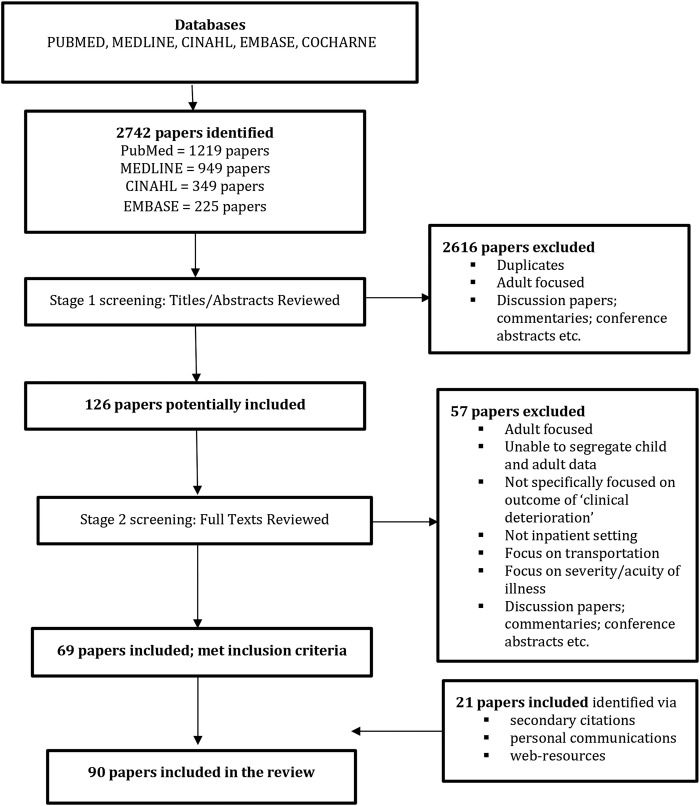
Method: The electronic databases PubMed, MEDLINE, CINAHL, EMBASE and Cochrane were searched systematically from inception up to August 2016. Eligible studies had to refer to PEWS, inclusive of rapid response systems and teams. Outcomes had to be specific to the identification of and/or response to clinical deterioration in children (including neonates) in paediatric hospital settings (including emergency departments). 2 review authors independently completed the screening and selection process, the quality appraisal of the retrieved evidence and data extraction; with a third reviewer resolving any discrepancies, as required. Results were narratively synthesised.
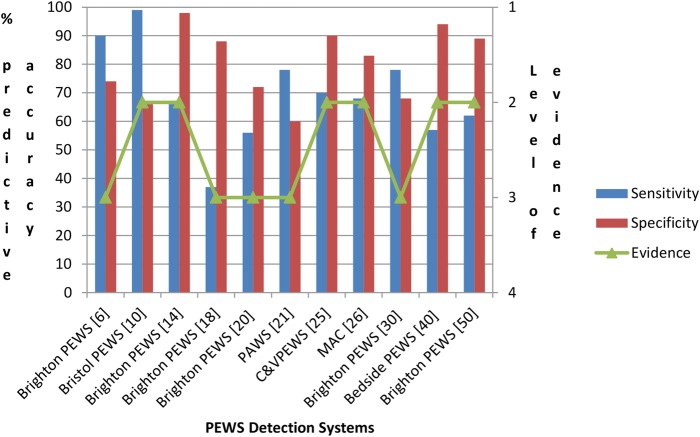
Results: From a total screening of 2742 papers, 90 papers, of varied designs, were identified as eligible for inclusion in the review. Findings revealed that PEWS are extensively used internationally in paediatric inpatient hospital settings. However, robust empirical evidence on which PEWS is most effective was limited. The studies examined did however highlight some evidence of positive directional trends in improving clinical and process-based outcomes for clinically deteriorating children. Favourable outcomes were also identified for enhanced multidisciplinary team work, communication and confidence in recognising, reporting and making decisions about child clinical deterioration.
Conclusions: Despite many studies reporting on the complexity and multifaceted nature of PEWS, no evidence was sourced which examined PEWS as a complex healthcare intervention. Future research needs to investigate PEWS as a complex multifaceted sociotechnical system that is embedded in a wider safety culture influenced by many organisational and human factors. PEWS should be embraced as a part of a larger multifaceted safety framework that will develop and grow over time with strong governance and leadership, targeted training, ongoing support and continuous improvement.
Keywords: PEWS; Paediatric early warning system; children; clinical deterioration; systematic review.
Published by the BMJ Publishing Group Limited. For permission to use (where not already granted under a licence) please go to http://www.bmj.com/company/products-services/rights-and-licensing/.
Conflict of interest statement
Figures
References
-
- Confidential Enquiry into Maternal and Child Health (CEMACH). Why children die—a pilot study 2006. London: CEMACH, 2008.
-
- Van Leuvan C, Mitchell I. Missed opportunities? An observational study of vital sign measurements. Crit Care Resusc 2008;10:111–5. - PubMed
Publication types
MeSH terms
LinkOut - more resources
Full Text Sources
Other Literature Sources
Medical
