


Biological regulation of atmospheric chemistry en route to planetary oxygenation
- PMID: 28289223
- PMCID: PMC5380067
- DOI: 10.1073/pnas.1618798114
Biological regulation of atmospheric chemistry en route to planetary oxygenation
Abstract
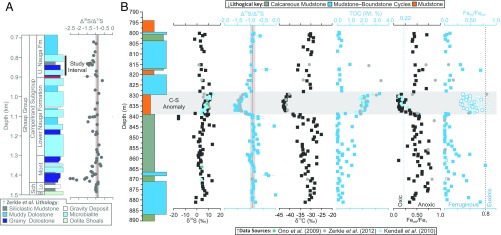
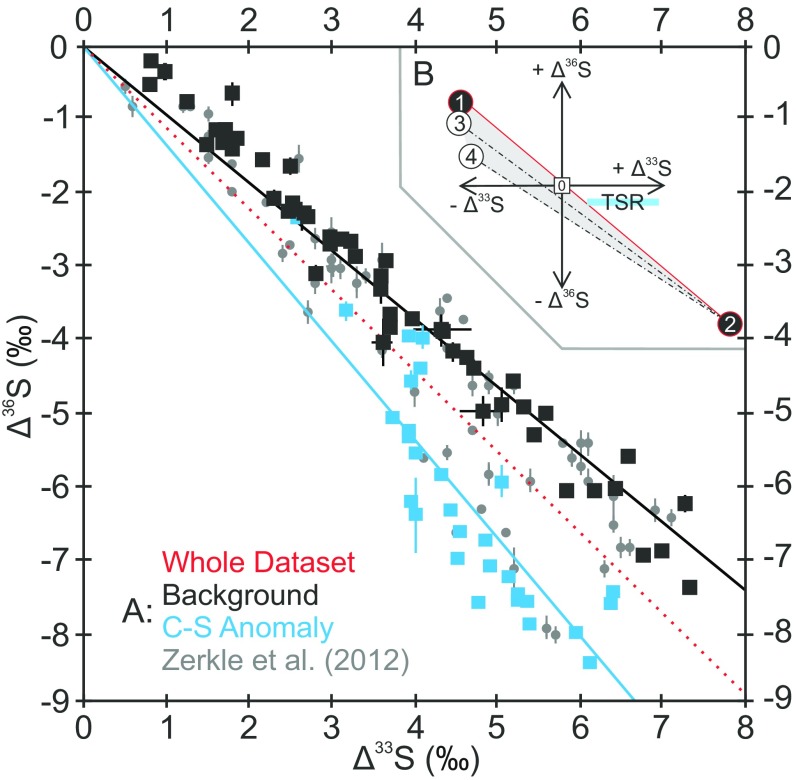
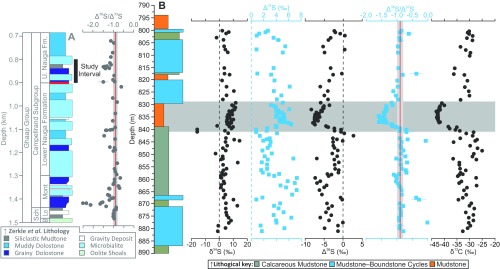
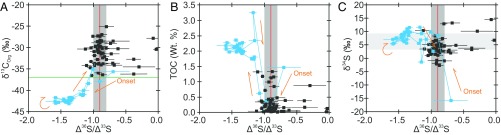
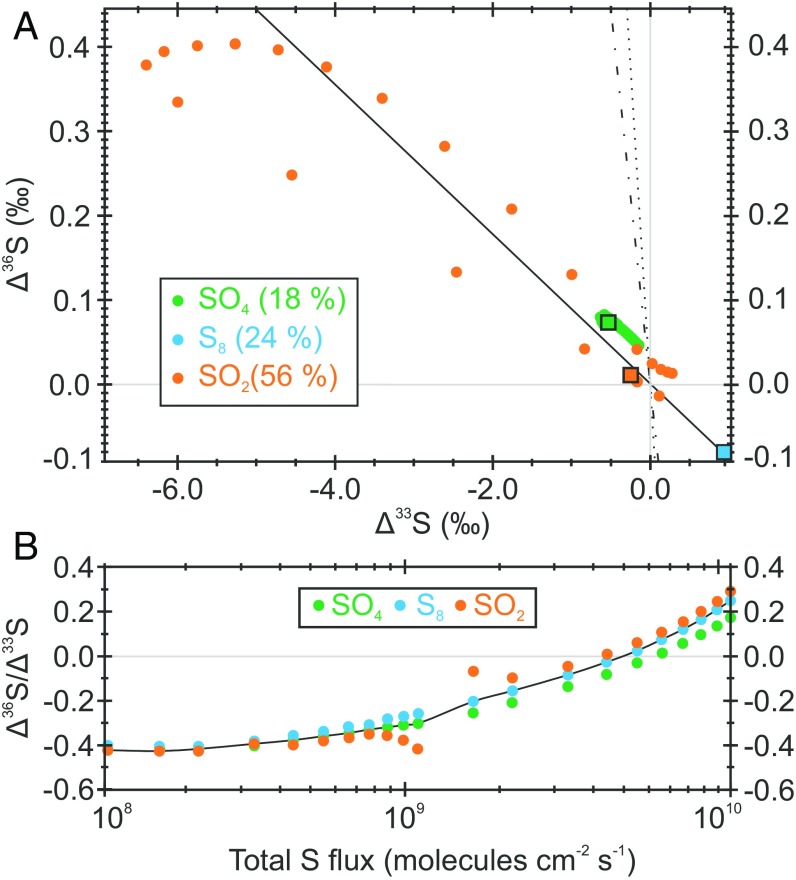
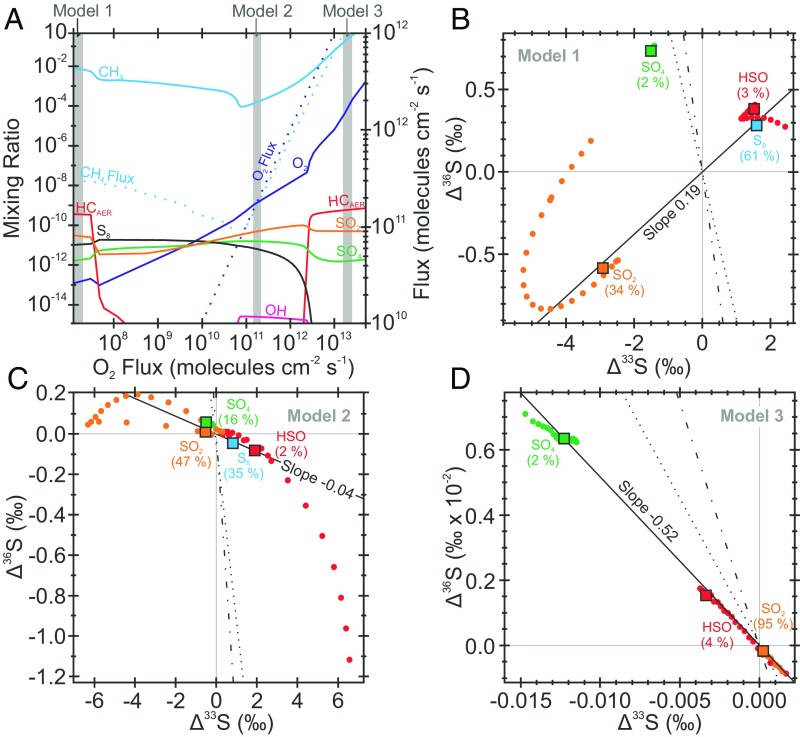
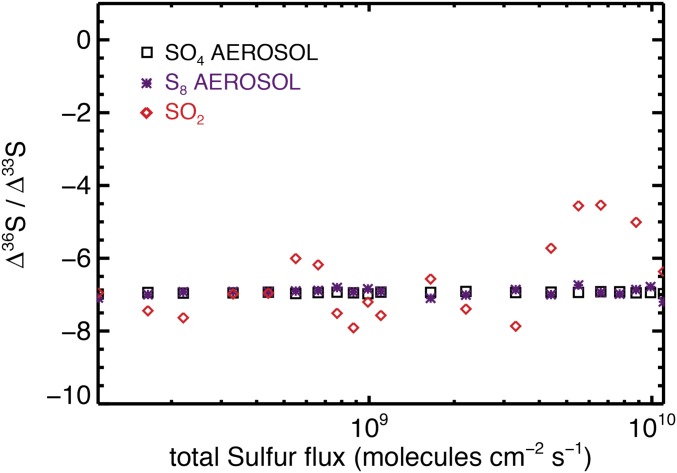
Emerging evidence suggests that atmospheric oxygen may have varied before rising irreversibly ∼2.4 billion years ago, during the Great Oxidation Event (GOE). Significantly, however, pre-GOE atmospheric aberrations toward more reducing conditions-featuring a methane-derived organic-haze-have recently been suggested, yet their occurrence, causes, and significance remain underexplored. To examine the role of haze formation in Earth's history, we targeted an episode of inferred haze development. Our redox-controlled (Fe-speciation) carbon- and sulfur-isotope record reveals sustained systematic stratigraphic covariance, precluding nonatmospheric explanations. Photochemical models corroborate this inference, showing Δ36S/Δ33S ratios are sensitive to the presence of haze. Exploiting existing age constraints, we estimate that organic haze developed rapidly, stabilizing within ∼0.3 ± 0.1 million years (Myr), and persisted for upward of ∼1.4 ± 0.4 Myr. Given these temporal constraints, and the elevated atmospheric CO2 concentrations in the Archean, the sustained methane fluxes necessary for haze formation can only be reconciled with a biological source. Correlative δ13COrg and total organic carbon measurements support the interpretation that atmospheric haze was a transient response of the biosphere to increased nutrient availability, with methane fluxes controlled by the relative availability of organic carbon and sulfate. Elevated atmospheric methane concentrations during haze episodes would have expedited planetary hydrogen loss, with a single episode of haze development providing up to 2.6-18 × 1018 moles of O2 equivalents to the Earth system. Our findings suggest the Neoarchean likely represented a unique state of the Earth system where haze development played a pivotal role in planetary oxidation, hastening the contingent biological innovations that followed.
Keywords: Neoarchean; hydrogen loss; organic haze; planetary oxidation; sulfur mass-independent fractionation.
Conflict of interest statement
The authors declare no conflict of interest.
Figures
References
-
- Farquhar J, Bao H, Thiemens M. Atmospheric influence of Earth’s earliest sulfur cycle. Science. 2000;289(5480):756–759. - PubMed
-
- Farquhar J, Savarino J, Airieau S, Thiemens MH. Observation of wavelength-sensitive mass-independent sulfur isotope effects during SO2 photolysis: Implications for the early atmosphere. J Geophys Res Planets. 2001;106(E12):32829–32839.
-
- Pavlov AA, Kasting JF. Mass-independent fractionation of sulfur isotopes in Archean sediments: Strong evidence for an anoxic Archean atmosphere. Astrobiology. 2002;2(1):27–41. - PubMed
-
- Bekker A, et al. Dating the rise of atmospheric oxygen. Nature. 2004;427(6970):117–120. - PubMed
Publication types
MeSH terms
Substances
LinkOut - more resources
Full Text Sources
Other Literature Sources
Research Materials
