


Role of microRNAs in translation regulation and cancer
- PMID: 28289518
- PMCID: PMC5329714
- DOI: 10.4331/wjbc.v8.i1.45
Role of microRNAs in translation regulation and cancer
Abstract
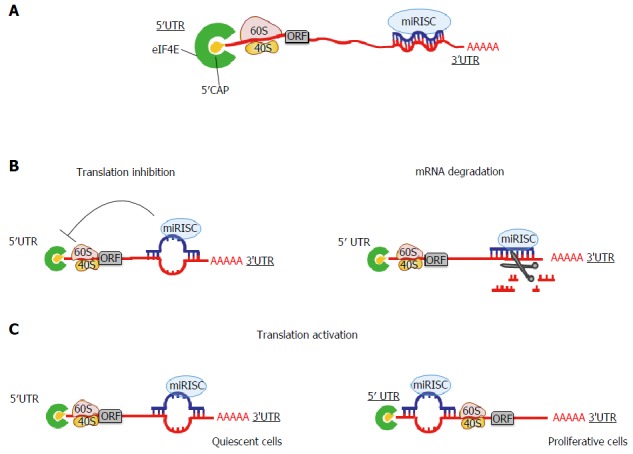
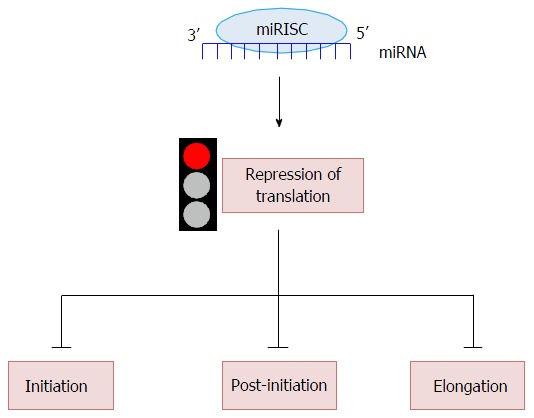
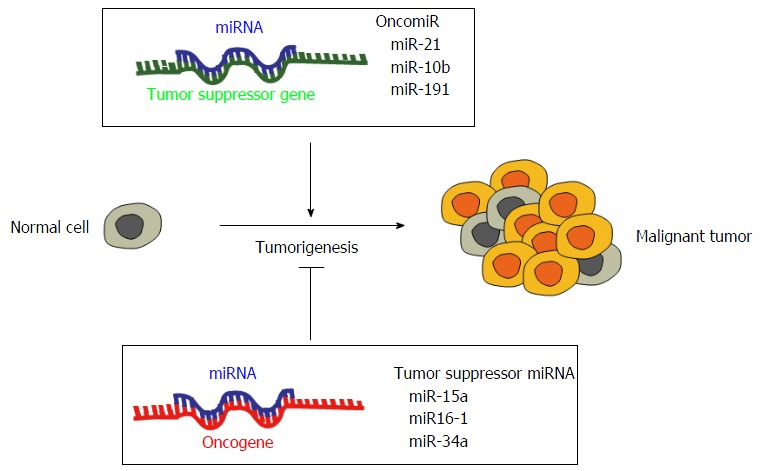
MicroRNAs (miRNAs) are pervasively expressed and regulate most biological functions. They function by modulating transcriptional and translational programs and therefore they orchestrate both physiological and pathological processes, such as development, cell differentiation, proliferation, apoptosis and tumor growth. miRNAs work as small guide molecules in RNA silencing, by negatively regulating the expression of several genes both at mRNA and protein level, by degrading their mRNA target and/or by silencing translation. One of the most recent advances in the field is the comprehension of their role in oncogenesis. The number of miRNA genes is increasing and an alteration in the level of miRNAs is involved in the initiation, progression and metastases formation of several tumors. Some tumor types show a distinct miRNA signature that distinguishes them from normal tissues and from other cancer types. Genetic and biochemical evidence supports the essential role of miRNAs in tumor development. Although the abnormal expression of miRNAs in cancer cells is a widely accepted phenomenon, the cause of this dysregulation is still unknown. Here, we discuss the biogenesis of miRNAs, focusing on the mechanisms by which they regulate protein synthesis. In addition we debate on their role in cancer, highlighting their potential to become therapeutic targets.
Keywords: Cancer; MicroRNA; OncomiR; Translation; Tumor suppressor.
Conflict of interest statement
Conflict-of-interest statement: Authors declare no conflict of interests for this article.
Figures
References
-
- Alexander RP, Fang G, Rozowsky J, Snyder M, Gerstein MB. Annotating non-coding regions of the genome. Nat Rev Genet. 2010;11:559–571. - PubMed
-
- Spadafora C. A LINE-1-encoded reverse transcriptase-dependent regulatory mechanism is active in embryogenesis and tumorigenesis. Ann N Y Acad Sci. 2015;1341:164–171. - PubMed
-
- Mercer TR, Dinger ME, Mattick JS. Long non-coding RNAs: insights into functions. Nat Rev Genet. 2009;10:155–159. - PubMed
-
- Esteller M. Non-coding RNAs in human disease. Nat Rev Genet. 2011;12:861–874. - PubMed
Publication types
LinkOut - more resources
Full Text Sources
Other Literature Sources
