Three-dimensional preservation of cellular and subcellular structures suggests 1.6 billion-year-old crown-group red algae
- PMID: 28291791
- PMCID: PMC5349422
- DOI: 10.1371/journal.pbio.2000735
Three-dimensional preservation of cellular and subcellular structures suggests 1.6 billion-year-old crown-group red algae
Abstract
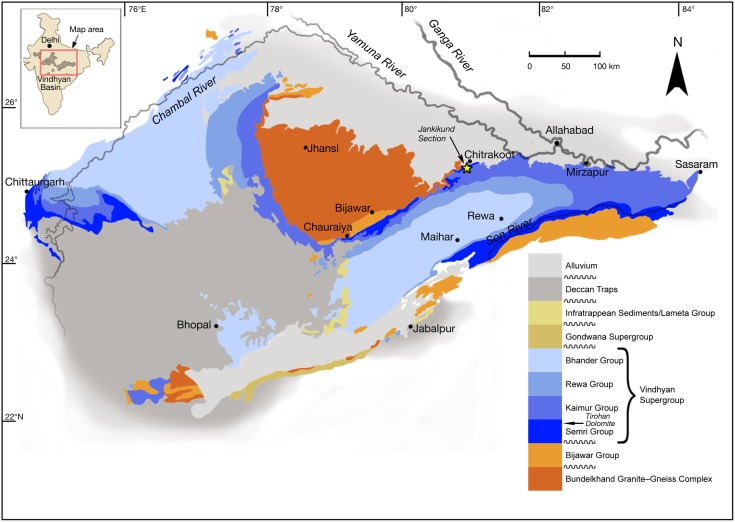
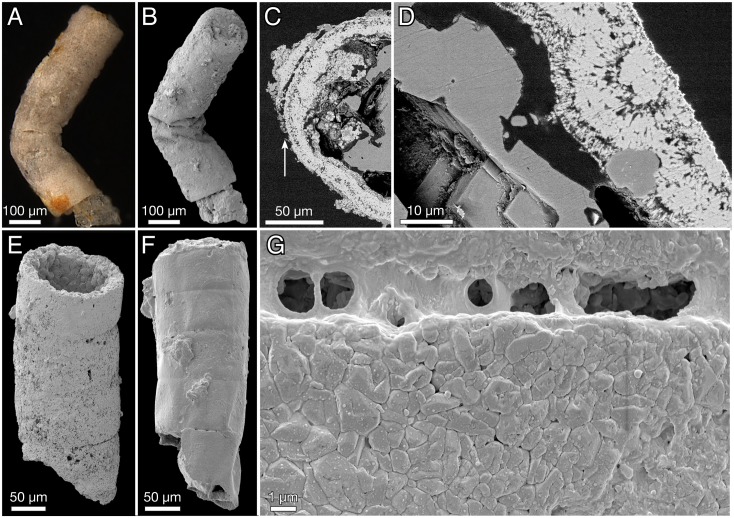
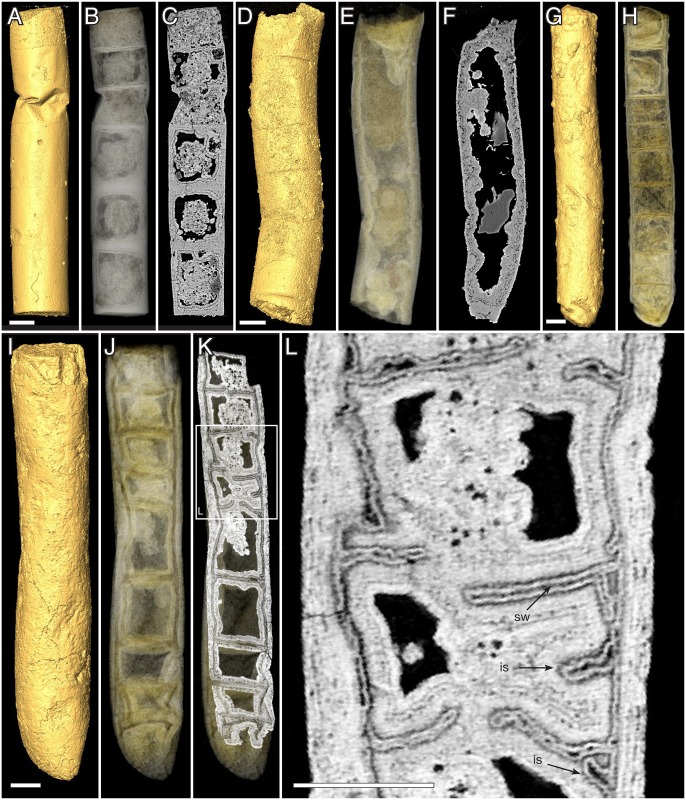
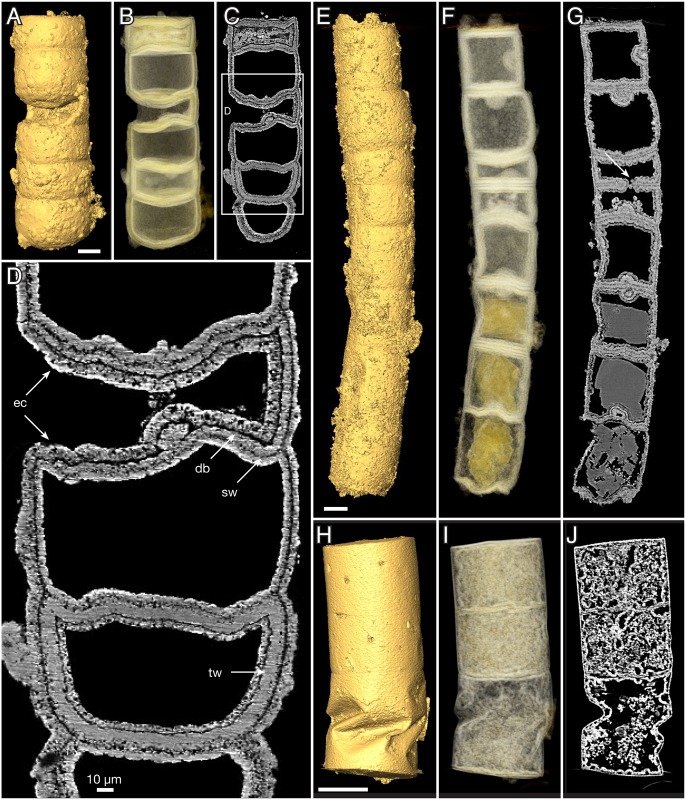
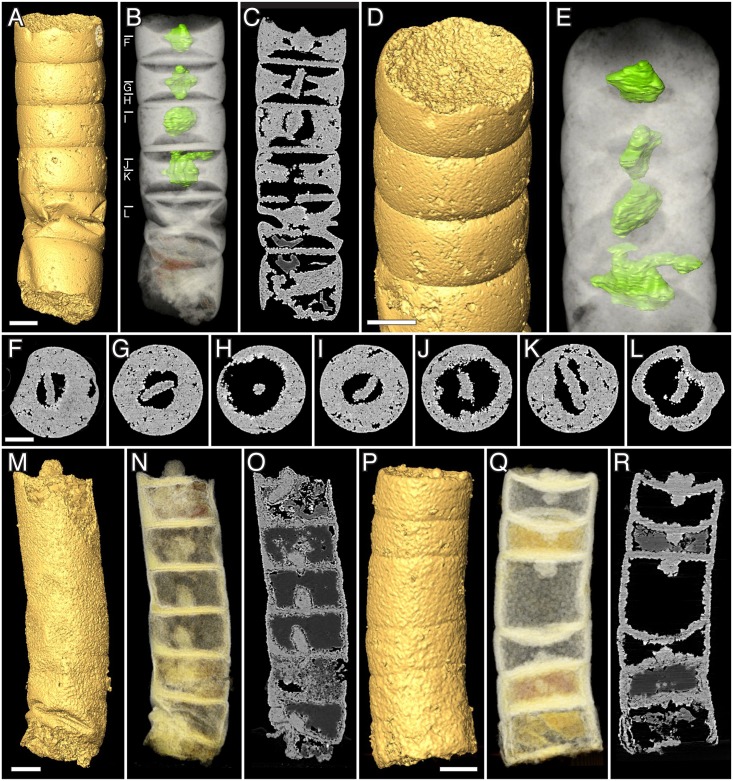
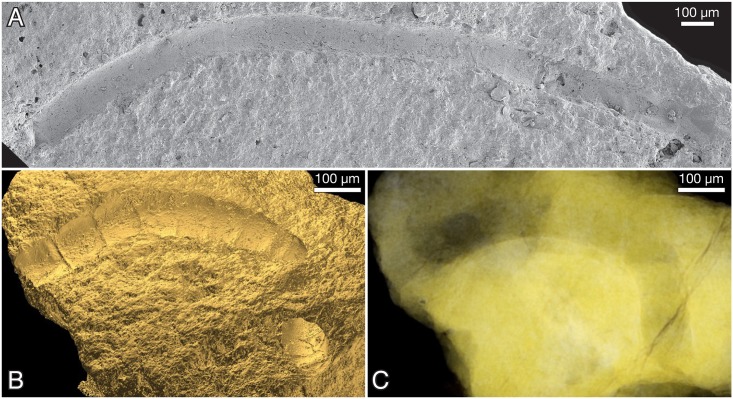
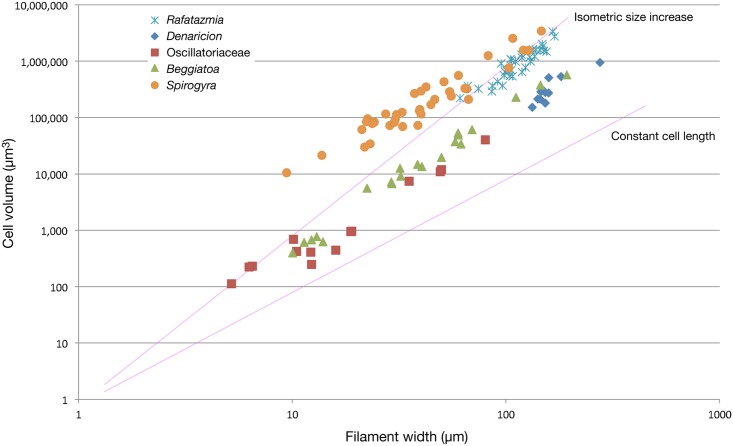
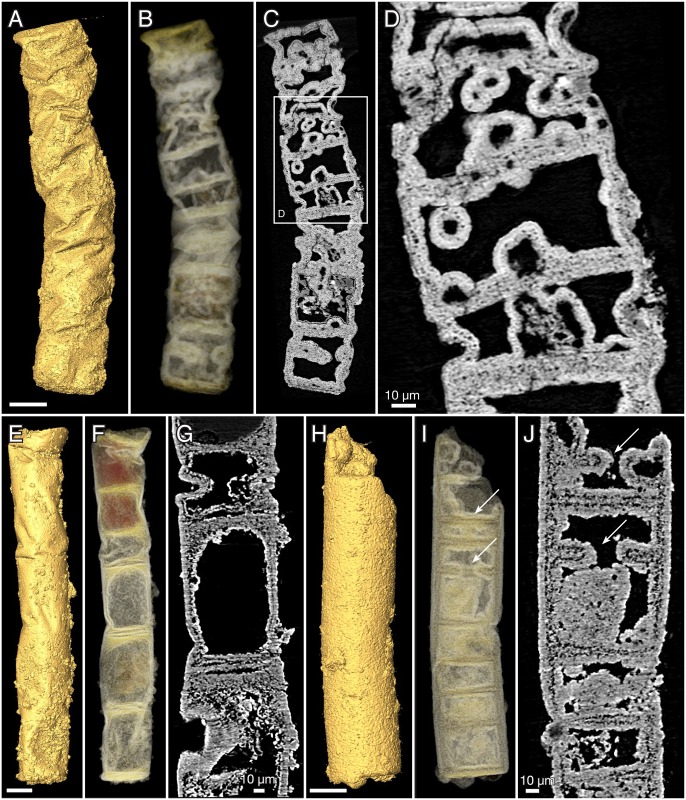
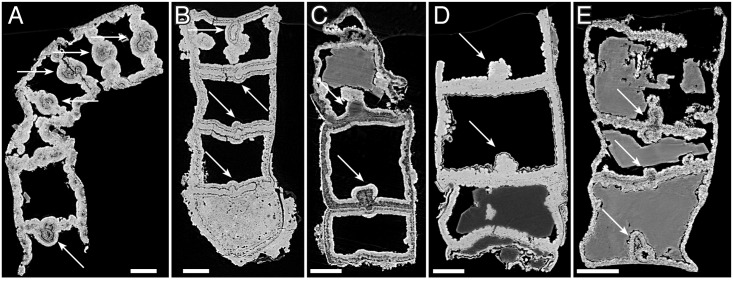
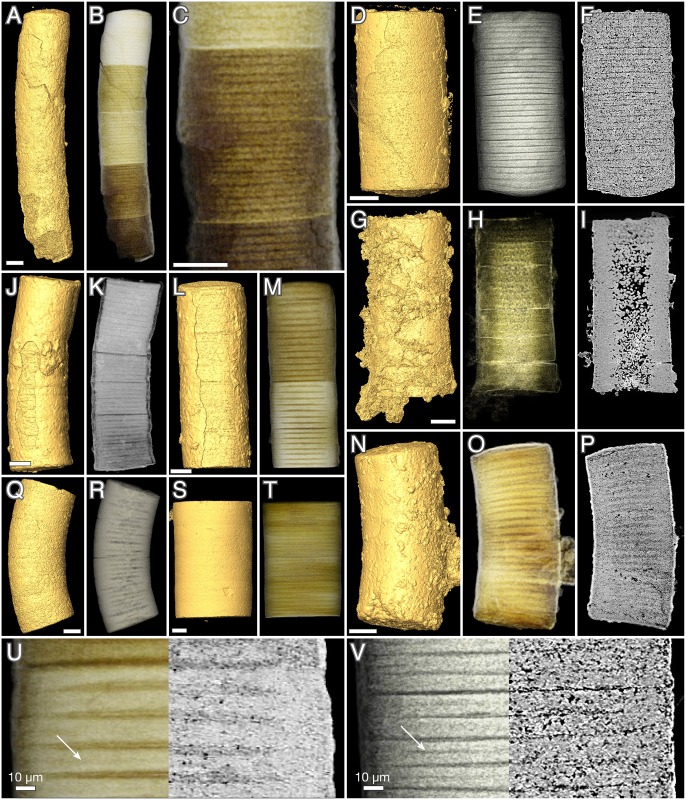
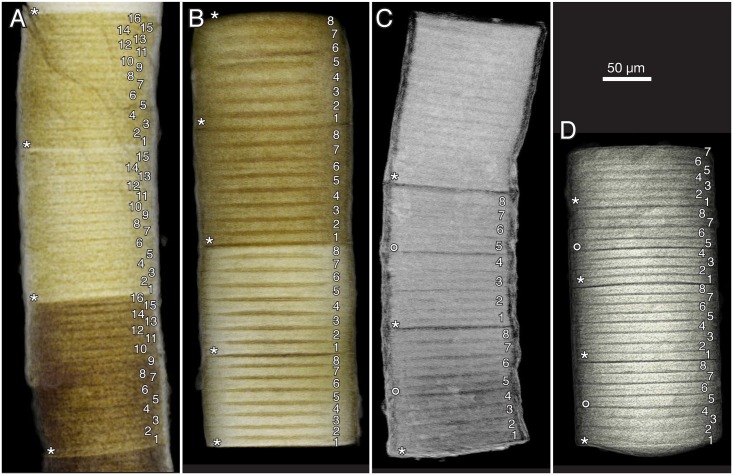
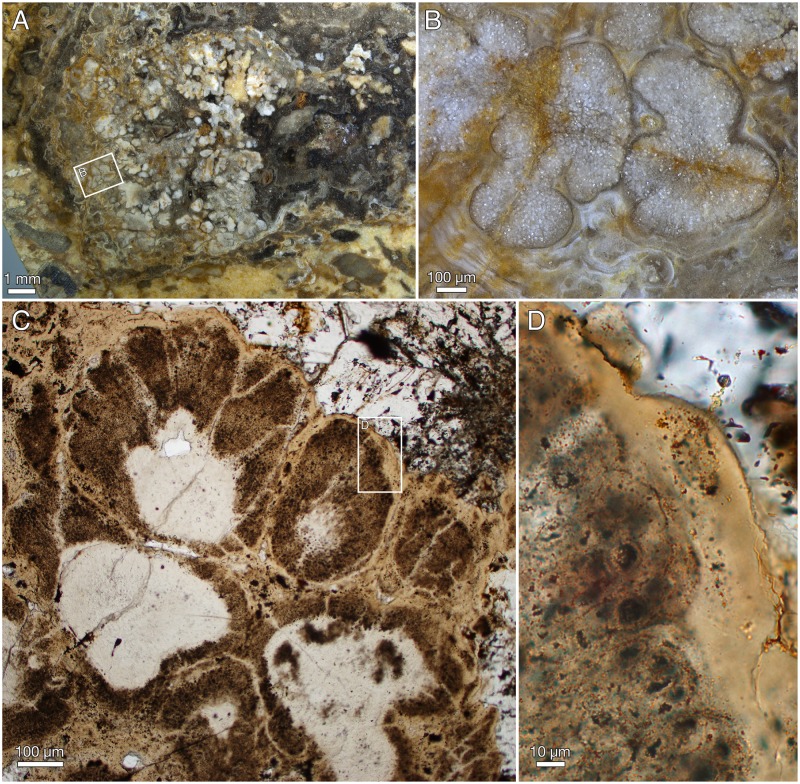
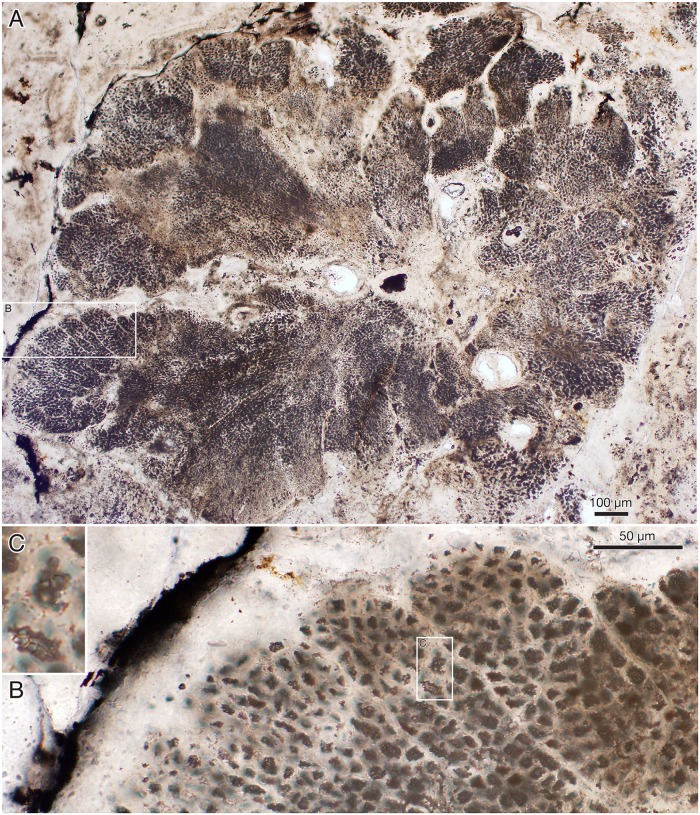
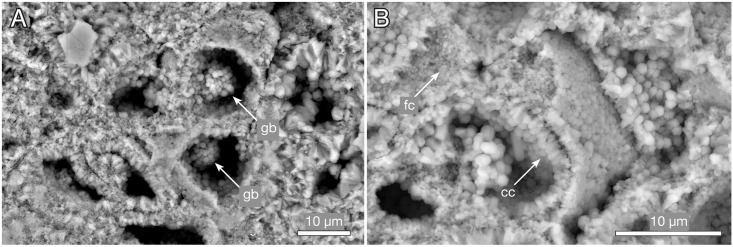
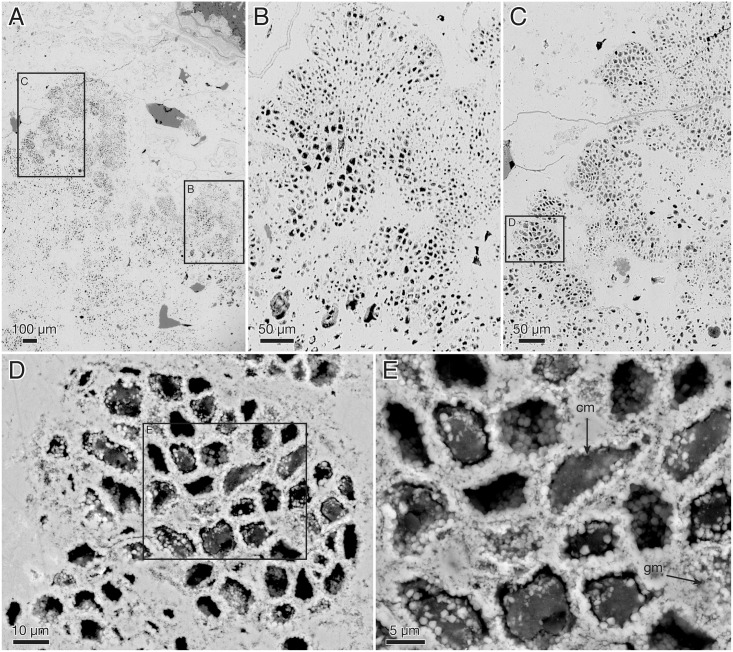
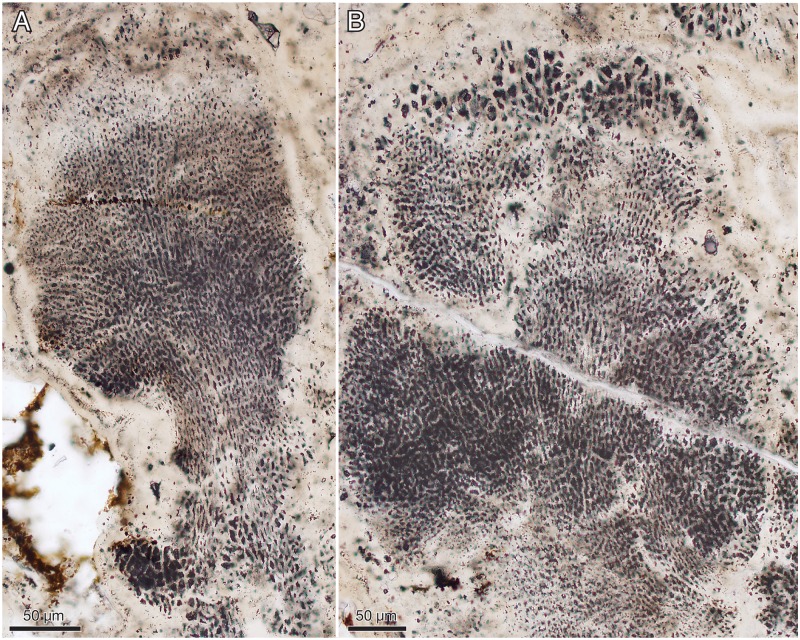
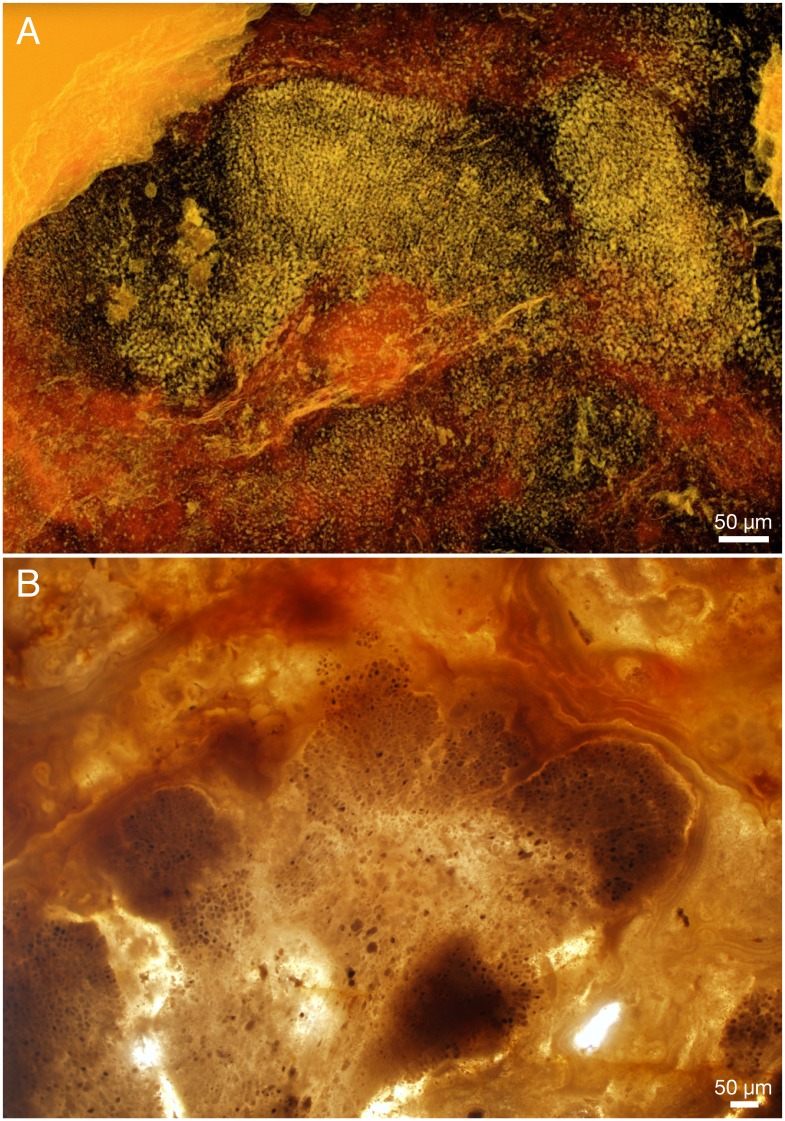
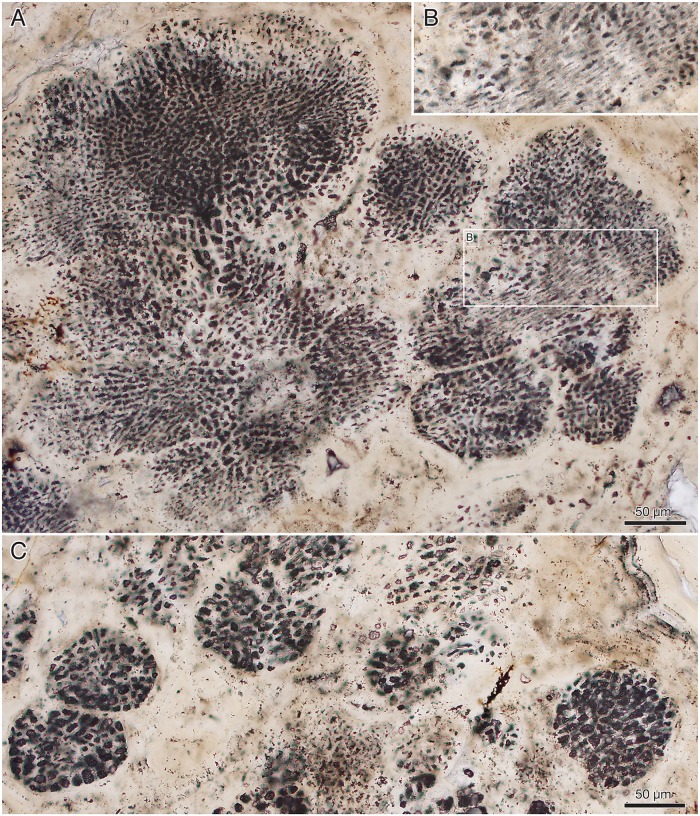
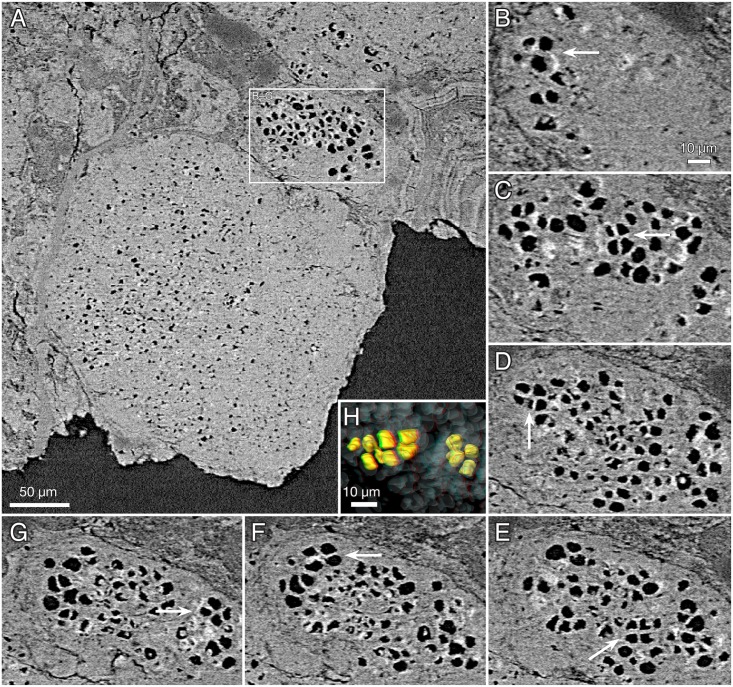
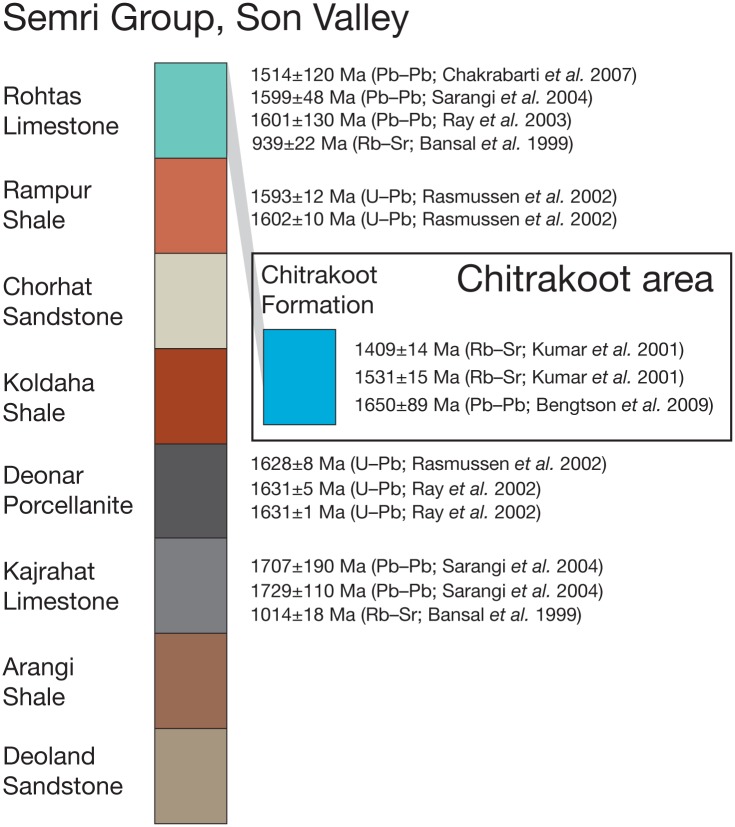
The ~1.6 Ga Tirohan Dolomite of the Lower Vindhyan in central India contains phosphatized stromatolitic microbialites. We report from there uniquely well-preserved fossils interpreted as probable crown-group rhodophytes (red algae). The filamentous form Rafatazmia chitrakootensis n. gen, n. sp. has uniserial rows of large cells and grows through diffusely distributed septation. Each cell has a centrally suspended, conspicuous rhomboidal disk interpreted as a pyrenoid. The septa between the cells have central structures that may represent pit connections and pit plugs. Another filamentous form, Denaricion mendax n. gen., n. sp., has coin-like cells reminiscent of those in large sulfur-oxidizing bacteria but much more recalcitrant than the liquid-vacuole-filled cells of the latter. There are also resemblances with oscillatoriacean cyanobacteria, although cell volumes in the latter are much smaller. The wider affinities of Denaricion are uncertain. Ramathallus lobatus n. gen., n. sp. is a lobate sessile alga with pseudoparenchymatous thallus, "cell fountains," and apical growth, suggesting florideophycean affinity. If these inferences are correct, Rafatazmia and Ramathallus represent crown-group multicellular rhodophytes, antedating the oldest previously accepted red alga in the fossil record by about 400 million years.
Conflict of interest statement
The authors have declared that no competing interests exist.
Figures
References
-
- Lücking R, Huhndorf S, Pfister DH, Plata ER, Lumbsch HT. Fungi evolved right on track. Mycologia. 2009;101(6):810–22. - PubMed
-
- Taylor TN, Krings M, Taylor EL. Fossil Fungi. Amsterdam: Elsevier; 2015.
-
- Xiao S. Written in stone: the fossil record of early eukaryotes In: Trueba G, Montúfar C, editors. Evolution from the Galapagos, Social and Ecological Interactions in the Galapagos Islands 2 New York: Springer; 2013. p. 107–24.
Publication types
MeSH terms
Associated data
LinkOut - more resources
Full Text Sources
Other Literature Sources