


MicroRNA categorization using sequence motifs and k-mers
- PMID: 28292266
- PMCID: PMC5351198
- DOI: 10.1186/s12859-017-1584-1
MicroRNA categorization using sequence motifs and k-mers
Abstract
Background: Post-transcriptional gene dysregulation can be a hallmark of diseases like cancer and microRNAs (miRNAs) play a key role in the modulation of translation efficiency. Known pre-miRNAs are listed in miRBase, and they have been discovered in a variety of organisms ranging from viruses and microbes to eukaryotic organisms. The computational detection of pre-miRNAs is of great interest, and such approaches usually employ machine learning to discriminate between miRNAs and other sequences. Many features have been proposed describing pre-miRNAs, and we have previously introduced the use of sequence motifs and k-mers as useful ones. There have been reports of xeno-miRNAs detected via next generation sequencing. However, they may be contaminations and to aid that important decision-making process, we aimed to establish a means to differentiate pre-miRNAs from different species.
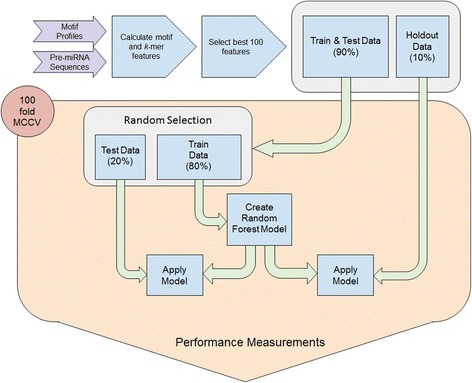
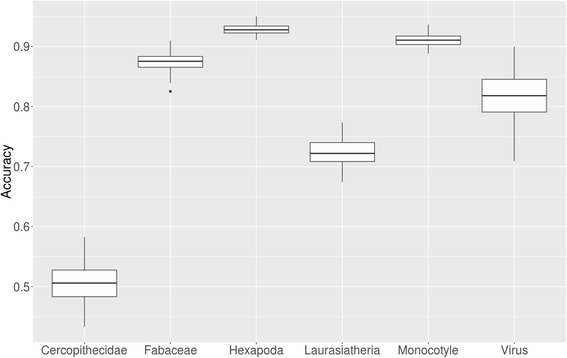
Results: To achieve distinction into species, we used one species' pre-miRNAs as the positive and another species' pre-miRNAs as the negative training and test data for the establishment of machine learned models based on sequence motifs and k-mers as features. This approach resulted in higher accuracy values between distantly related species while species with closer relation produced lower accuracy values.
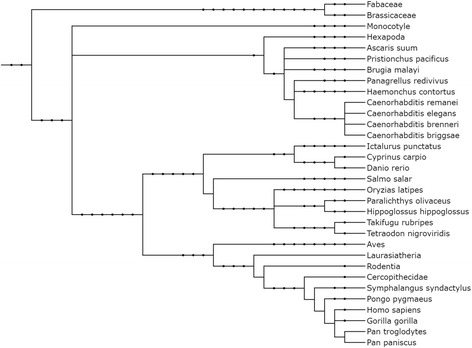
Conclusions: We were able to differentiate among species with increasing success when the evolutionary distance increases. This conclusion is supported by previous reports of fast evolutionary changes in miRNAs since even in relatively closely related species a fairly good discrimination was possible.
Keywords: Differentiate miRNAs among species; Machine learning; Pre-microRNA; Sequence motifs; k-mer; miRNA categorization; microRNA.
Figures

References
-
- Yousef M, Allmer J, Khalifaa W. Plant MicroRNA Prediction employing Sequence Motifs Achieves High Accuracy. 2015.
-
- Chapman EJ, Carrington JC. Specialization and evolution of endogenous small RNA pathways. Nat. Rev. Genet. Nature Publishing Group; 2007;8:884–96. - PubMed
MeSH terms
Substances
LinkOut - more resources
Full Text Sources
Other Literature Sources
Miscellaneous
