


Payback time? Influence of having children on mortality in old age
- PMID: 28292784
- PMCID: PMC5484032
- DOI: 10.1136/jech-2016-207857
Payback time? Influence of having children on mortality in old age
Abstract
Background: It is known that parents have lower mortality than childless individuals. Support from adult children to ageing parents may be of importance for parental health and longevity. The aim of this study was to estimate the association between having a child and the risk of death, and to examine whether the association increased at older ages when health starts to deteriorate and the need of support from a family member increases.
Methods: In this nationwide study, all men and women (born between 1911 and 1925 and residing in Sweden), as well as their children, were identified in population registers and followed over time. Age-specific death risks were calculated for each calendar year for individuals having at least one child and for individuals without children. Adjusted risk differences and risk ratios were estimated.
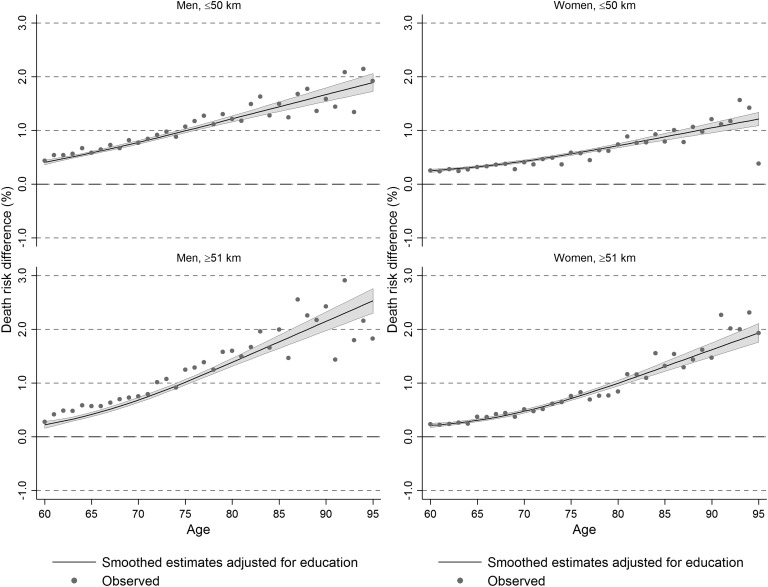
Results: Men and women having at least one child experienced lower death risks than childless men and women. At 60 years of age, the difference in life expectancy was 2 years for men and 1.5 years for women. The absolute differences in death risks increased with parents' age and were somewhat larger for men than for women. The association persisted when the potential confounding effect of having a partner was taken into account. The gender of the child did not matter for the association between parenthood and mortality.
Conclusions: Having children is associated with increased longevity, particularly in an absolute sense in old age. That the association increased with parents' age and was somewhat stronger for the non-married may suggest that social support is a possible explanation.
Keywords: AGEING; LONGITUDINAL STUDIES; Life course epidemiology.
Published by the BMJ Publishing Group Limited. For permission to use (where not already granted under a licence) please go to http://www.bmj.com/company/products-services/rights-and-licensing/.
Conflict of interest statement
Figures


References
-
- Andersson G, Ronsen M, Knudsen LB, et al. . Cohort fertility patterns in the Nordic countries. Demographic Research 2009;20:313–52. 10.4054/DemRes.2009.20.14 - DOI
MeSH terms
LinkOut - more resources
Full Text Sources
Other Literature Sources
