


Meaningful Use of an Electronic Personal Health Record (ePHR) among Pediatric Cancer Survivors
- PMID: 28293684
- PMCID: PMC5373768
- DOI: 10.4338/ACI-2016-11-RA-0189
Meaningful Use of an Electronic Personal Health Record (ePHR) among Pediatric Cancer Survivors
Abstract
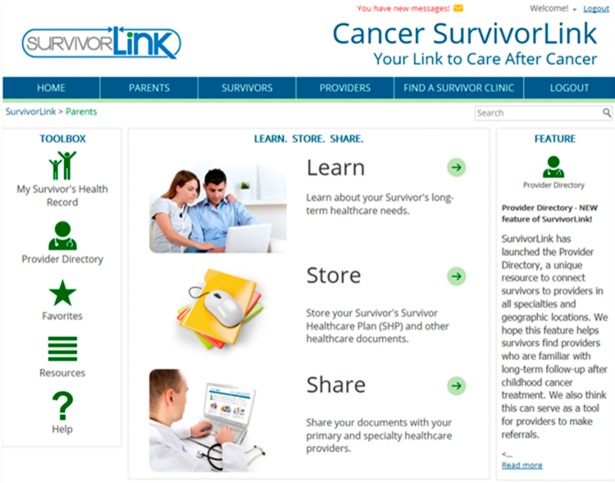
Background and Objectivs: Survivors of pediatric and adolescent cancer are at an increased risk of chronic and debilitating health conditions and require life-long specialized care. Stand-alone electronic personal health records (ePHRs) may aid their self-management. This analysis characterizes young adult survivors and parents who meaningfully use an ePHR, Cancer SurvivorLinkTM, designed for survivors of pediatric and adolescent cancer.
Methods: This was a retrospective observational study of patients seen at a pediatric survivor clinic for annual survivor care. Young adult survivors and/or parent proxies for survivors <18 years old who completed ePHR registration prior to their appointment or within 90 days were classified as registrants. Registrants who uploaded or downloaded a document and/or shared their record were classified as meaningful users.
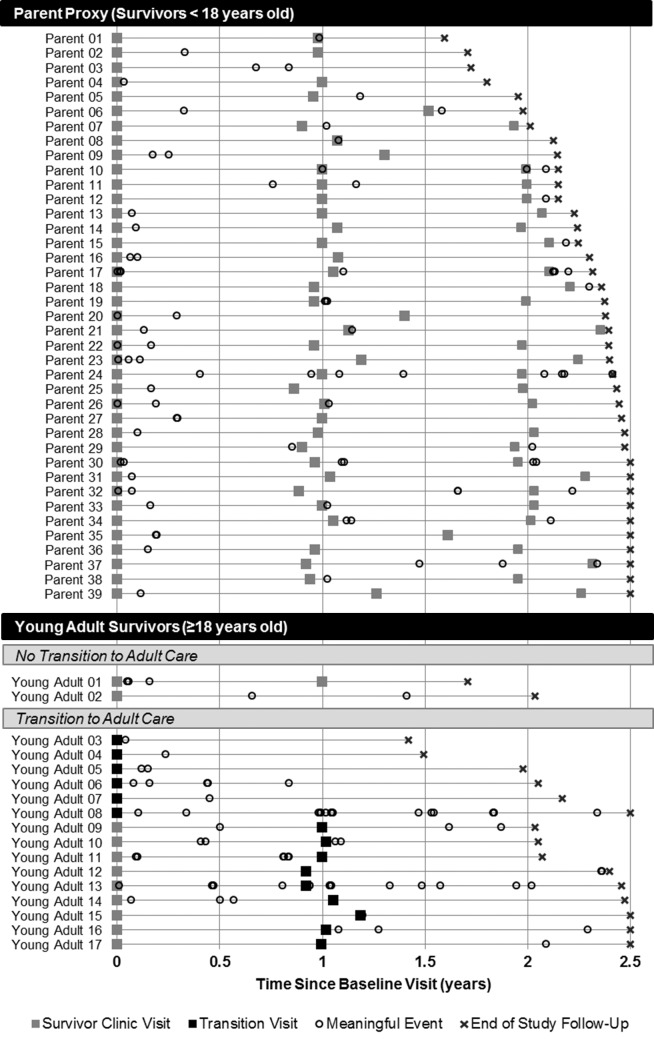
Results: Overall, 23.7% (148/624) of survivors/parents registered and 38% of registrants used SurvivorLink meaningfully. Young adult registrants who transferred to adult care during the study period were more likely to be meaningful users (aOR: 2.6 (95% CI: 1.1, 6.1)) and used the ePHR twice as frequently as those who continued to receive care in our institution's pediatric survivor clinic. Among survivors who continued to receive care at our institution, being a registrant was associated with having an annual follow-up visit (aOR: 2.6 (95% CI: 1.2, 5.8)).
Conclusions: While ePHRs may not be utilized by all survivors, SurvivorLink is a resource for a subset and may serve as an important bridge for patients who transfer their care. Using SurvivorLink was also associated with receiving recommended annual survivor care.
Keywords: Pediatric cancer survivor; SurvivorLink; electronic personal health record; survivorship; transition.
Conflict of interest statement
The authors declare they have no conflict of interest relevant to this article to disclose.
Figures
References
-
- Howlader N, Noone A, Krapcho M, Garshell J, Neyman N, Altekruse S, Kosary CL, Yu M, Ruhl J, Tatalovich Z, Cho H, Mariotto A, Lewis DR, Chen HS, Feuer EJ, Cronin KA. (eds). SEER Cancer Statistics Review, 1975–2010. Besthesda, MD [cited 2013 April]; Available from: http://seer.cancer.gov/csr/1975_2010/, based on November 2012 SEER data submission, posted to the SEER web site, April 2013.
-
- Phillips SM, Padgett LS, Leisenring WM, Stratton KK, Bishop K, Krull KR, Alfano CM, Gibson TM, de Moor JS, Hartigan DB, Armstrong GT, Robison LL, Rowland JH, Oeffinger KC, Mariotto AB. Survivors of childhood cancer in the United States: prevalence and burden of morbidity. Cancer Epidemiol Biomarkers Prev 2015; 24(4): 653-663. - PMC - PubMed
-
- Oeffinger KC, Mertens AC, Sklar CA, Kawashima T, Hudson MM, Meadows AT, Friedman DL, Marina N, Hobbie W, Kadan-Lottick NS, Schwartz CL, Leisenring W, Robison LLChildhood Cancer Survivor Study. Chronic health conditions in adult survivors of childhood cancer. N Engl J Med 2006; 355(15):1572–1582. - PubMed
-
- Children‘s Oncology Group. Long-Term Follow-Up Guidelines for Survivors of Childhood, Adolescent, and Young Adult Cancers Version 4.0. Version 4.0 ed2013.
Publication types
MeSH terms
Grants and funding
LinkOut - more resources
Full Text Sources
Other Literature Sources
Medical
