


Phosphoinositides, Major Actors in Membrane Trafficking and Lipid Signaling Pathways
- PMID: 28294977
- PMCID: PMC5372647
- DOI: 10.3390/ijms18030634
Phosphoinositides, Major Actors in Membrane Trafficking and Lipid Signaling Pathways
Abstract
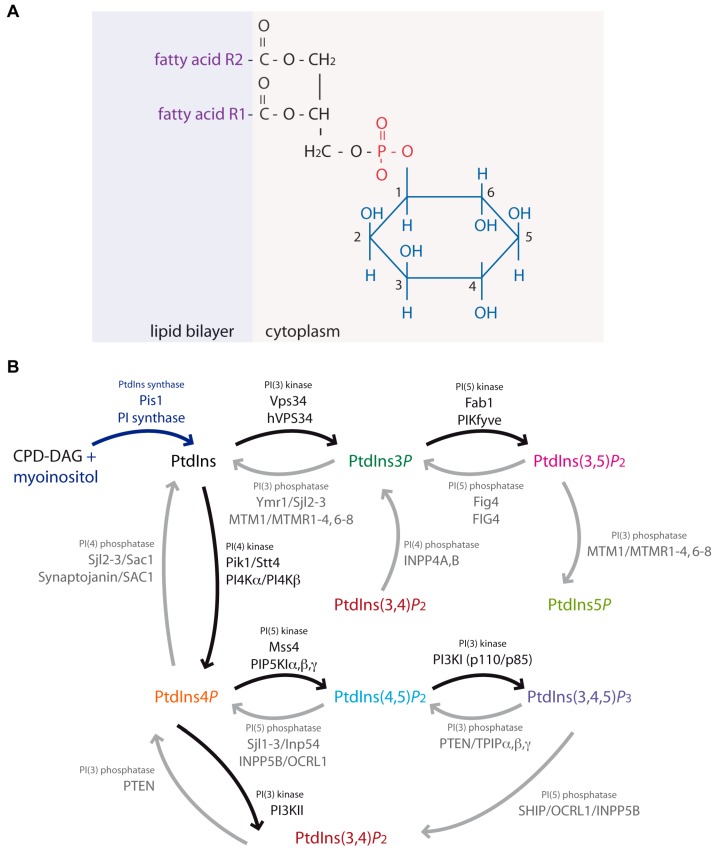
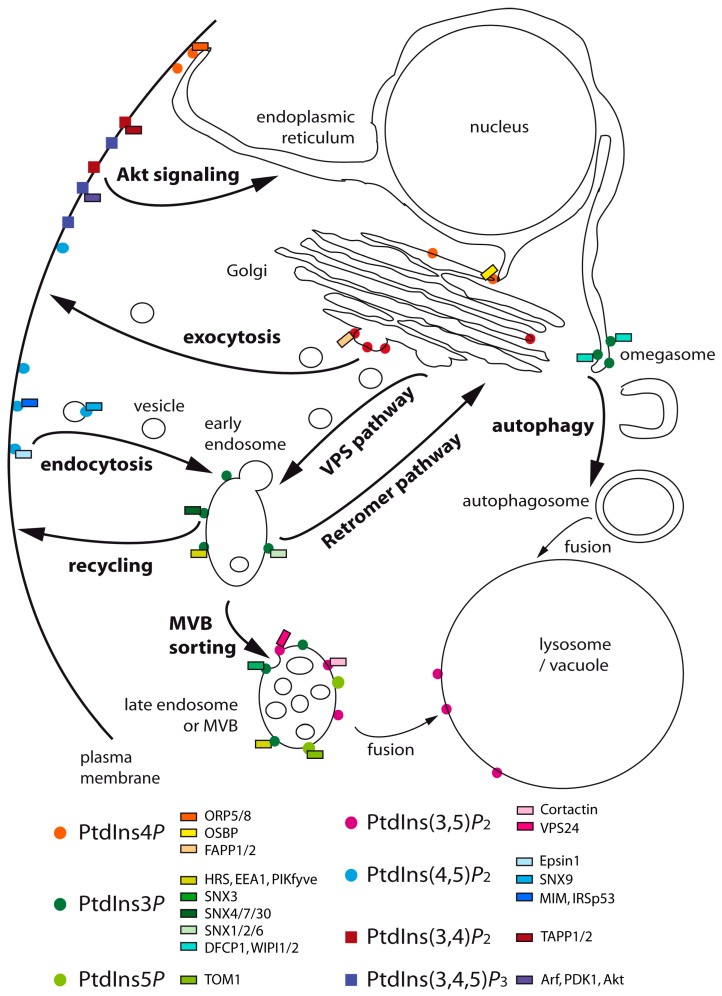
Phosphoinositides are lipids involved in the vesicular transport of proteins and lipids between the different compartments of eukaryotic cells. They act by recruiting and/or activating effector proteins and thus are involved in regulating various cellular functions, such as vesicular budding, membrane fusion and cytoskeleton dynamics. Although detected in small concentrations in membranes, their role is essential to cell function, since imbalance in their concentrations is a hallmark of many cancers. Their synthesis involves phosphorylating/dephosphorylating positions D3, D4 and/or D5 of their inositol ring by specific lipid kinases and phosphatases. This process is tightly regulated and specific to the different intracellular membranes. Most enzymes involved in phosphoinositide synthesis are conserved between yeast and human, and their loss of function leads to severe diseases (cancer, myopathy, neuropathy and ciliopathy).
Keywords: kinase; lipids; membrane trafficking; phosphatase; phosphoinositides; vesicles.
Conflict of interest statement
The authors declare no conflict of interest.
Figures
References
-
- Spector A.A., Yorek M.A. Membrane lipid composition and cellular function. J. Lipid Res. 1985;26:1015–1035. - PubMed
Publication types
MeSH terms
Substances
LinkOut - more resources
Full Text Sources
Other Literature Sources
Molecular Biology Databases
