


Sickle cell disease in Africa: an overview of the integrated approach to health, research, education and advocacy in Tanzania, 2004-2016
- PMID: 28295224
- PMCID: PMC5558871
- DOI: 10.1111/bjh.14594
Sickle cell disease in Africa: an overview of the integrated approach to health, research, education and advocacy in Tanzania, 2004-2016
Abstract
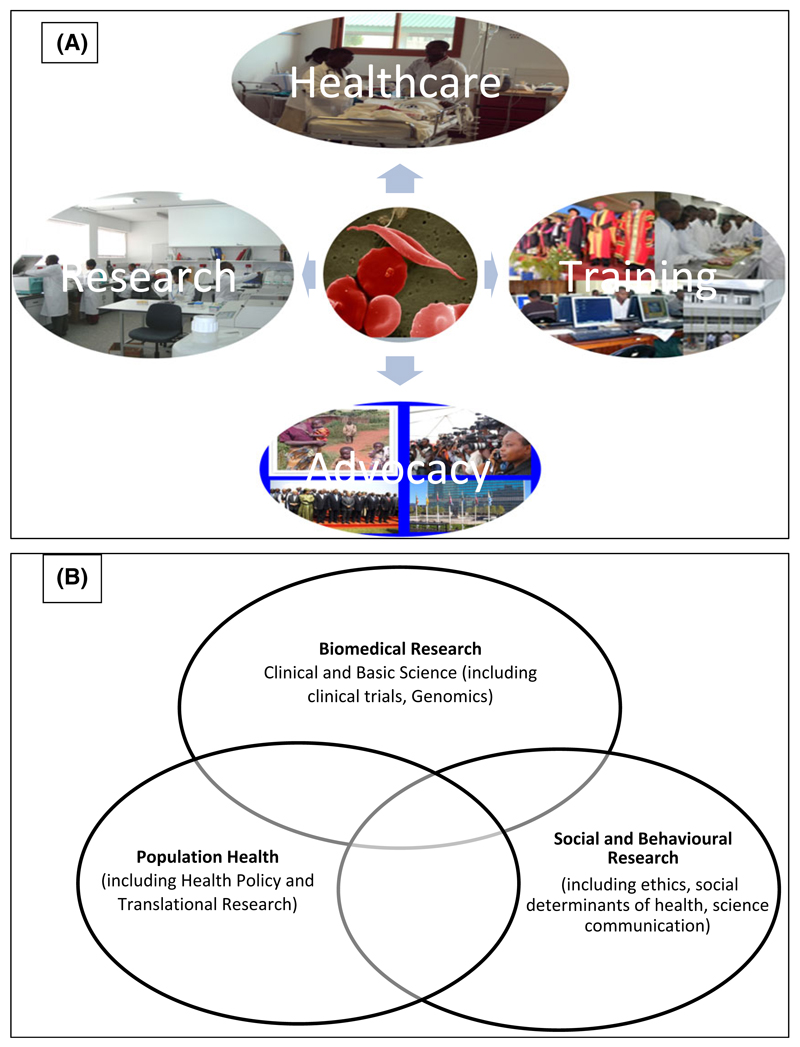
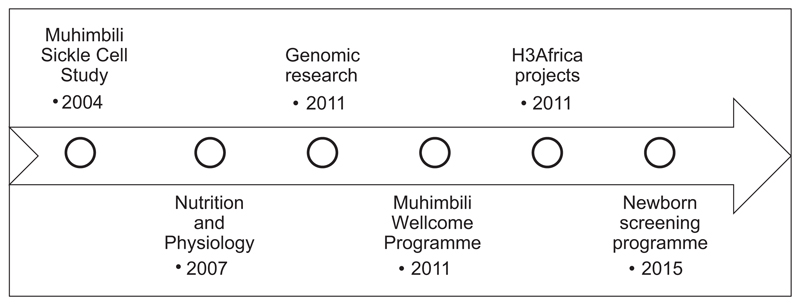
Sickle cell disease (SCD) is the single most important genetic cause of childhood mortality globally. Tanzania has one of the highest annual births of SCD individuals in the world, estimated to reach 11 000 births a year. Without intervention, 50-90% of children will die in childhood. However, cost-effective interventions have the potential to reduce childhood mortality by up to 70%. The effects of SCD are multi-dimensional, ranging from causing high morbidity and mortality, and reducing the quality of life, to imposing a high socio-economic burden on individuals, families and health systems. In the past 12 years, the SCD programme in Tanzania has developed, with local and global partnerships, a systematic framework for comprehensive research that is integrated into providing healthcare, training and advocacy in SCD. This report outlines the approach and achievements of collective initiatives for management and control of SCD in Tanzania.
Keywords: Tanzania; health; research; sickle cell.
© 2017 John Wiley & Sons Ltd.
Conflict of interest statement
The authors have no competing interests.
Figures
References
-
- Aken’ova YA, Bakare RA, Okunade MA. Septicaemia in sickle cell anaemia patients: the Ibadan experience. The Central African Journal of Medicine. 1998;44:102–104. - PubMed
-
- Booth C, Inusa B, Obaro SK. Infection in sickle cell disease: a review. International Journal of Infectious Diseases: IJID: Official Publication of the International Society for Infectious Diseases. 2001;14:e2–e12. - PubMed
-
- Charache S, Dover GJ, Moore RD, Eckert S, Ballas SK, Koshy M, Milner PF, Orringer EP, Phillips G, Jr, Platt OS. Hydroxyurea: effects on haemoglobin F production in patients with sickle cell anaemia. Blood. 1992;79:2555–2565. - PubMed
Publication types
MeSH terms
Grants and funding
LinkOut - more resources
Full Text Sources
Other Literature Sources
Medical
Miscellaneous
