Review
. 2017 Nov;9(6):10.1002/wnan.1464.
doi: 10.1002/wnan.1464. Epub 2017 Mar 15.

Bio-inspired nanomedicine strategies for artificial blood components

Affiliations
Review

Bio-inspired nanomedicine strategies for artificial blood components

Anirban Sen Gupta. Wiley Interdiscip Rev Nanomed Nanobiotechnol. 2017 Nov.

Abstract

Blood is a fluid connective tissue where living cells are suspended in noncellular liquid matrix. The cellular components of blood render gas exchange (RBCs), immune surveillance (WBCs) and hemostatic responses (platelets), and the noncellular components (salts, proteins, etc.) provide nutrition to various tissues in the body. Dysfunction and deficiencies in these blood components can lead to significant tissue morbidity and mortality. Consequently, transfusion of whole blood or its components is a clinical mainstay in the management of trauma, surgery, myelosuppression, and congenital blood disorders. However, donor-derived blood products suffer from issues of shortage in supply, need for type matching, high risks of pathogenic contamination, limited portability and shelf-life, and a variety of side-effects. While robust research is being directed to resolve these issues, a parallel clinical interest has developed toward bioengineering of synthetic blood substitutes that can provide blood's functions while circumventing the above problems. Nanotechnology has provided exciting approaches to achieve this, using materials engineering strategies to create synthetic and semi-synthetic RBC substitutes for enabling oxygen transport, platelet substitutes for enabling hemostasis, and WBC substitutes for enabling cell-specific immune response. Some of these approaches have further extended the application of blood cell-inspired synthetic and semi-synthetic constructs for targeted drug delivery and nanomedicine. The current study provides a comprehensive review of the various nanotechnology approaches to design synthetic blood cells, along with a critical discussion of successes and challenges of the current state-of-art in this field. WIREs Nanomed Nanobiotechnol 2017, 9:e1464. doi: 10.1002/wnan.1464 For further resources related to this article, please visit the WIREs website.


Figures

Figure 1
Figure 1
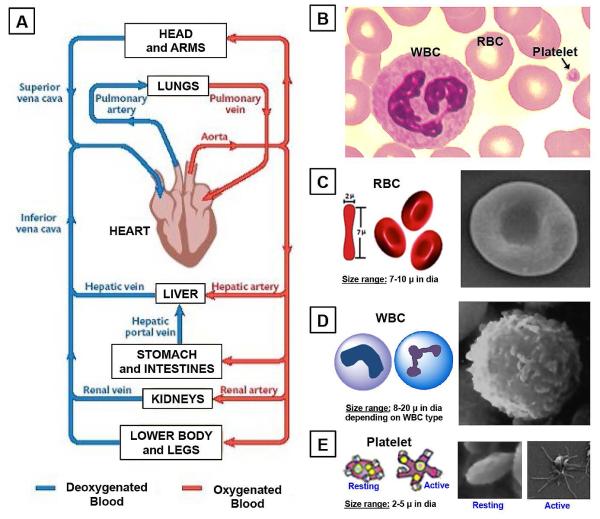
[A] Arterial and venous circulation pathways in the body that carries RBCs, WBCs and platelets for respective biological functions; [B] Representative histology stain of blood smear showing RBC, WBC and platelet; [C] Schematic cartoon and representative SEM image of RBC; [D] Schematic cartoon and representative SEM image of WBC; [E] Schematic cartoon and representative SEM images of resting and active platelets.
Figure 2
Figure 2
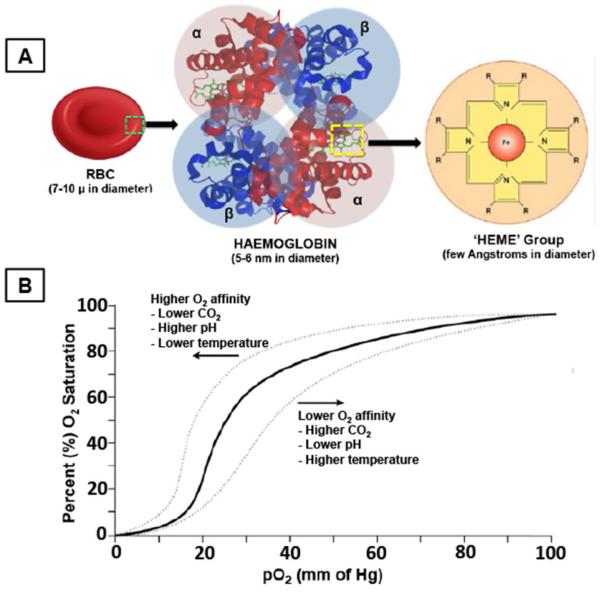
[A] Multi-scale representation of RBC, the Hemoglobin (Hb) protein structure inside RBC and the ‘Heme’ porphyrin structure inside Hb; [B] Representative oxygen binding curve for Hb showing the co-operative binding nature (sigmoidal curve).
Figure 3
Figure 3
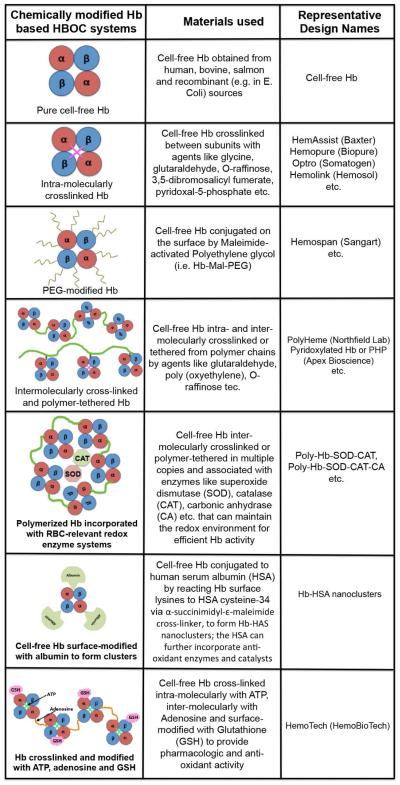
Schematic representation of design and components of RBC-inspired chemically modified prominent HBOC nanosystems, along with their design/trade names.
Figure 4
Figure 4
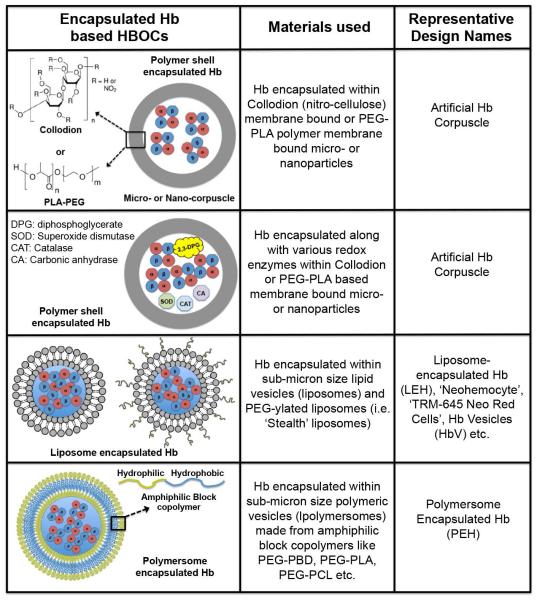
Schematic representation of design and components of RBC-inspired Hb-encapsulated prominent HBOC nanosystems, along with their design/trade names.
Figure 5
Figure 5
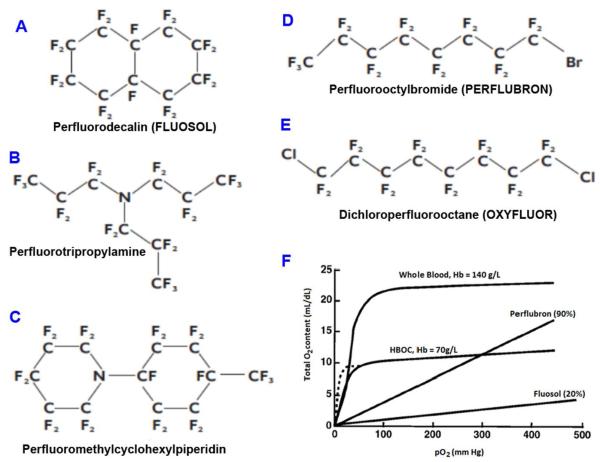
[A]-[E] Chemical structure of various perfluorocarbon (PFC) compounds that have been studied for oxygen carrying applications; [F] Oxygen binding curves of whole blood and HBOC systems (cooperative sigmoid binding characteristics) compared with tat PFC-based oxygen carriers (linear binding characteristics).
Figure 6
Figure 6
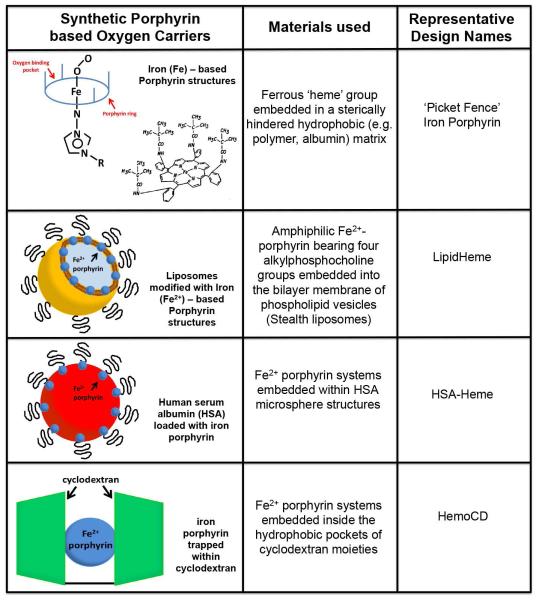
Schematic representation of design and components of some porphyrin based oxygen-carrying nanosystems, along with their design/trade names.
Figure 7
Figure 7
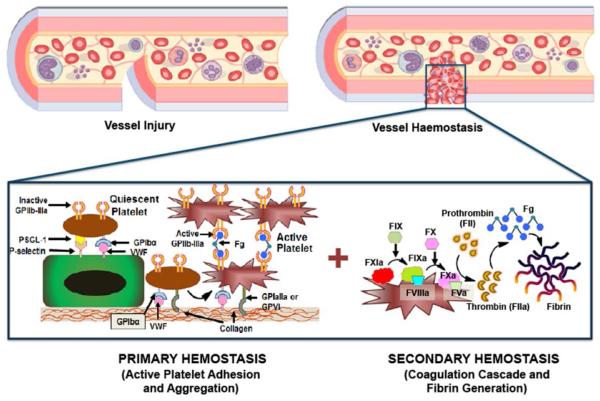
Molecular mechanisms of platelet-mediated hemostasis in bleeding vessel, showing respective components of primary hemostasis and secondary hemostasis.
Figure 8
Figure 8
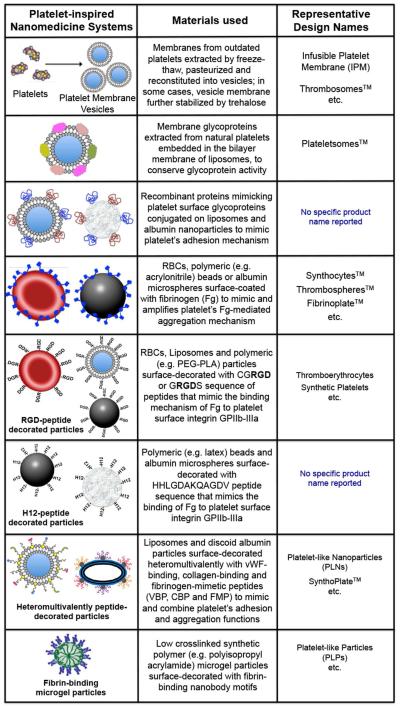
Schematic representation of design and components of platelet-inspired intravenously injectable synthetic hemostat nanosystems, along with their design/trade names where applicable.
Figure 9
Figure 9
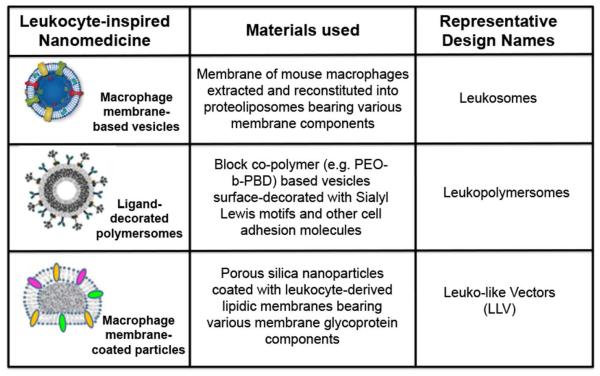
Schematic representation of design and components of some WBC (leukocyte)-inspired biosynthetic nanosystems, along with their design/trade names.
Figure 10
Figure 10
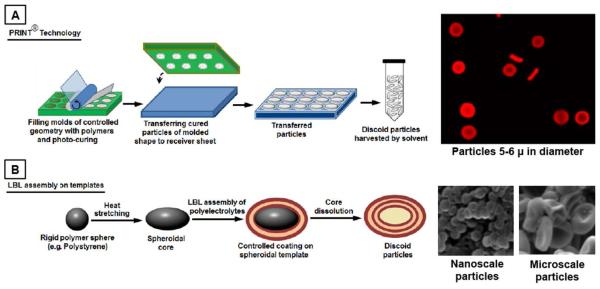
Process scheme and representative particle images (fluorescence or SEM) for [A] the PRINT® technology and [B] the template-mediated thermostretching and layer-by-layer assembly based technology to produce micro- and nanoparticles that mimic the size and shape of blood cells (e.g. RBCs and platelets).

References

    1. Kwon E,J, Lo J,H, Bhatia S,N. Smart nanosystems: Bio-inspired technologies that interact with the host environment. Proc Nat Acad Sci USA. 2015;112:14460–14466. - PMC - PubMed
    1. Yoo J-W, Irvine D,J, Discher D,E, Mitragotri S. Bio-inspired, bioengineered and biomimetic drug delivery carriers. Nature Reviews Drug Discovery. 2011;10:521–535. - PubMed
    1. Dehaini D, Fang R,H, Zhang L. Biomimetic strategies for targeted nanoparticle delivery. Bioengineering & Translational Medicine. 2016;1:30–46. - PMC - PubMed
    1. Giangrande P,L,F. The history of blood transfusion. Br J Haematol. 2000;110:758–67. - PubMed
    1. Hillyer CD, editor. Blood banking and Transfusion Medicine. Churchill Livingstone Elsevier; 2007.

Substances

LinkOut - more resources