. 2017 Mar 15;12(3):e0172989.
doi: 10.1371/journal.pone.0172989. eCollection 2017.

Ice-cover is the principal driver of ecological change in High Arctic lakes and ponds

Affiliations

Ice-cover is the principal driver of ecological change in High Arctic lakes and ponds

Katherine Griffiths et al. PLoS One. .

Abstract

Recent climate change has been especially pronounced in the High Arctic, however, the responses of aquatic biota, such as diatoms, can be modified by site-specific environmental characteristics. To assess if climate-mediated ice cover changes affect the diatom response to climate, we used paleolimnological techniques to examine shifts in diatom assemblages from ten High Arctic lakes and ponds from Ellesmere Island and nearby Pim Island (Nunavut, Canada). The sites were divided a priori into four groups ("warm", "cool", "cold", and "oasis") based on local elevation and microclimatic differences that result in differing lengths of the ice-free season, as well as about three decades of personal observations. We characterized the species changes as a shift from Condition 1 (i.e. a generally low diversity, predominantly epipelic and epilithic diatom assemblage) to Condition 2 (i.e. a typically more diverse and ecologically complex assemblage with an increasing proportion of epiphytic species). This shift from Condition 1 to Condition 2 was a consistent pattern recorded across the sites that experienced a change in ice cover with warming. The "warm" sites are amongst the first to lose their ice covers in summer and recorded the earliest and highest magnitude changes. The "cool" sites also exhibited a shift from Condition 1 to Condition 2, but, as predicted, the timing of the response lagged the "warm" sites. Meanwhile some of the "cold" sites, which until recently still retained an ice raft in summer, only exhibited this shift in the upper-most sediments. The warmer "oasis" ponds likely supported aquatic vegetation throughout their records. Consequently, the diatoms of the "oasis" sites were characterized as high-diversity, Condition 2 assemblages throughout the record. Our results support the hypothesis that the length of the ice-free season is the principal driver of diatom assemblage responses to climate in the High Arctic, largely driven by the establishment of new aquatic habitats, resulting in increased diversity and the emergence of novel growth forms and epiphytic species.


Conflict of interest statement

Competing Interests: The authors have declared that no competing interests exist.

Figures

Fig 1
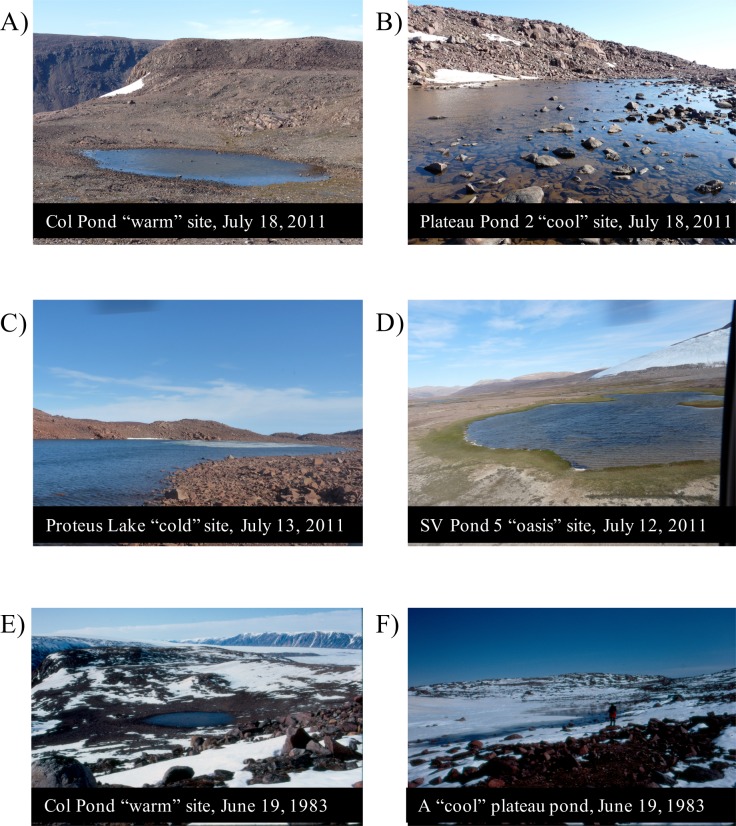
Fig 1. Images of the Ellesmere Island and Pim Island sites highlighting the differences in microclimate between the four categories.
Col Pond (A) a “warm” site; Plateau Pond 2 (B) a “cool” site with snow persisting in the catchment; Proteus Lake (C) a “cold” site with no catchment vegetation and a pan of ice; and Sverdrup Pond 5 (D) an “oasis” site with considerable catchment vegetation. Photos A-D are taken from July 12th– 18th, 2011. Photo E and F are archival photographs (source John Smol) taken on June 19th, 1983, within one hour of each other. Col Pond (E) is ice free, while a pond on the plateau (F) remains largely ice covered (Plateau Pond 2, located ~0.5 km away and at a similar elevation, was fully ice-covered at the time), illustrating the differences in ice-off times between the “warm” and “cool” sites at the beginning of summer.
Fig 2
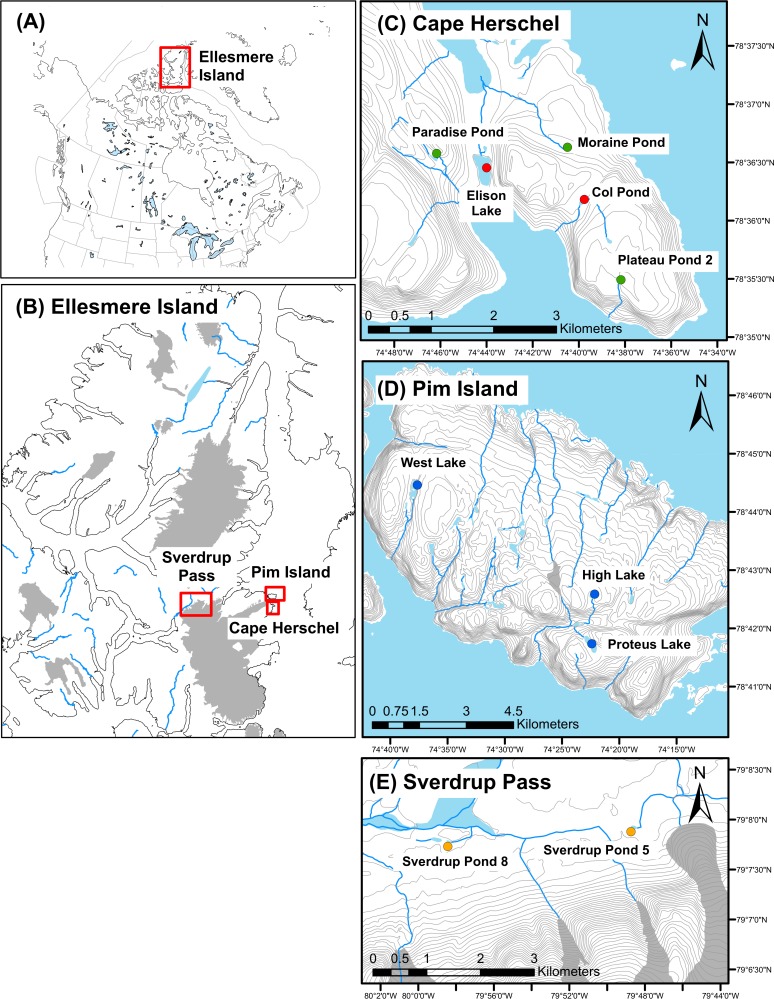
Fig 2. Location map of study sites.
Location map for Ellesmere Island, Nunavut, Canada (A), with Ellesmere Island in detail highlighting the three study regions: Cape Herschel, Pim Island, and Sverdrup Pass (B), and higher resolution insets of Cape Herschel (C), Pim Island (D), and Sverdrup Pass (E) identifying the 10 lakes and ponds in this study with “warm” sites as red circles, “cool” sites as green circles, “cold” sites as dark blue circles, and “oasis” sites in orange. Major hydrological features are shown in light blue, glaciers in dark grey and 20 m topographic contours as light grey lines. Source: Natural Resources Canada [28].
Fig 3
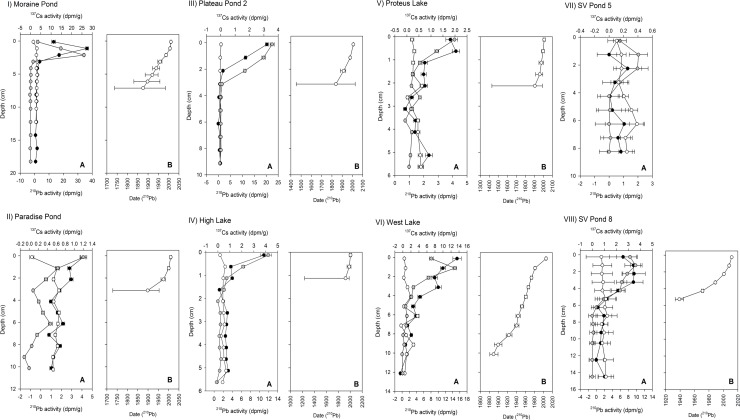
Fig 3. Profiles of 210Pb activities and age-depth models.
The activities in decays per minute g-1 (dpm/g) of unsupported 210Pb (black circles), supported 210Pb (white circles) and 137Cs (grey circles) vs sediment depth (A) and the Constant Rate of Supply 210Pb generated age-depth model (B) for each dated study site: Moraine Pond (I), Paradise Pond (II), Plateau Pond 2 (III), High Lake (IV), Proteus Lake (V), West Lake (VI), SV Pond 5 (VII), and SV Pond 8 (VIII). Error bars represent standard error.
Fig 4
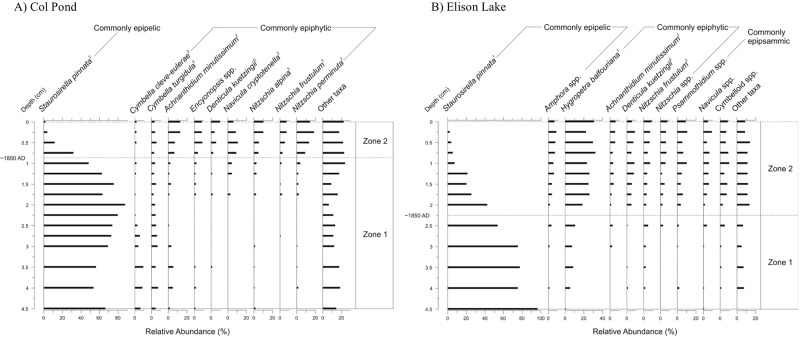
Fig 4. Relative frequency profiles of dominant diatom taxa sorted according to habitat preference from “warm” sites, along with significant stratigraphic zones.
(A) Col Pond and (B) Elison Lake, on Ellesmere Island, Nunavut, Canada. Habitat preferences are provided and attributed as follows: 1) Douglas et al. [27], 2) Lim et al. [14], 3) Michelutti et al. [55], 4) Kingston [56], and 5) Kociolek and Spaulding [57]. Stratigraphies are plotted against core depth and reference dates are provided from a previous study [4] on the same sites.
Fig 5
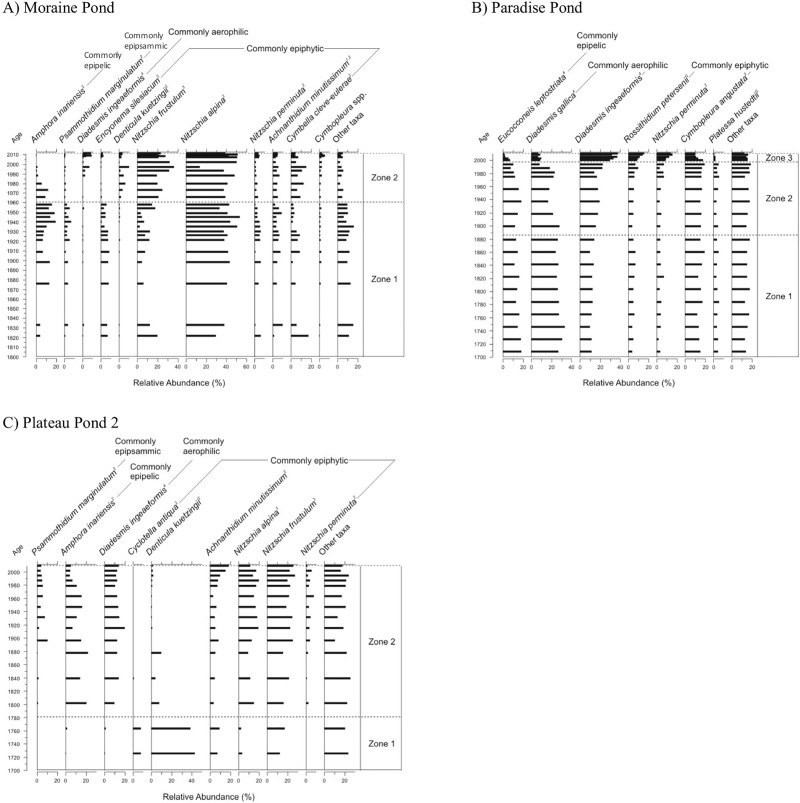
Fig 5. Relative frequency profiles of dominant diatom taxa sorted according to habitat preference from “cool” sites, along with significant stratigraphic zones.
(A) Moraine Pond, (B) Paradise Pond, and (C) Plateau Pond 2, on Ellesmere Island, Nunavut, Canada. Habitat preferences are provided and attributed as follows: 1) Douglas et al. [27], 2) Lim et al. [14], 3) Michelutti et al. [55], 4) Kingston [56], and 5) Kociolek and Spaulding [57]. Stratigraphies are plotted against interpolated 210Pb age.
Fig 6
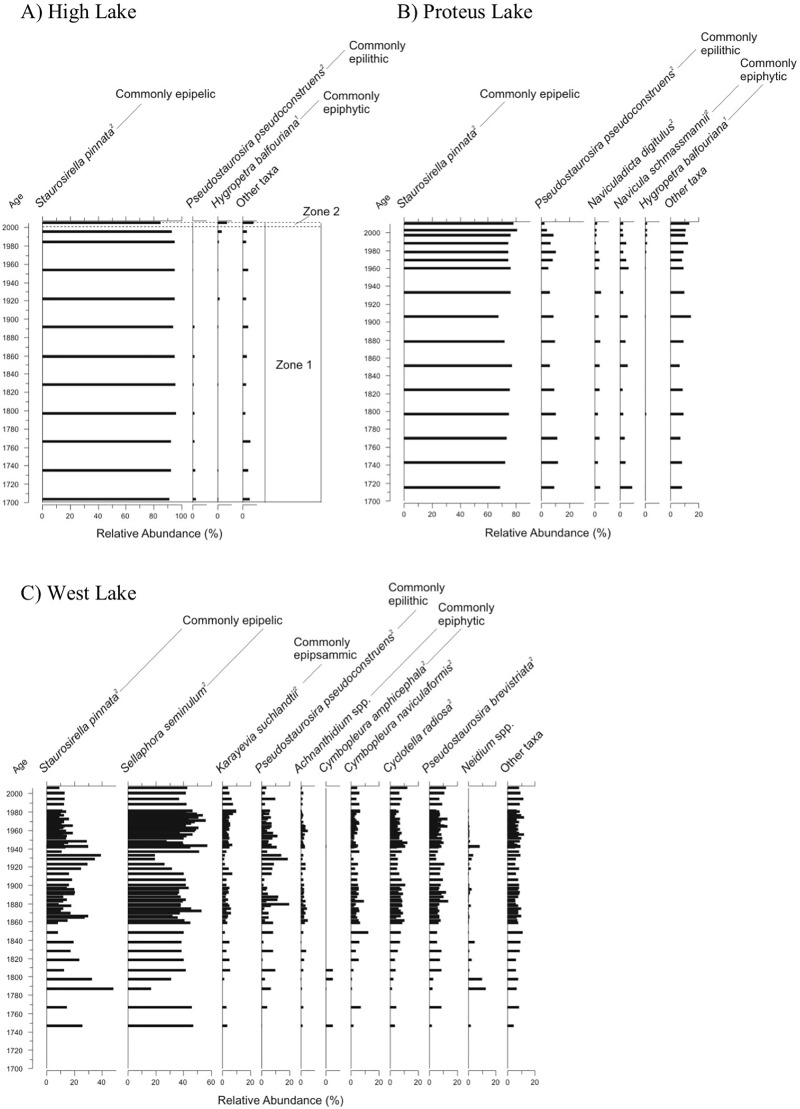
Fig 6. Relative frequency profiles of dominant diatom taxa sorted according to habitat preference from “cold” sites, along with significant stratigraphic zones.
(A) High Lake, (B) Proteus Lake, and (C) West Lake, on Pim Island, Nunavut, Canada. Habitat preferences are provided and attributed as follows: 1) Douglas et al. [27], 2) Lim et al. [14], 3) Michelutti et al. [55], 4) Kingston [56], and 5) Kociolek and Spaulding [57]. Stratigraphies are plotted against interpolated 210Pb age.
Fig 7
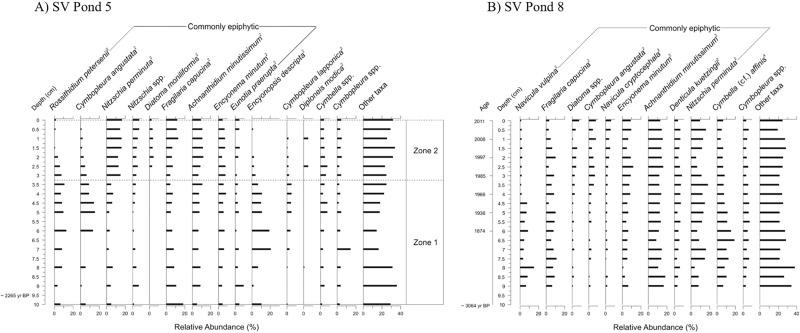
Fig 7. Relative frequency profiles of dominant diatom taxa sorted according to habitat preference from Sverdrup Pass “oasis” sites, along with significant stratigraphic zones.
(A) SV Pond 5 and (B) SV Pond 8, Ellesmere Island, Nunavut, Canada. Habitat preferences are provided and attributed as follows: 1) Douglas et al. [27], 2) Lim et al. [14], 3) Michelutti et al. [55], 4) Kingston [56], and 5) Kociolek and Spaulding [57]. Stratigraphies are plotted against core depth and reference dates are provided from 210Pb ages, where suitable (B), and with basal 14C ages.
Fig 8
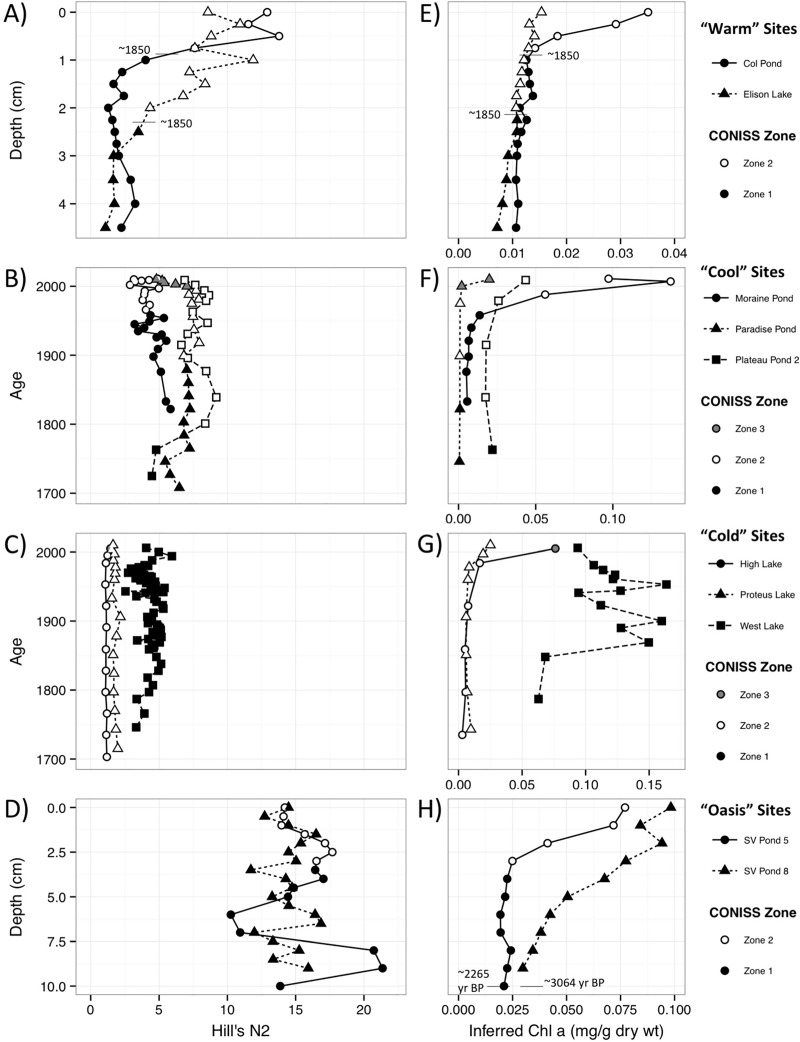
Fig 8. Hill’s N2 diversity index values chlorophyll a profiles for all study sites.
Hill’s N2 diversity index values (A, B, C, D) and visible reflectance spectroscopy-inferred chlorophyll a concentrations (E, F, G, H) from lakes and ponds divided into “warm” (A, E), “cool” (B, F), “cold” (C, G), and “oasis” (D, H) groups based upon local elevation and climate gradients on Ellesmere Island and Pim Island, Nunavut, Canada. The diatom zones are indicated on each profile to relate the species changes to the changes in diversity and inferred primary production.

Comment in

References

    1. Larsen JN, Anisimov OA, Constable A, Hollowed AB, Maynard N, Prestrud P, et al. Polar regions In: Barros VR, Field CB, Dokken DJ, Mastrandrea MD, Mach KJ, Bilir TE, et al., editors. Climate Change 2014: Impacts, Adaptation, and Vulnerability Part B: Regional Aspects Contribution of Working Group II to the Fifth Assessment Report of the Intergovernmental Panel on Climate Change. New York: Cambridge University Press; 2014. p. 71.
    1. Smol JP, Douglas MSV. From controversy to consensus: making the case for recent climate change in the Arctic using lake sediments. Front Ecol Environ. 2007; 5(9): 466–74.
    1. Smol JP, Douglas MSV. Crossing the final ecological threshold in high Arctic ponds. Proc Natl Acad Sci U S A. 2007; 104(30): 12395–7. 10.1073/pnas.0702777104 - DOI - PMC - PubMed
    1. Douglas MSV, Smol JP, Blake W Jr. Marked post-18th century environmental change in high-Arctic ecosystems. Science. 1994; 266: 416–9. 10.1126/science.266.5184.416 - DOI - PubMed
    1. Smol JP, Wolfe AP, Birks HJB, Douglas MSV, Jones VJ, Korhola A, et al. Climate-driven regime shifts in the biological communities of Arctic lakes. Proc Natl Acad Sci U S A. 2005; 102(12): 4397–402. 10.1073/pnas.0500245102 - DOI - PMC - PubMed