A Comparative Study of Intravenous Dexmedetomidine and Intravenous Clonidine for Postspinal Shivering in Patients Undergoing Lower Limb Orthopedic Surgeries
- PMID: 28298775
- PMCID: PMC5341633
- DOI: 10.4103/0259-1162.183157
A Comparative Study of Intravenous Dexmedetomidine and Intravenous Clonidine for Postspinal Shivering in Patients Undergoing Lower Limb Orthopedic Surgeries
Abstract
Background: Dexmedetomidine and clonidine have been used for the prevention and treatment of shivering following spinal blockade. A prospective randomized, double-blinded study was conducted to compare the efficacy and safety of dexmedetomidine and clonidine in controlling postspinal shivering.
Methods: A total of sixty participants of equal sex, aged between 18 and 60 years of American Society of Anesthesiologists (ASA) I/II Class, who underwent orthopedic lower limb surgeries under spinal anesthesia with ≥Grade III shivering were randomly divided into two groups, Group D (n = 30) received injection dexmedetomidine 0.5 μg/kg and Group C (n = 30) received injection clonidine 1 μg/kg when they experienced shivering. Time taken to control shivering, response rate, recurrence rate, and side effects such as nausea, vomiting, dry mouth, respiratory depression, and deep sedation were observed.
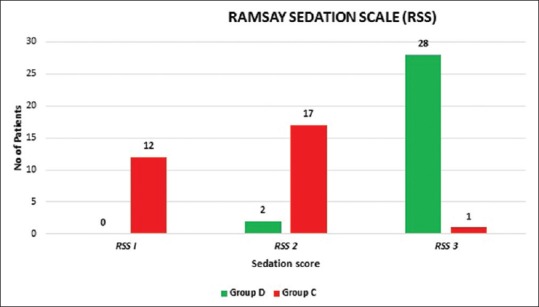
Results: The demographic profile, ASA Class, duration of surgery, duration of anesthesia, temperature, onset and grade of shivering were all comparable between the two groups. Time taken to control shivering and recurrence rate were significantly lower in Group D when compared with Group C. Level of sedation was adequate with Group D, and the incidence of hypotension and bradycardia were significantly higher in Group C. The other side effects profiles were comparable between the two groups.
Conclusion: Dexmedetomidine 0.5 μg/kg is more efficient than clonidine 1 μg/kg in controlling postspinal blockade shivering. Dexmedetomidine has early onset of effect, high response rate, and less recurrence rate with added advantage of good sedation and stable cardiorespiratory parameters.
Keywords: Clonidine; dexmedetomidine; lower limb surgeries; postspinal shivering.
Conflict of interest statement
There are no conflicts of interest.
Figures
References
-
- Ozaki M, Kurz A, Sessler DI, Lenhardt R, Schroeder M, Moayeri A, et al. Thermoregulatory thresholds during epidural and spinal anesthesia. Anesthesiology. 1994;81:282–8. - PubMed
-
- Glosten B, Sessler DI, Faure EA, Karl L, Thisted RA. Central temperature changes are poorly perceived during epidural anesthesia. Anesthesiology. 1992;77:10–6. - PubMed
-
- Sessler DI. Temperature regulation and monitoring. In: Millar RD, editor. Textbook of Anesthesia. 7th ed. New York: Churchill Livingstone Inc; 2010. pp. 1533–66.
-
- Tsai YC, Chu KS. A comparison of tramadol, amitriptyline, and meperidine for postepidural anesthetic shivering in parturients. Anesth Analg. 2001;93:1288–92. - PubMed
-
- Macintyre PE, Pavlin EG, Dwersteg JF. Effect of meperidine on oxygen consumption, carbon dioxide production, and respiratory gas exchange in postanesthesia shivering. Anesth Analg. 1987;66:751–5. - PubMed
LinkOut - more resources
Full Text Sources
Other Literature Sources