


Antithrombotic Effect and Mechanism of Radix Paeoniae Rubra
- PMID: 28299338
- PMCID: PMC5337344
- DOI: 10.1155/2017/9475074
Antithrombotic Effect and Mechanism of Radix Paeoniae Rubra
Abstract
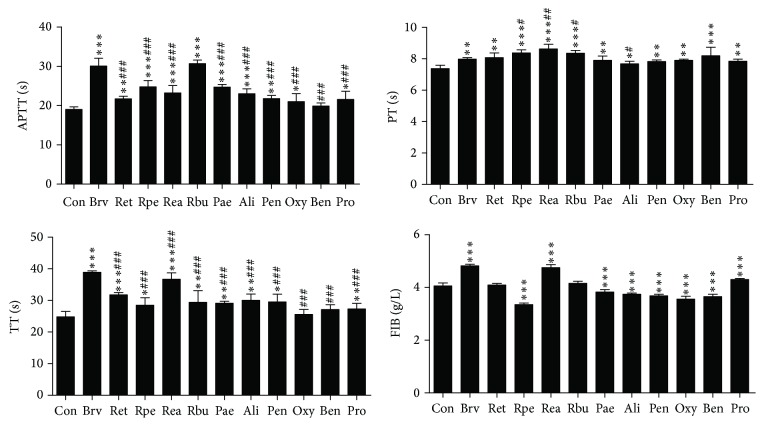
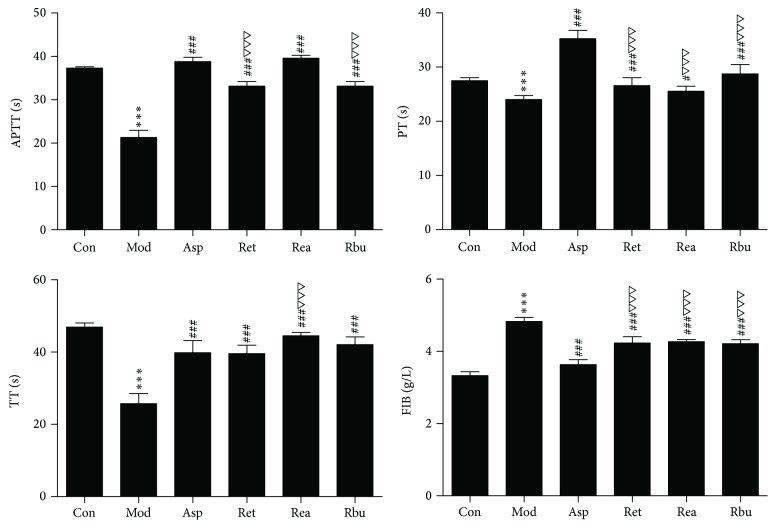
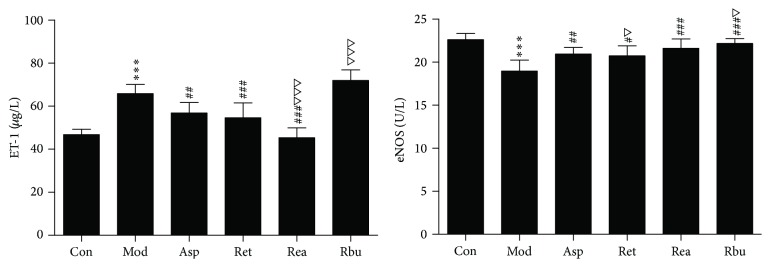
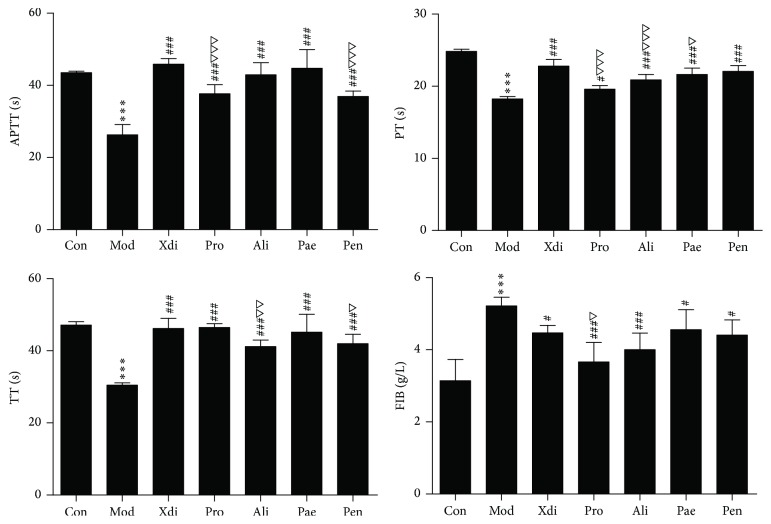
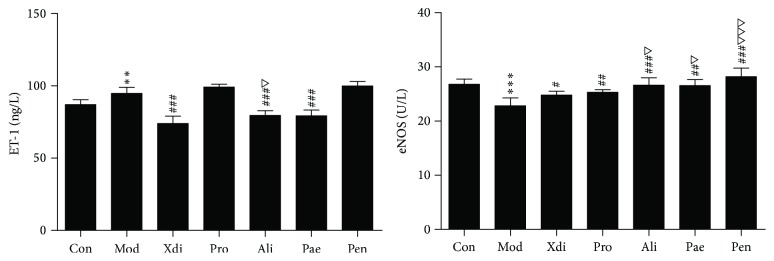
The compounds of Radix Paeoniae Rubra (RPR) were isolated and identified by bioassay-guided method, and antithrombotic effects and mechanism were investigated by the acute blood stasis rat model. The RPR extract was evaluated by APTT, TT, PT, and FIB assays in vitro. Results indicated that RPR extract exhibited the anticoagulant activity. In order to find active compounds, six compounds were isolated and identified, and four compounds, paeoniflorin (Pae), pentagalloylglucose (Pen), albiflorin (Ali), and protocatechuic acid (Pro), exhibited the anticoagulant activity in vitro. Therefore, the antithrombosis effects of RPR extract and four active compounds were investigated in vivo by measuring whole blood viscosity (WBV), plasma viscosity (PV), APTT, PT, TT, and FIB. Meanwhile, the levels of TXB2, 6-Keto-PGF1α , eNOS, and ET-1 were detected. Results suggested that RPR extract and four active compounds had the inhibition effect on thrombus formation, and the antithrombotic effects were associated with the regulation of vascular endothelium active substance, activating blood flow and anticoagulation effect.
Conflict of interest statement
The authors declare that they have no conflict of interests.
Figures
References
-
- Berry C. N., Girard D., Lochot S., Lecoffre C. Antithrombotic actions of argatroban in rat models of venous, ‘mixed’ and arterial thrombosis, and its effects on the tail transection bleeding time. British Journal of Pharmacology. 1994;113(4):1209–1214. doi: 10.1111/j.1476-5381.1994.tb17126.x. - DOI - PMC - PubMed
-
- Bao Q. Q., Zhang L., Li X. Q., Li Z. L., Liu Y. M. Clinical significance of acute infection in elderly patients with thrombotic disease. Chinese Journal of Gerontology. 2009;29(17):2253–2255.
-
- Rosendaal F. R. Risk factors for venous thrombotic disease. Thrombosis and Haemostasis. 1999;82(2):610–619. - PubMed
MeSH terms
Substances
LinkOut - more resources
Full Text Sources
Other Literature Sources
Medical
