


Validation of a Preclinical Drug Screening Platform for Pharmacoresistant Epilepsy
- PMID: 28303498
- PMCID: PMC7895462
- DOI: 10.1007/s11064-017-2227-7
Validation of a Preclinical Drug Screening Platform for Pharmacoresistant Epilepsy
Abstract
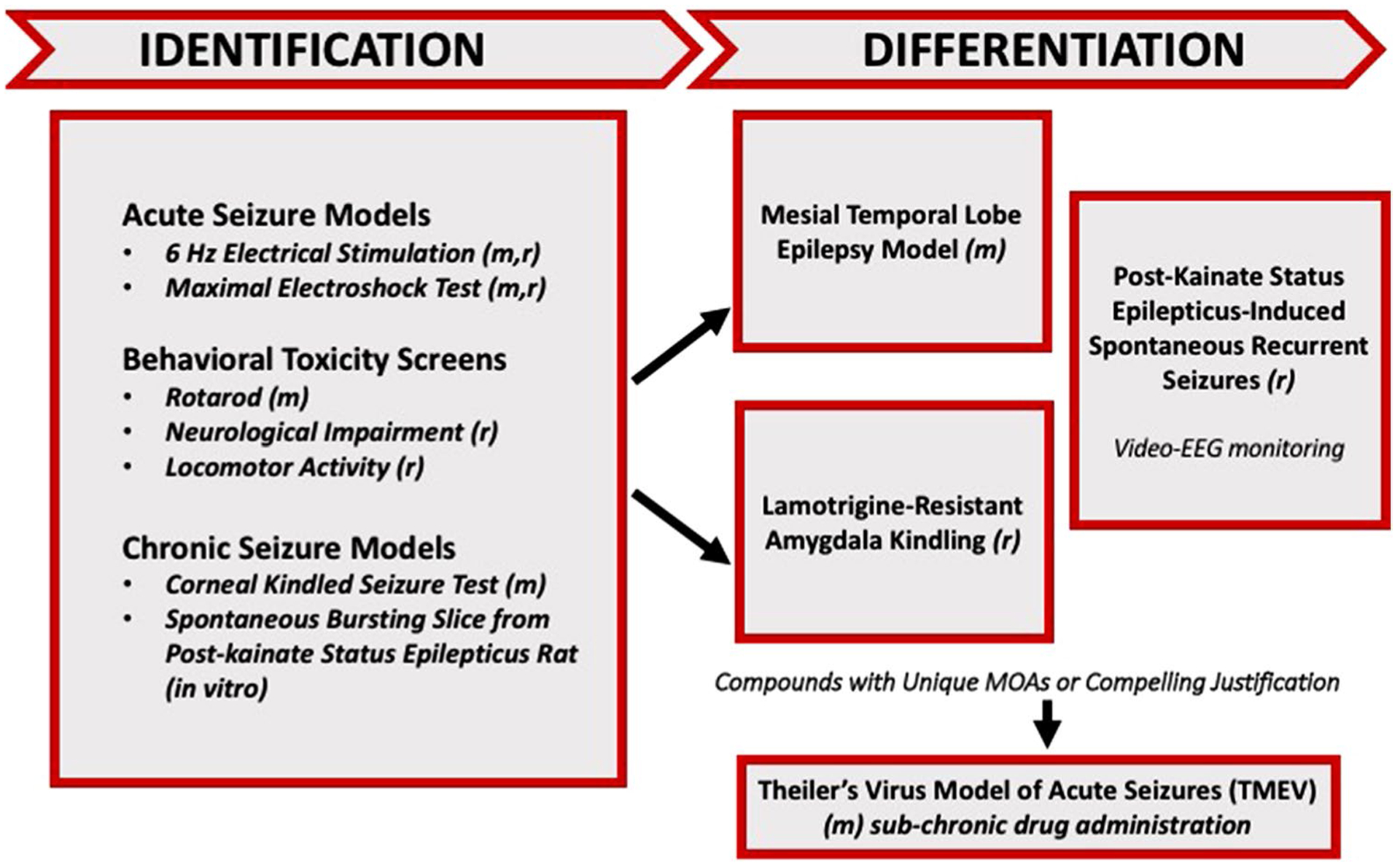
The successful identification of promising investigational therapies for the treatment of epilepsy can be credited to the use of numerous animal models of seizure and epilepsy for over 80 years. In this time, the maximal electroshock test in mice and rats, the subcutaneous pentylenetetrazol test in mice and rats, and more recently the 6 Hz assay in mice, have been utilized as primary models of electrically or chemically-evoked seizures in neurologically intact rodents. In addition, rodent kindling models, in which chronic network hyperexcitability has developed, have been used to identify new agents. It is clear that this traditional screening approach has greatly expanded the number of marketed drugs available to manage the symptomatic seizures associated with epilepsy. In spite of the numerous antiseizure drugs (ASDs) on the market today, the fact remains that nearly 30% of patients are resistant to these currently available medications. To address this unmet medical need, the National Institute of Neurological Disorders and Stroke (NINDS) Epilepsy Therapy Screening Program (ETSP) revised its approach to the early evaluation of investigational agents for the treatment of epilepsy in 2015 to include a focus on preclinical approaches to model pharmacoresistant seizures. This present report highlights the in vivo and in vitro findings associated with the initial pharmacological validation of this testing approach using a number of mechanistically diverse, commercially available antiseizure drugs, as well as several probe compounds that are of potential mechanistic interest to the clinical management of epilepsy.
Keywords: 6 Hz test; Animal models; Antiseizure drugs; Corneal kindling; M-CPP; N6-cyclopentyladenosine; Valproic acid.
Figures
References
-
- Council NANDaSN (2015) Anticonvulsant Screening Program Report.
-
- Barker-Haliski M, White HS (2015) Antiepileptic drug development and experimental models In: Wyllie E, Gidal BE, Good-kin HP (eds) Wyllie’s treatment of epilepsy. 6th edn Lippencott, Williams & Wilkins, Philadelphia
Publication types
MeSH terms
Substances
Grants and funding
LinkOut - more resources
Full Text Sources
Other Literature Sources
