


Relationships between strength and endurance parameters and air depletion rates in professional firefighters
- PMID: 28303944
- PMCID: PMC5356010
- DOI: 10.1038/srep44590
Relationships between strength and endurance parameters and air depletion rates in professional firefighters
Abstract
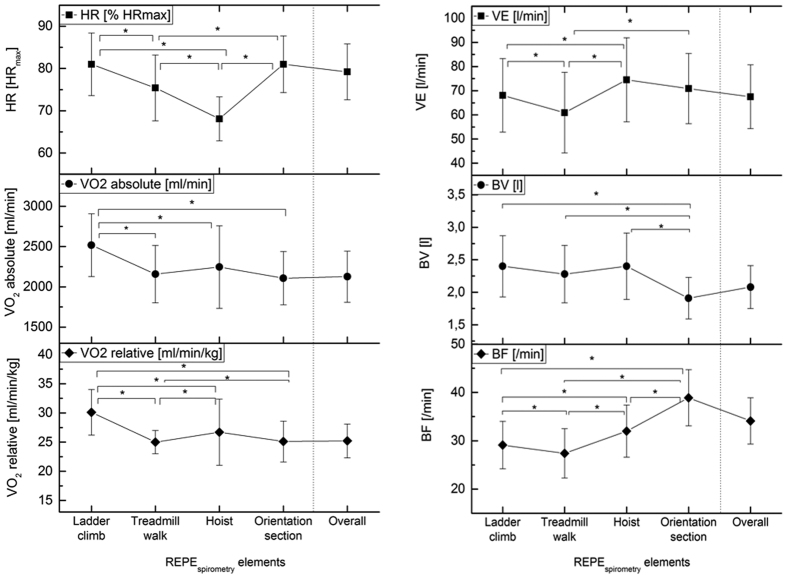
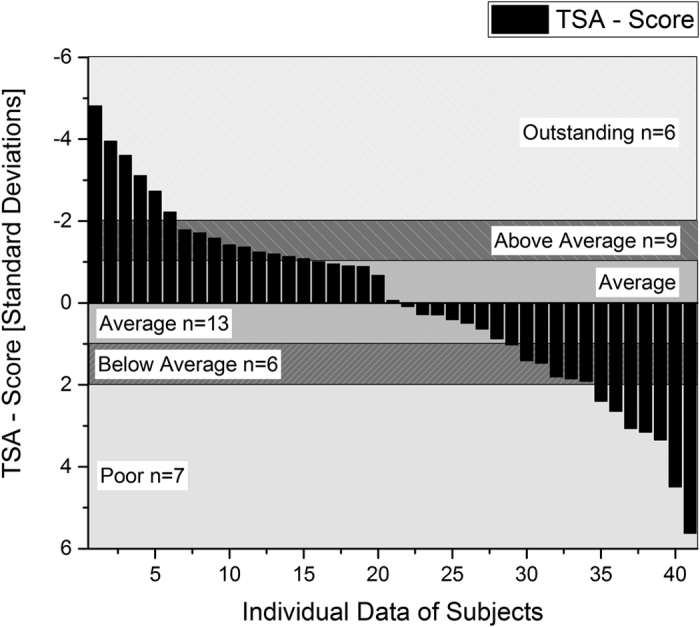
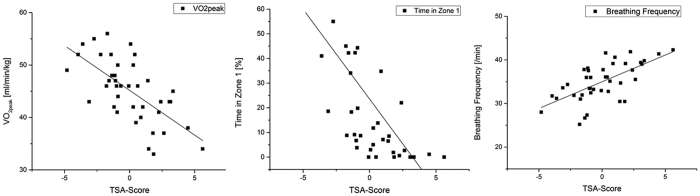
The aim of this study was to quantify the physical demands of a simulated firefighting circuit and to establish the relationship between job performance and endurance and strength fitness measurements. On four separate days 41 professional firefighters (39 ± 9 yr, 179.6 ± 2.3 cm, 84.4 ± 9.2 kg, BMI 26.1 ± 2.8 kg/m2) performed treadmill testing, fitness testing (strength, balance and flexibility) and a simulated firefighting exercise. The firefighting exercise included ladder climbing (20 m), treadmill walking (200 m), pulling a wire rope hoist (15 times) and crawling an orientation section (50 m). Firefighting performance during the simulated exercise was evaluated by a simple time-strain-air depletion model (TSA) taking the sum of z-transformed parameters of time to finish the exercise, strain in terms of mean heart rate, and air depletion from the breathing apparatus. Multiple regression analysis based on the TSA-model served for the identification of the physiological determinants most relevant for professional firefighting. Three main factors with great influence on firefighting performance were identified (70.1% of total explained variance): VO2peak, the time firefighter exercised below their individual ventilatory threshold and mean breathing frequency. Based on the identified main factors influencing firefighting performance we recommend a periodic preventive health screening for incumbents to monitor peak VO2 and individual ventilatory threshold.
Conflict of interest statement
The authors declare no competing financial interests.
Figures
References
-
- Bilzon J., Scarpello E. G., Smith C. V., Ravenhill N. A. & Rayson M. P. Characterization of the metabolic demands of simulated shipboard Royal Navy fire-fighting tasks. Ergonomics. 44, 766–780 (2001). - PubMed
-
- Davis P. O., Dotson C. O. & Laine D. Relationship between simulated fire fighting tasks and physical performance measures. Medicine & Science in Sports & Exercise 14, 65–71 (1982). - PubMed
-
- Del Sal M. et al. Physiologic Responses Of Firefighter Recruits During A Supervised Live-Fire Work Performance Test. Journal of Strength and Conditioning Research 23, 2396–2404 (2009). - PubMed
-
- Elsner K. & Kolkhorst F. W. Metabolic demands of simulated firefighting tasks. Ergonomics 51, 1418–1425 (2008). - PubMed
-
- Heimburg E., Rasmussen A. & Medbö J. Physiological responses of firefighters and performance predictors during a simulated rescue of hospital patients. Ergonomics 49, 111–126 (2006). - PubMed
Publication types
MeSH terms
LinkOut - more resources
Full Text Sources
Other Literature Sources
Research Materials
