


Sexual dimorphism in laryngeal muscle fibers and ultrasonic vocalizations in the adult rat
- PMID: 28304076
- PMCID: PMC5819991
- DOI: 10.1002/lary.26561
Sexual dimorphism in laryngeal muscle fibers and ultrasonic vocalizations in the adult rat
Abstract
Objective: The human voice is sexually dimorphic in obvious ways, such as differences in fundamental frequency and gross laryngeal anatomy, but also in less apparent ways, such as in the prevalence and types of voice disorders and the manifestation of voice changes in advanced age. Differences between males and females are rarely explored, however, in mechanistic animal studies. The goal of this study was to explore sexual dimorphism in laryngeal function and structure in adult rats by examining ultrasonic vocalization acoustics and muscle fiber size and type in the thyroarytenoid muscle.
Study design: Animal group comparison.
Methods: Spontaneous ultrasonic vocalizations from 10 male adult rats and 10 female adult rats were recorded, classified, and acoustically analyzed. Cross-sections of the thyroarytenoid muscle were stained and imaged for analysis of muscle fiber size and type. Acoustic and muscle parameters were statistically compared between sexes.
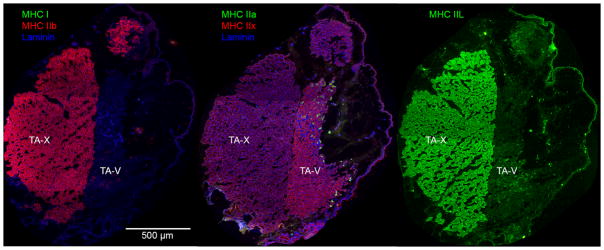
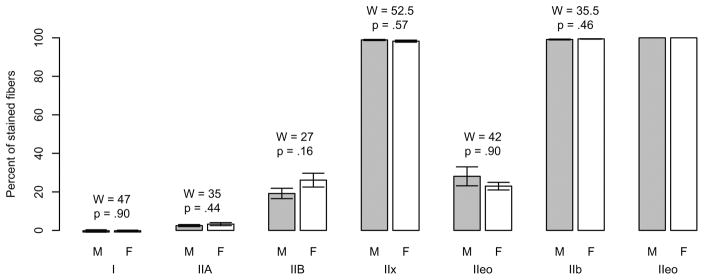
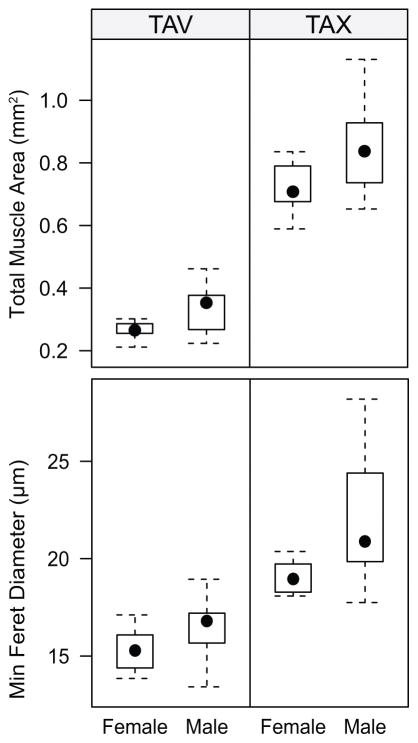
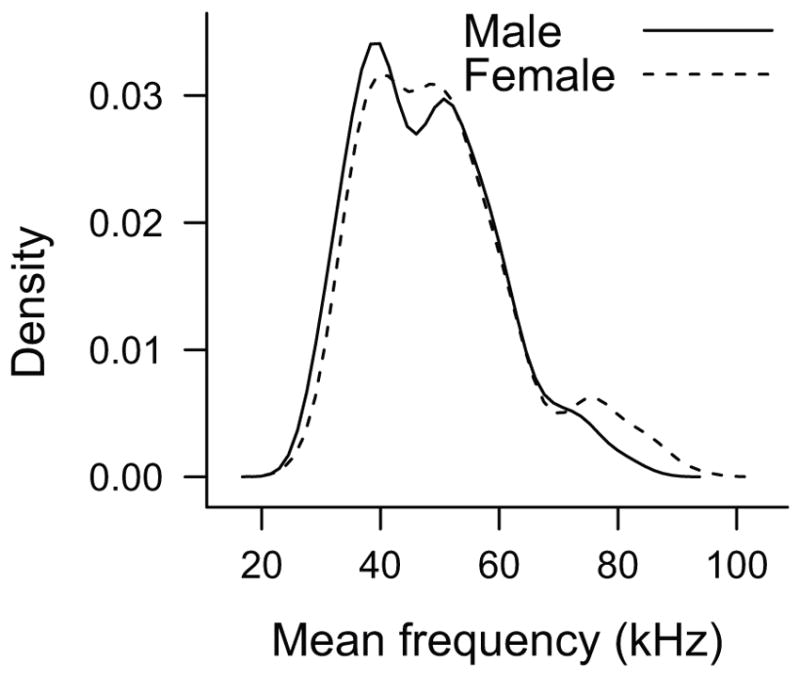
Results: Male rats had a lower mean frequency of short ultrasonic vocalizations. Male rats also had a larger mean fiber size in the external division of the thyroarytenoid and larger overall muscle area in both the vocalis and external divisions of the thyroarytenoid. However, muscle fiber type compositions were similar between sexes in both the vocalis and external division of the thyroarytenoid muscles.
Conclusion: Functional and structural laryngeal differences exist between adult male and female rats; therefore, the rat model can be used to further study sexual dimorphism of the voice.
Level of evidence: NA. Laryngoscope, 127:E270-E276, 2017.
Keywords: Larynx; female; rat; sexual dimorphism; thyroarytenoid; ultrasonic vocalizations.
© 2017 The American Laryngological, Rhinological and Otological Society, Inc.
Conflict of interest statement
The authors have no conflicts of interest or financial disclosures related relevant to the subject of this manuscript.
Figures
References
-
- Kahane JC. A morphological study of the human prepubertal and pubertal larynx. Am J Anat. 1978 Jan;151(1):11–19. - PubMed
-
- Titze IR. Physiologic and Acoustic Differences between Male and Female Voices. J Acoust Soc Am. 1989 Apr;85(4):1699–1707. - PubMed
-
- Abitbol J, Abitbol P, Abitbol B. Sex hormones and the female voice. J Voice. 1999 Sep;13(3):424–446. - PubMed
-
- Bhattacharyya N. The prevalence of voice problems among adults in the United States. Laryngoscope. 2014 Oct;124(10):2359–2362. - PubMed
-
- Simberg S, Udd H, Santtila P. Gender Differences in the Prevalence of Vocal Symptoms in Smokers. J Voice. 2015 Sep;29(5):588–591. - PubMed
Publication types
MeSH terms
Grants and funding
LinkOut - more resources
Full Text Sources
Other Literature Sources
Research Materials
