


Influence of human papillomavirus on the clinical presentation of oropharyngeal carcinoma in the United States
- PMID: 28304083
- PMCID: PMC6615732
- DOI: 10.1002/lary.26566
Influence of human papillomavirus on the clinical presentation of oropharyngeal carcinoma in the United States
Abstract
Objective: Much of what is known about the significance of human papillomavirus (HPV) in oropharyngeal squamous cell carcinoma is derived from single-institution retrospective studies, post hoc analyses of tissue specimens from clinical trials, and tissue bank studies with a small sample size. The objective of this study is to investigate the impact of HPV on the frequency and clinical presentation of oropharyngeal carcinoma in a large, national sample with information from patients who underwent HPV testing.
Study design: Retrospective, cross-sectional study.
Methods: We identified a comprehensive national sample of 8,359 patients with oropharyngeal carcinoma and known HPV status diagnosed between 2010 and 2011 within the National Cancer Database. Multivariable logistic regression was used to assess correlates of patient and tumor characteristics on HPV status.
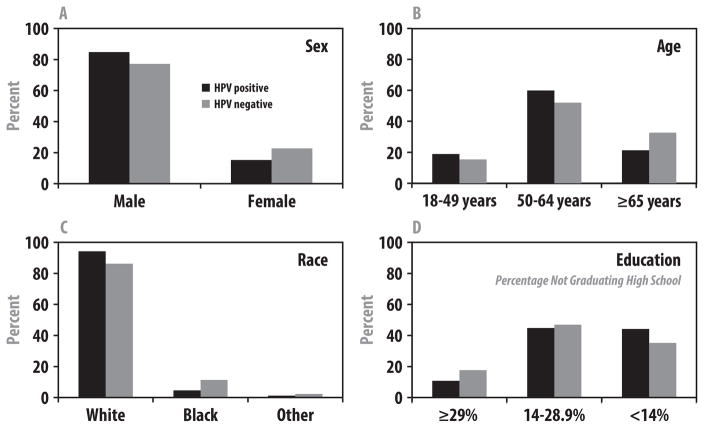
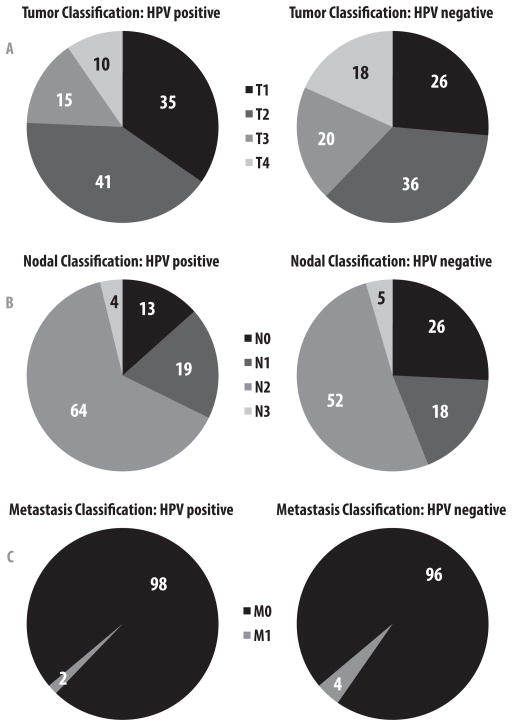
Results: Among patients with oropharyngeal carcinoma, the frequency of HPV-related squamous cell carcinoma in the United States was 65.4%. HPV-related oropharyngeal carcinoma was associated with younger age, male sex, and white race (P < 0.001). Advanced primary tumor stage was associated with HPV-negative disease (P < 0.001), whereas increasing nodal burden was associated with HPV-positive disease (P < 0.001). Despite less-advanced nodal disease, HPV-negative tumors were associated with a higher likelihood of metastasis at presentation (P < 0.001).
Conclusion: HPV now accounts for the majority of newly diagnosed oropharyngeal carcinoma in the United States and is associated with a distinct clinical profile, supporting efforts to re-evaluate the staging and treatment paradigm for HPV-associated oropharyngeal cancer.
Level of evidence: 4. Laryngoscope, 127:2270-2278, 2017.
Keywords: HPV; National Cancer Database; Oropharyngeal squamous cell carcinoma; clinical presentation; human papillomavirus.
© 2017 The American Laryngological, Rhinological and Otological Society, Inc.
Conflict of interest statement
Figures
References
-
- Auluck A, Hislop G, Bajdik C, et al. Trends in oropharyngeal and oral cavity cancer incidence of Human Papillomavirus (HPV)-related and HPV-unrelated sites in a multicultural population: The British Columbia experience. Cancer. 2010;116:2635–2644. - PubMed
-
- Hammarstedt L, Lindquist D, Dahlstrand H, et al. Human papillomavirus as a risk factor for the increase in incidence of tonsillar cancer. Int J Cancer. 2006;119:2620–2623. - PubMed
-
- Braakhuis BJM, Visser O, René Leemans C. Oral and oropharyngeal cancer in The Netherlands between 1989 and 2006: Increasing incidence, but not in young adults. Oral Oncol. 2009;45:e85–e89. - PubMed
Publication types
MeSH terms
Grants and funding
LinkOut - more resources
Full Text Sources
Other Literature Sources
Research Materials
