


Structural and Molecular Mechanisms of Cytokine-Mediated Endocrine Resistance in Human Breast Cancer Cells
- PMID: 28306507
- PMCID: PMC5546241
- DOI: 10.1016/j.molcel.2017.02.008
Structural and Molecular Mechanisms of Cytokine-Mediated Endocrine Resistance in Human Breast Cancer Cells
Abstract
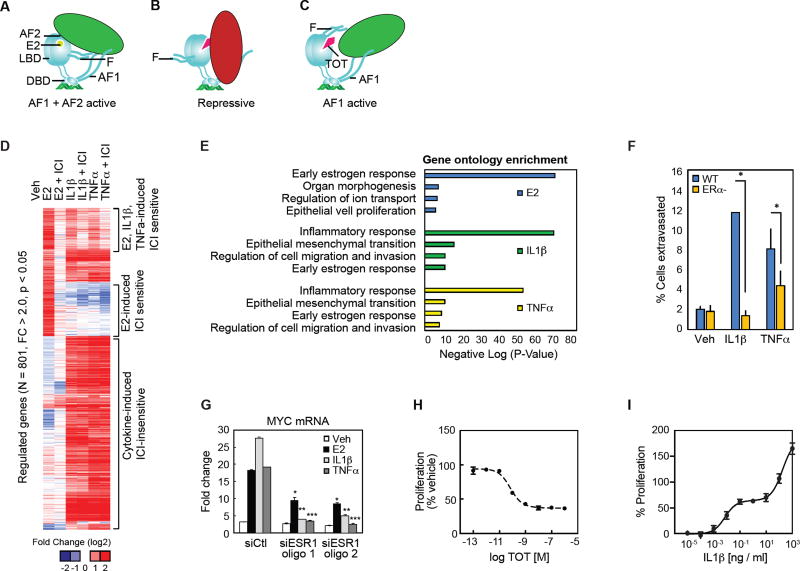
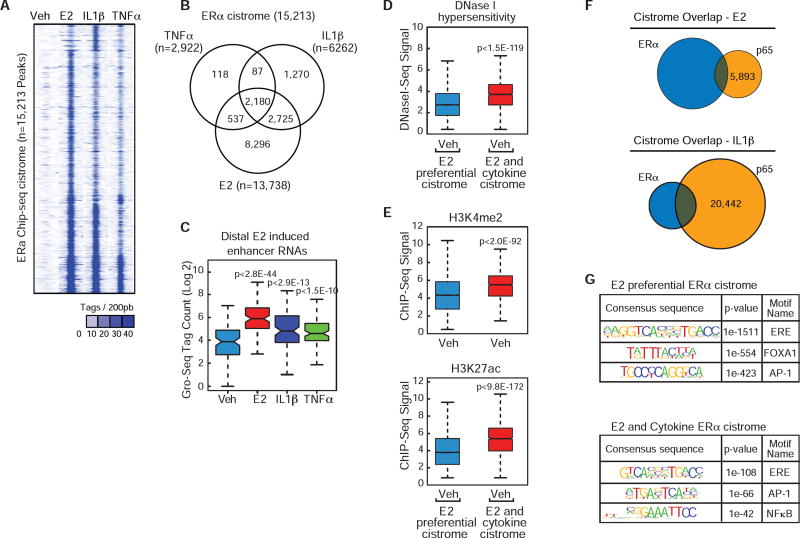
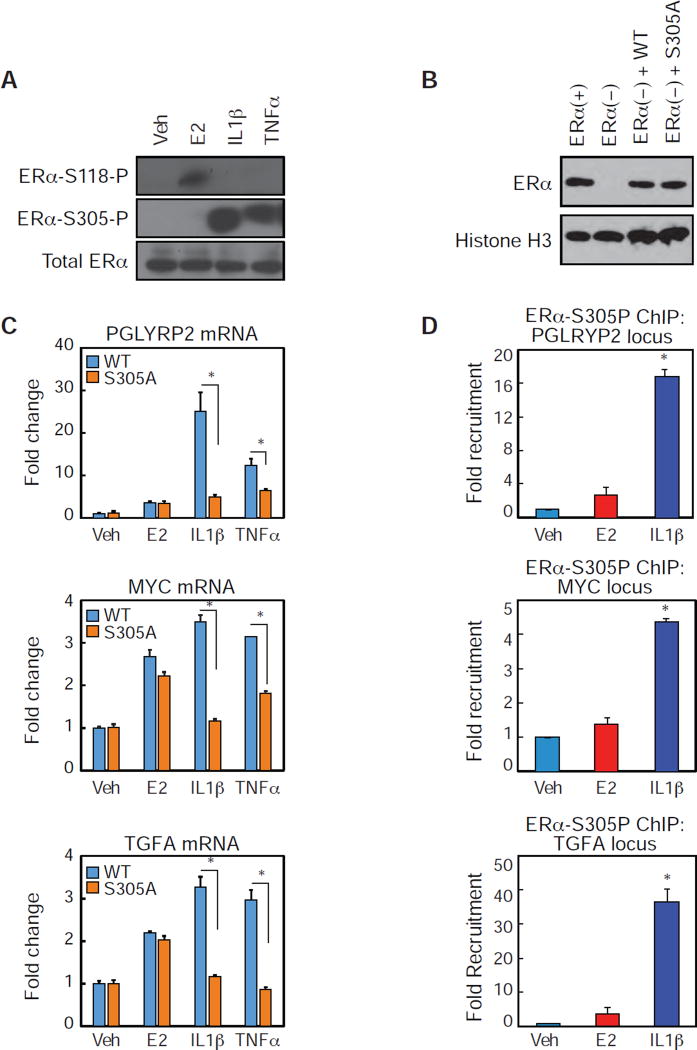
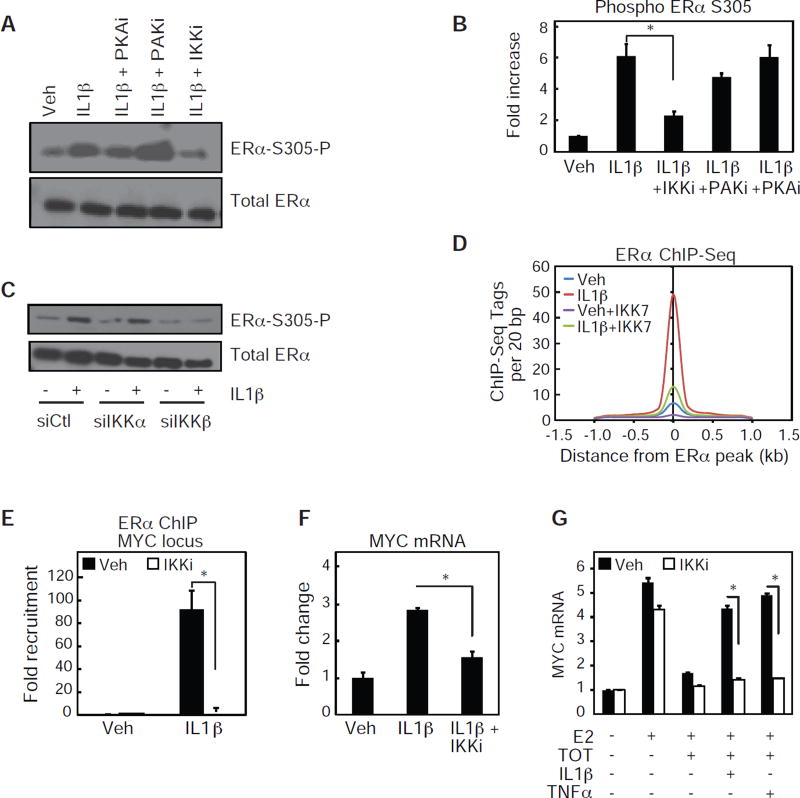
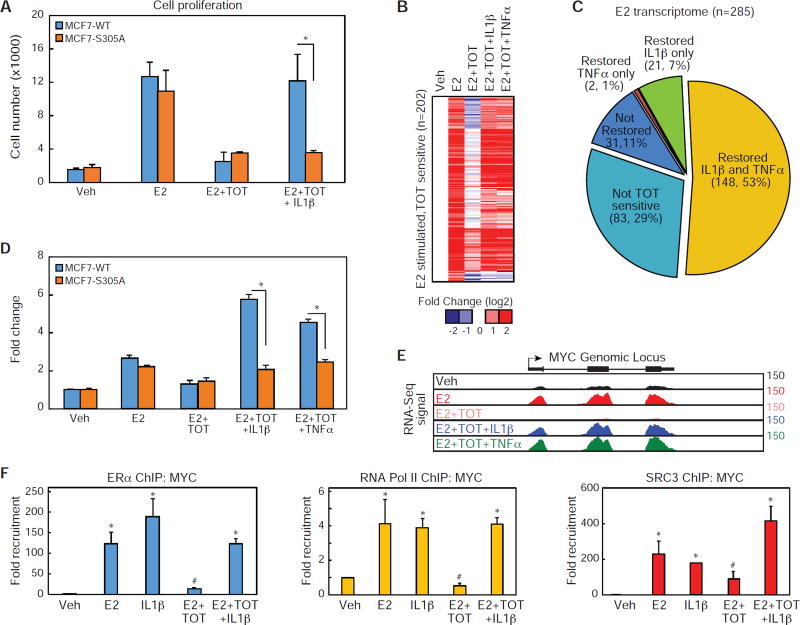
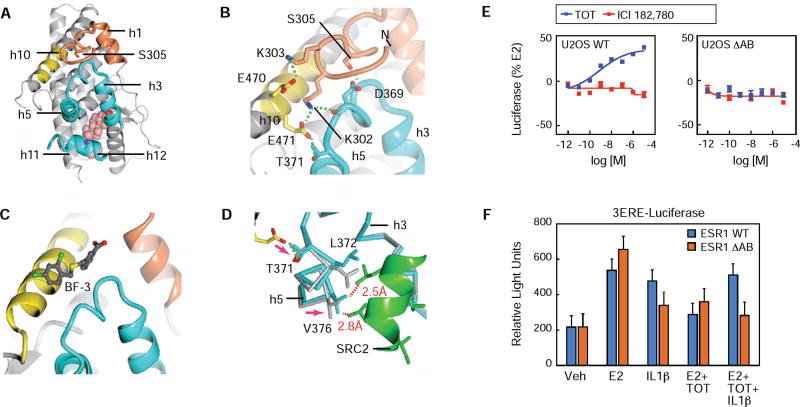
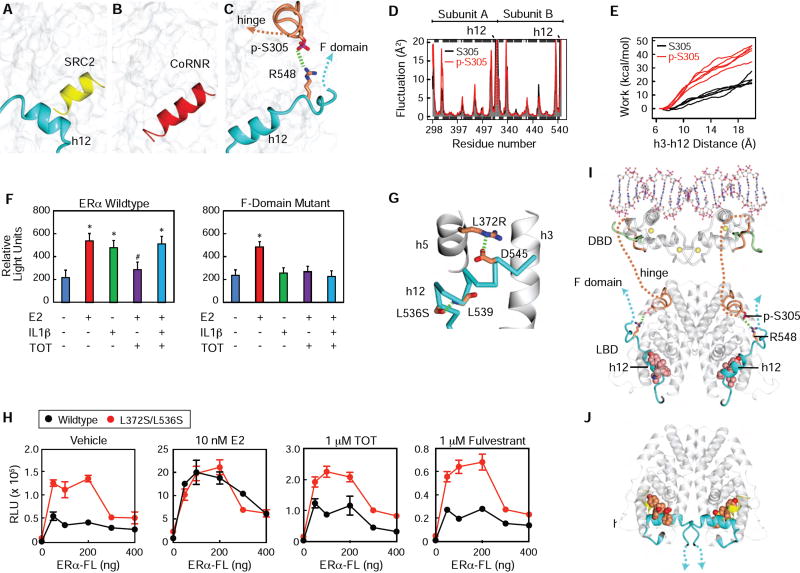
Human breast cancers that exhibit high proportions of immune cells and elevated levels of pro-inflammatory cytokines predict poor prognosis. Here, we demonstrate that treatment of human MCF-7 breast cancer cells with pro-inflammatory cytokines results in ERα-dependent activation of gene expression and proliferation, in the absence of ligand or presence of 4OH-tamoxifen (TOT). Cytokine activation of ERα and endocrine resistance is dependent on phosphorylation of ERα at S305 in the hinge domain. Phosphorylation of S305 by IKKβ establishes an ERα cistrome that substantially overlaps with the estradiol (E2)-dependent ERα cistrome. Structural analyses suggest that S305-P forms a charge-linked bridge with the C-terminal F domain of ERα that enables inter-domain communication and constitutive activity from the N-terminal coactivator-binding site, revealing the structural basis of endocrine resistance. ERα therefore functions as a transcriptional effector of cytokine-induced IKKβ signaling, suggesting a mechanism through which the tumor microenvironment controls tumor progression and endocrine resistance.
Keywords: breast cancer; crystallography; cytokines; drug resistance; estrogen receptor; inflammation; tamoxifen.
Copyright © 2017 Elsevier Inc. All rights reserved.
Figures
References
-
- Bodine PV, Harris HA, Komm BS. Suppression of ligand-dependent estrogen receptor activity by bone- resorbing cytokines in human osteoblasts. Endocrinology. 1999;140:2439–51. - PubMed
MeSH terms
Substances
Grants and funding
LinkOut - more resources
Full Text Sources
Other Literature Sources
Medical
Molecular Biology Databases
Research Materials
Miscellaneous
