


Barriers to dog rabies vaccination during an urban rabies outbreak: Qualitative findings from Arequipa, Peru
- PMID: 28306717
- PMCID: PMC5371379
- DOI: 10.1371/journal.pntd.0005460
Barriers to dog rabies vaccination during an urban rabies outbreak: Qualitative findings from Arequipa, Peru
Abstract
Background: Canine rabies was reintroduced to the city of Arequipa, Peru in March 2015. The Ministry of Health has conducted a series of mass dog vaccination campaigns to contain the outbreak, but canine rabies virus transmission continues in Arequipa's complex urban environment, putting the city's 1 million inhabitants at risk of infection. The proximate driver of canine rabies in Arequipa is low dog vaccination coverage. Our objectives were to qualitatively assess barriers to and facilitators of rabies vaccination during mass campaigns, and to explore strategies to increase participation in future efforts.
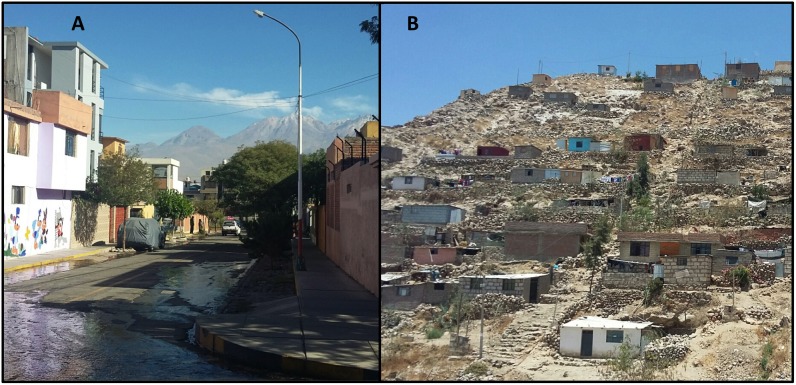
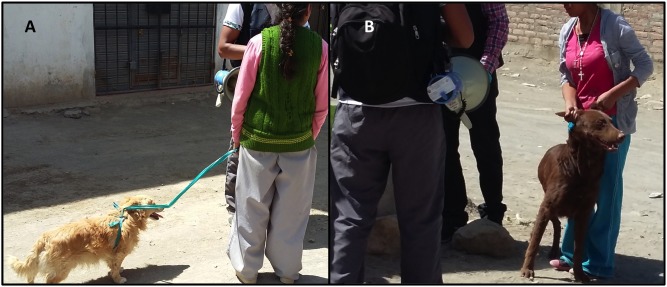
Methodology/principal findings: We conducted 8 focus groups (FG) in urban and peri-urban communities of Mariano Melgar district; each FG included both sexes, and campaign participants and non-participants. All FG were transcribed and then coded independently by two coders. Results were summarized using the Social Ecological Model. At the individual level, participants described not knowing enough about rabies and vaccination campaigns, mistrusting the campaign, and being unable to handle their dogs, particularly in peri-urban vs. urban areas. At the interpersonal level, we detected some social pressure to vaccinate dogs, as well as some disparaging of those who invest time and money in pet dogs. At the organizational level, participants found the campaign information to be insufficient and ill-timed, and campaign locations and personnel inadequate. At the community level, the influence of landscape and topography on accessibility to vaccination points was reported differently between participants from the urban and peri-urban areas. Poor security and impermanent housing materials in the peri-urban areas also drives higher prevalence of guard dog ownership for home protection; these dogs usually roam freely on the streets and are more difficult to handle and bring to the vaccination points.
Conclusions: A well-designed communication campaign could improve knowledge about canine rabies. Timely messages on where and when vaccination is occurring could increase dog owners' perception of their own ability to bring their dogs to the vaccination points and be part of the campaign. Small changes in the implementation of the campaign at the vaccination points could increase the public's trust and motivation. Location of vaccination points should take into account landscape and community concerns.
Conflict of interest statement
The authors have declared that no competing interests exist.
Figures
References
-
- Pan American Health Organization, World Health Organization. Epidemiological Alert [Internet]. 2015 Jun. Available: http://www.paho.org/hq/index.php?option=com_docman&task=doc_download&Ite...
-
- Ministerio de Salud del Peru—Direccion General de Epidemiologia. Alerta Epidemiológica [Epidemiologic Alert]. Lima; 2015. Report No.: AE-DEVE N. 003–2015.
-
- El Presidente de la República. Decreto Supremo que declara en Emergencia Sanitaria por el plazo de noventa (90) días calendario, a la provincia de Arequipa del departamento de Arequipa [Internet]. Apr 2, 2016 pp. 582224–582229. Available: http://busquedas.elperuano.com.pe/normaslegales/decreto-supremo-que-decl...
-
- Knobel DL, Lembo T, Morters M, Townsend SE, Cleaveland S, Hampson K. Dog Rabies and Its Control. Rabies. Elsevier; 2013. pp. 591–615.
MeSH terms
Substances
Grants and funding
LinkOut - more resources
Full Text Sources
Other Literature Sources
Medical
