


Inhibition of androgen receptor by decoy molecules delays progression to castration-recurrent prostate cancer
- PMID: 28306720
- PMCID: PMC5357013
- DOI: 10.1371/journal.pone.0174134
Inhibition of androgen receptor by decoy molecules delays progression to castration-recurrent prostate cancer
Abstract
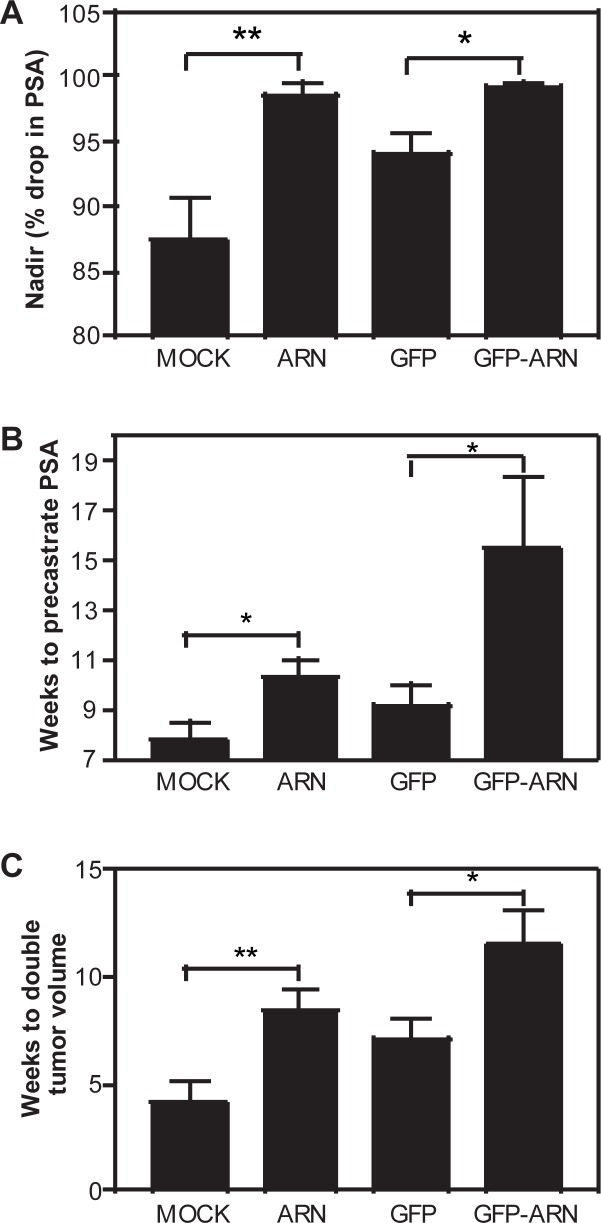
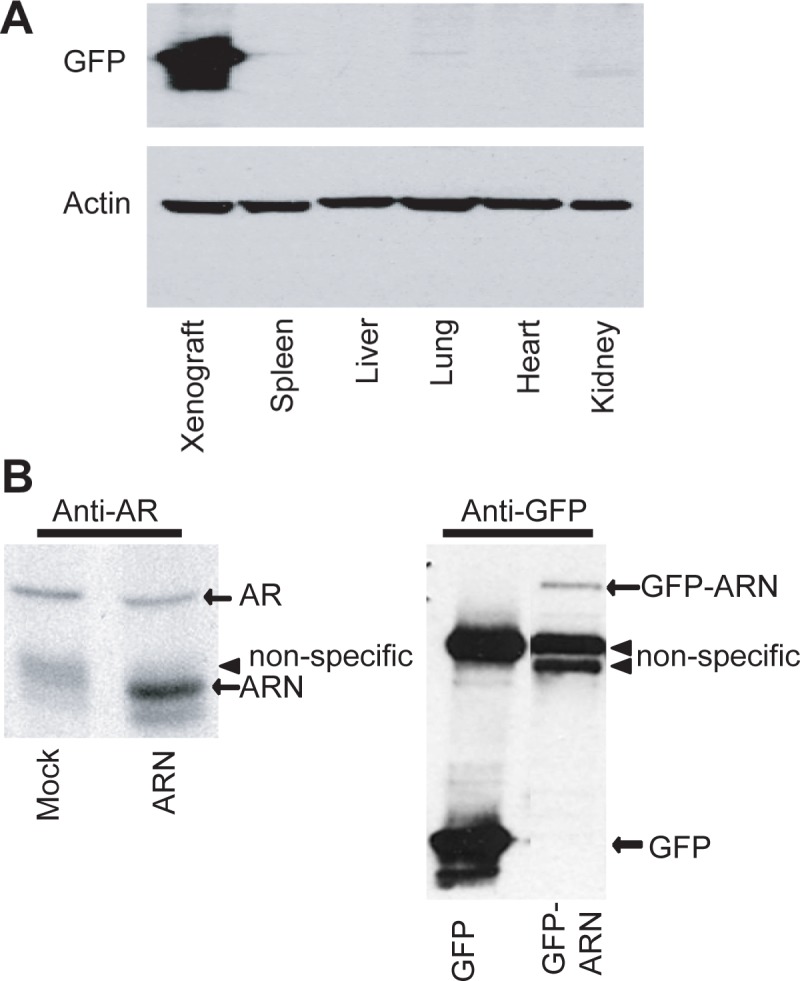
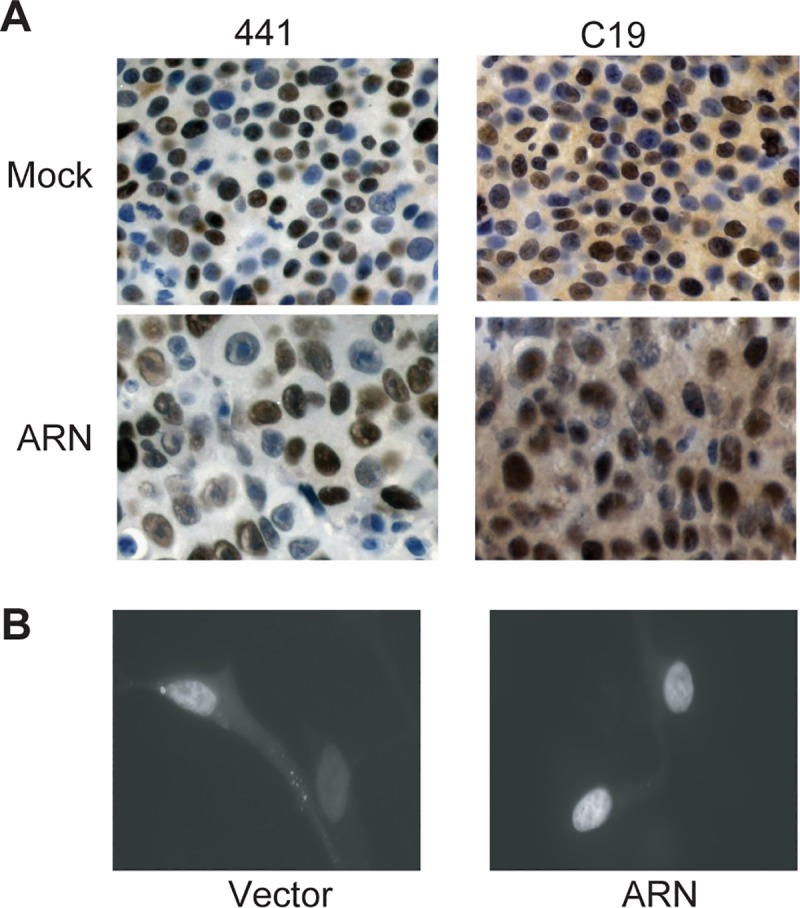
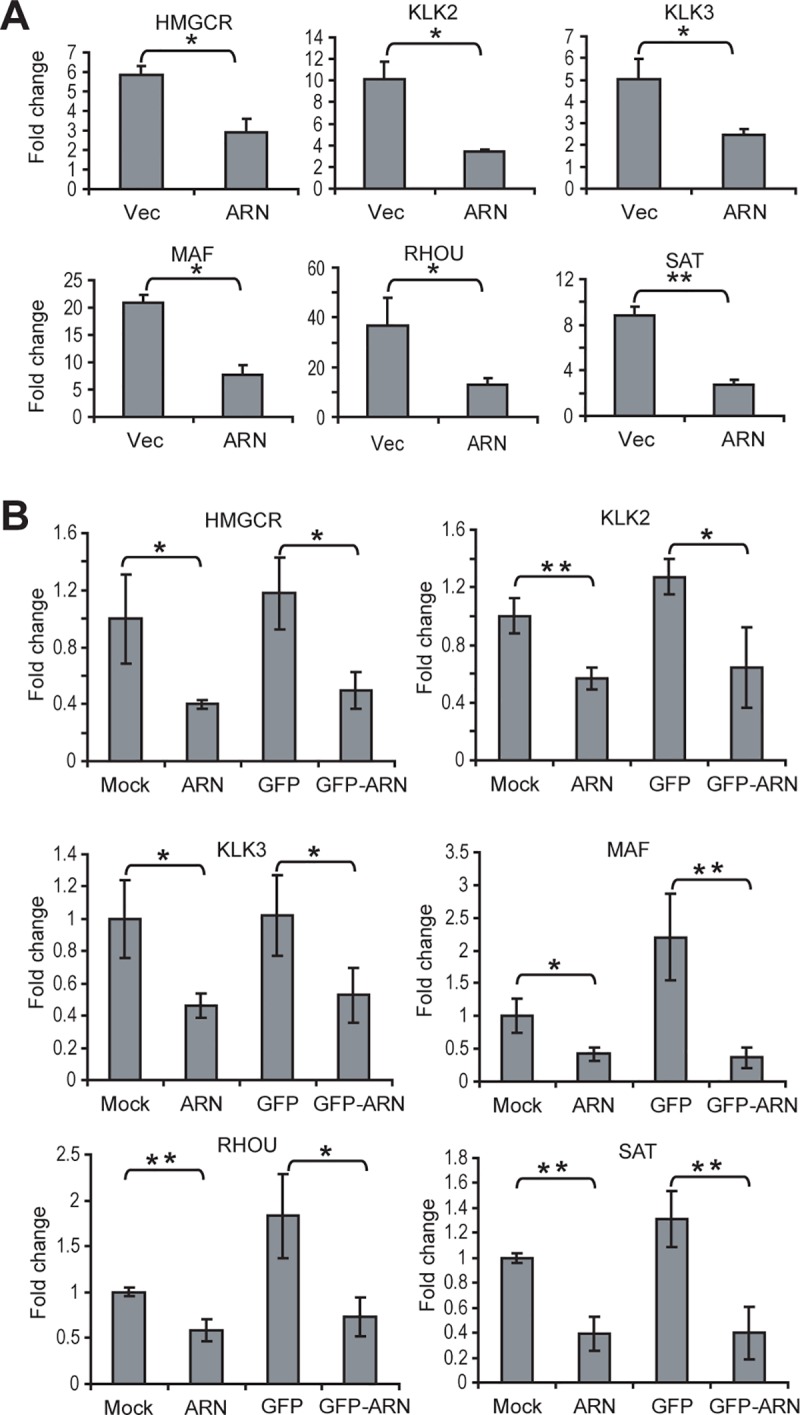
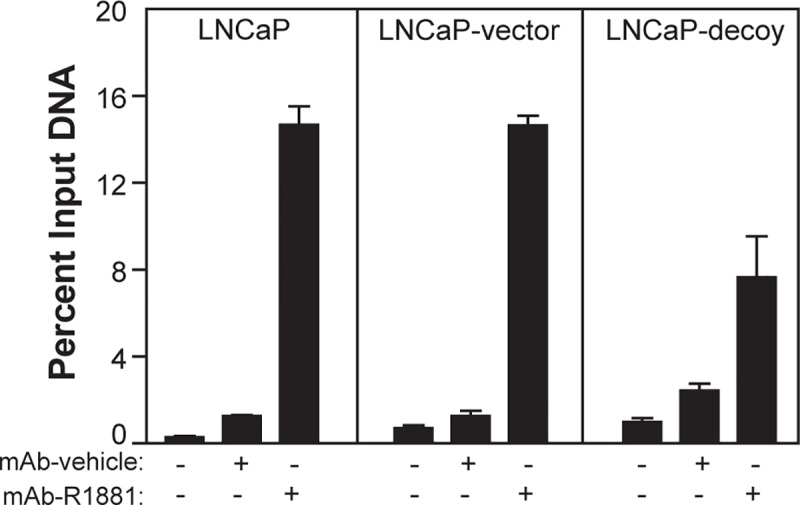
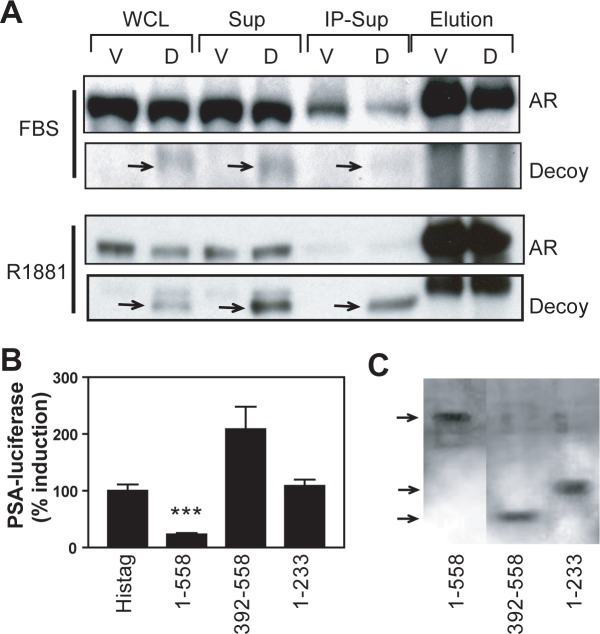
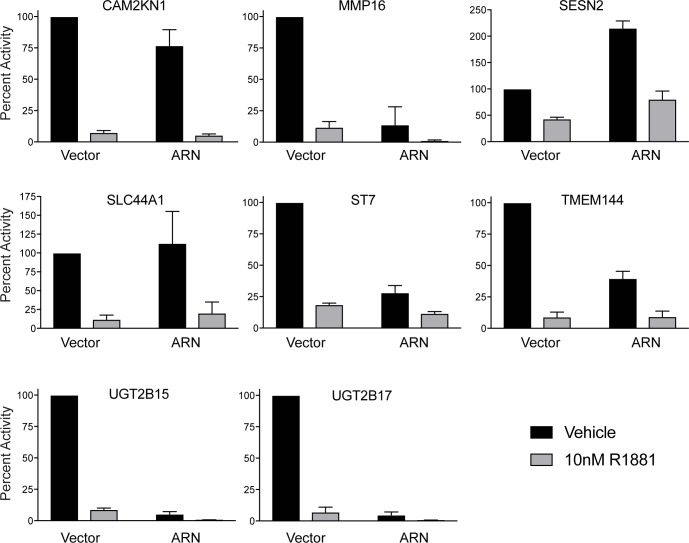
Androgen receptor (AR) is a member of the steroid receptor family and a therapeutic target for all stages of prostate cancer. AR is activated by ligand binding within its C-terminus ligand-binding domain (LBD). Here we show that overexpression of the AR NTD to generate decoy molecules inhibited both the growth and progression of prostate cancer in castrated hosts. Specifically, it was shown that lentivirus delivery of decoys delayed hormonal progression in castrated hosts as indicated by increased doubling time of tumor volume, prolonged time to achieve pre-castrate levels of serum prostate-specific antigen (PSA) and PSA nadir. These clinical parameters are indicative of delayed hormonal progression and improved therapeutic response and prognosis. Decoys reduced the expression of androgen-regulated genes that correlated with reduced in situ interaction of the AR with androgen response elements. Decoys did not reduce levels of AR protein or prevent nuclear localization of the AR. Nor did decoys interact directly with the AR. Thus decoys did not inhibit AR transactivation by a dominant negative mechanism. This work provides evidence that the AR NTD plays an important role in the hormonal progression of prostate cancer and supports the development of AR antagonists that target the AR NTD.
Conflict of interest statement
Figures
References
-
- Jenster G, van der Korput HA, Trapman J, Brinkmann AO. Identification of two transcription activation units in the N-terminal domain of the human androgen receptor. J Biol Chem. 1995; 270(13),7341–7346. - PubMed
-
- Cleutjens KB, van Eekelen CC, van der Korput HA, Brinkmann AO, Trapman J. (1996) Two androgen response regions cooperate in steroid hormone regulated activity of the prostate-specific antigen promoter. J Biol Chem. 1996;271(11),6379–6388. - PubMed
MeSH terms
Substances
Grants and funding
LinkOut - more resources
Full Text Sources
Other Literature Sources
Medical
Molecular Biology Databases
Research Materials
Miscellaneous
