. 2017 Mar 17;12(3):e0174339.
doi: 10.1371/journal.pone.0174339. eCollection 2017.

A cooperative function for multisensory stimuli in the induction of approach behavior of a potential mate

Affiliations

A cooperative function for multisensory stimuli in the induction of approach behavior of a potential mate

Anders Ågmo et al. PLoS One. .

Abstract

Intrasexual competition is an important element of natural selection in which the most attractive conspecific has a considerable reproductive advantage over the others. The conspecifics that are approached first often become the preferred mate partners, and could thus from a biological perspective have a reproductive advantage. This underlines the importance of the initial approach and raises the question of what induces this approach, or what makes a conspecific attractive. Identification of the sensory modalities crucial for the activation of approach is necessary for elucidating the central nervous processes involved in the activation of sexual motivation and eventually copulatory behavior. The initial approach to a potential mate depends on distant stimuli in the modalities of audition, olfaction, vision, and other undefined characteristics. This study investigated the role of the different modalities and the combination of these modalities in the sexual incentive value of a female rat. This study provides evidence that the presence of a single-sensory stimulus with one modality (olfaction, vision, or 'others', but not audition) is sufficient to attenuate the preference for a social contact with a male rat. However, a multisensory stimulus of multiple modalities is necessary to induce preference for the stimulus over social contact to a level of an intact receptive female. The initial approach behavior, therefore, seems to be induced by the combination of at least two modalities among which olfaction is crucial. This suggests that there is a cooperative function for the different modalities in the induction of approach behavior of a potential mate.


Conflict of interest statement

Competing Interests: The authors have declared that no competing interests exist.

Figures

Fig 1
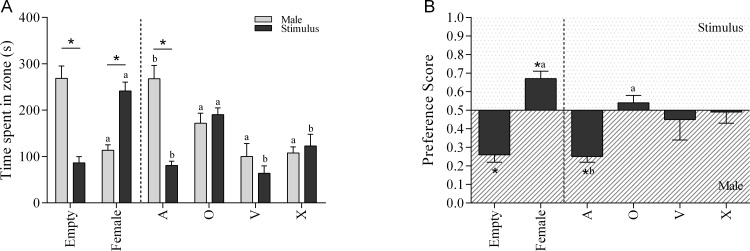
Fig 1. The incentive value assay of a single-sensory stimulus.
(A) The time spent in incentive zone and (B) the preference score in the 10-minute sexual incentive motivation test, in which male rats where presented with a single-sensory stimulus of one modality and a control male rat (social stimulus). As control situation an empty incentive cage or a receptive female were presented next to the male rat. A = audition, O = olfaction, V = vision, X = ‘others’. *p<0.05 compared to 0.5 (B) or male rat (A), ap<0.05 compared to ‘empty’ (A, B), bp<0.05 compared to ‘female’ (A, B).
Fig 2
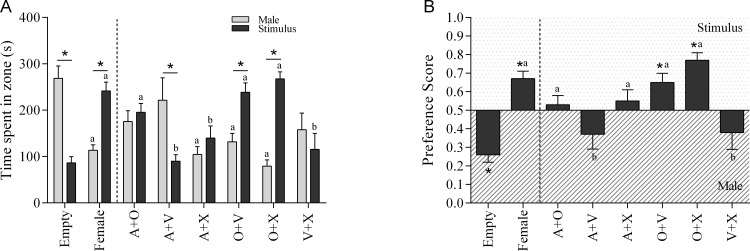
Fig 2. The incentive value assay of a multisensory stimulus of two modalities.
(A) The time spent in incentive zone and (B) the preference score in the 10-minute sexual incentive motivation test, in which male rats where presented with a multisensorsensory stimulus of two modalities and a control male rat (social stimulus). As control situation an empty incentive cage or a receptive female were presented next to the male rat. A = audition, O = olfaction, V = vision, and X = ‘others’. *p<0.05 compared to 0.5 (B) or male rat (A), ap<0.05 compared to ‘empty’ (A, B), bp<0.05 compared to ‘female’ (A, B).
Fig 3
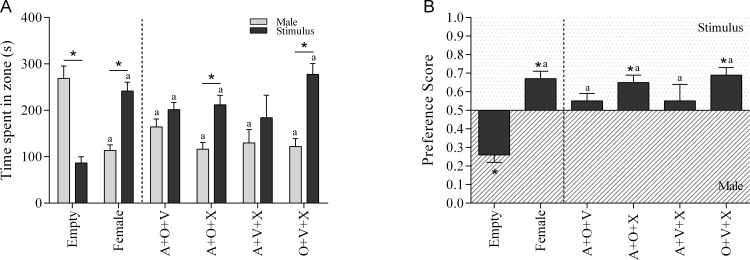
Fig 3. The incentive value assay of a multisensory stimulus of three modalities.
(A) The time spent in incentive zone and (B) the preference score in the 10-minute sexual incentive motivation test, in which male rats where presented with a multisensorsensory stimulus of three modalities and a control male rat (social stimulus). As control situation an empty incentive cage or a receptive female were presented next to the male rat. A = audition, O = olfaction, V = vision, and X = ‘others’. *p<0.05 compared to 0.5 (B) or male rat (A), ap<0.05 compared to ‘empty’ (A, B).

References

    1. Barnett SA. The Rat; a Study in Behavior. Chicago: University of Chicago Press; 1975.
    1. McClintock MK. Group mating in the domestic rat as a context for sexual selection: consequences for the analysis of sexual hehavior and neuroendocrine responses 1984. In: Advances in the study of behavior [Internet]. New York: Academic Press; [1–50].
    1. Ferreira-Nuño A, Morales-Otal A, Paredes RG, Velazquez-Moctezuma J. Sexual behavior of female rats in a multiple-partner preference test. Horm Behav. 2005;47(3):290–6. 10.1016/j.yhbeh.2004.11.012 - DOI - PubMed
    1. Snoeren EM, Agmo A. The role of odors and ultrasonic vocalizations in female rat (Rattus norvegicus) partner choice. J Comp Psychol. 2014;128(4):367–77. 10.1037/a0036541 - DOI - PubMed
    1. Snoeren EM, Helander LR, Iversen EE, Ågmo A. On the role of individual differences in female odor and ultrasonic vocalizations for male's choice of partner. Physiol Behav. 2014;132:17–23. 10.1016/j.physbeh.2014.04.048 - DOI - PubMed

LinkOut - more resources