


Medication adherence outcomes of 771 intervention trials: Systematic review and meta-analysis
- PMID: 28315760
- PMCID: PMC5467216
- DOI: 10.1016/j.ypmed.2017.03.008
Medication adherence outcomes of 771 intervention trials: Systematic review and meta-analysis
Abstract
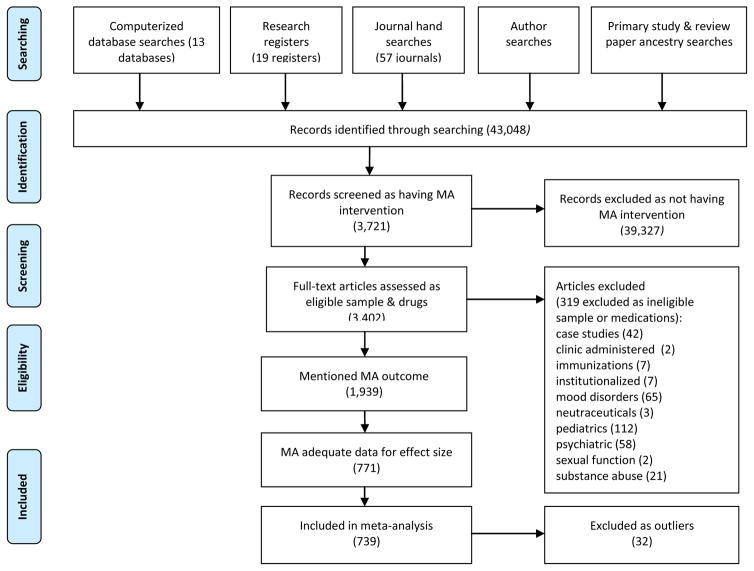
Excellent medication adherence contributes to decreases in morbidity, mortality, and health care costs. Although researchers have tested many interventions to increase adherence, results are sometimes conflicting and often unclear. This systematic review applied meta-analytic procedures to integrate primary research that tested medication adherence interventions. Comprehensive searching completed in 2015 located 771 published and unpublished intervention studies with adherence behavior outcomes. Random-effects model analysis calculated standardized mean difference effect sizes. Meta-analytic moderator analyses examined the association between adherence effect sizes and sample, design, and intervention characteristics. Analyses were conducted in 2016. A standardized mean difference effect size of 0.290 comparing treatment and control groups was calculated. Moderator analyses revealed larger effect sizes for habit-based and behavioral-targeted (vs. cognitive-focused) interventions. The most effective interventions were delivered face-to-face, by pharmacists, and administered directly to patients. Effect sizes were smaller in studies with older and homeless participants. Risks of bias were common; effect sizes were significantly lower among studies with masked data collectors and intention-to-treat analyses. The largest effect sizes were reported by studies using medication electronic event monitoring and pill count medication adherence measures. Publication bias was present. This most comprehensive review to date documented that, although interventions can increase adherence, much room remains for improvement. Findings suggest health care providers should focus intervention content on behavioral strategies, especially habit-based interventions, more so than cognitive strategies designed to change knowledge and beliefs.
Keywords: Intervention; Medication adherence; Meta-analysis.
Copyright © 2017 Elsevier Inc. All rights reserved.
Conflict of interest statement
Figures
References
-
- Borenstein M, Hedges L, Higgins JPT, Rothstein H. Introduction to Meta-Analysis. John Wiley & Sons, Ltd; West Sussex, England: 2009.
-
- Chisholm-Burns MA, Kim Lee J, Spivey CA, Slack M, Herrier RN, Hall-Lipsy E, Graff Zivin J, Abraham I, Palmer J, et al. US pharmacists’ effect as team members on patient care: systematic review and meta-analyses. Med Care. 2010;48:923–33. - PubMed
-
- Christensen AJ. Patient Adherence to Medical Treatment Regimens. Yale; New Haven: 2004.
-
- Conn VS, Hafdahl AR, Cooper PS, Ruppar TM, Mehr DR, Russell CL. Interventions to improve medication adherence among older adults: meta-analysis of adherence outcomes among randomized controlled trials. Gerontologist. 2009;49:447–62. - PubMed
-
- Cooper H, Hedges LV, Valentine JC. The Handbook of Research Synthesis and Meta-Analysis. 2. Russell Sage Foundation; New York: 2009. p. 615.
Publication types
MeSH terms
Grants and funding
LinkOut - more resources
Full Text Sources
Other Literature Sources
Medical
