


Late preterm birth has direct and indirect effects on infant gut microbiota development during the first six months of life
- PMID: 28316118
- PMCID: PMC5763336
- DOI: 10.1111/apa.13837
Late preterm birth has direct and indirect effects on infant gut microbiota development during the first six months of life
Abstract
Aim: Preterm infants display aberrant gut microbial colonisation. We investigated whether the differences in gut microbiota between late preterm and full-term infants results from prematurity or external exposures.
Methods: This study comprised 43 late preterm infants (340/7 -366/7 ) and 75 full-term infants based on faecal samples collected following birth and at two to four weeks and six months of age. We assessed clinically relevant bacteria using quantitative polymerase chain reaction. Logistic regression analyses were performed to determine whether the observed differences in gut microbiota were attributable to prematurity or perinatal exposure.
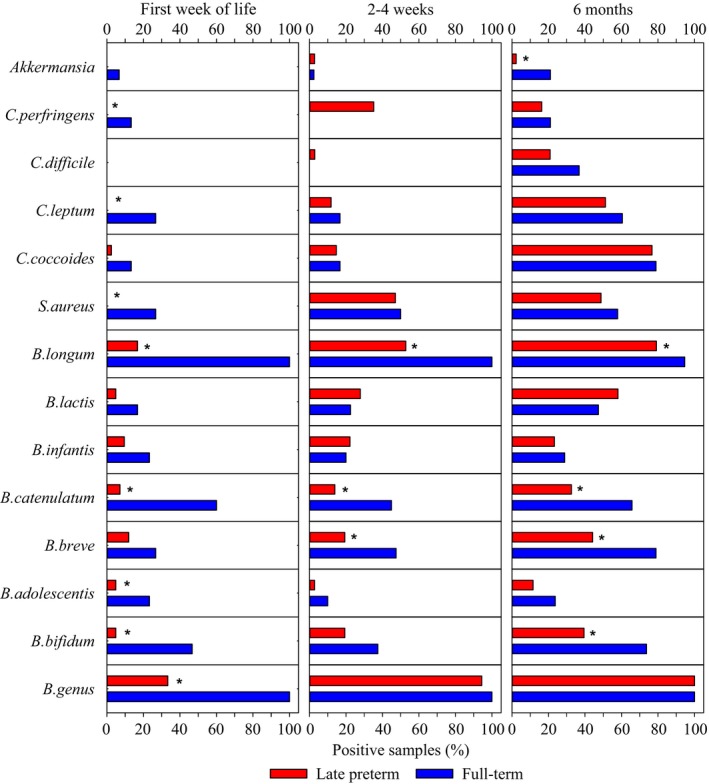
Results: The prevalence of bifidobacteria differed in the intestinal microbiota of the full-term and late preterm neonates. Differences in the presence of specific species were detected at the age of six months, although the microbiota alterations were most prominent following delivery. As well as prematurity, the mode of birth, intrapartum and neonatal antibiotic exposure, and the duration of breastfeeding had an additional impact on gut microbiota development.
Conclusion: The gut microbiota composition was significantly different between late preterm and full-term infants at least six months after birth. Antibiotic exposure was common in late preterm infants and modulated gut colonisation, but preterm birth also affected gut microbiota development independently.
Keywords: Antibiotics; Caesarean section; Gut colonisation; Intestinal microbiota; Late preterm neonate.
©2017 The Authors. Acta Paediatrica published by John Wiley & Sons Ltd on behalf of Foundation Acta Paediatrica.
Figures
References
-
- Rautava S, Luoto R, Salminen S, Isolauri E. Microbial contact during pregnancy, intestinal colonization and human disease. Nat Rev Gastroenterol Hepatol 2012; 9: 565–76. - PubMed
-
- Kalliomäki M, Kirjavainen P, Eerola E, Kero P, Salminen S, Isolauri E. Distinct patterns of neonatal gut microflora in infants in whom allergy was and was not developing. J Allergy Clin Immunol 2001; 107: 129–34. - PubMed
-
- Björkstén B, Sepp E, Julge K, Voor T, Mikelsaar M. Allergy development and the intestinal microflora during the first year of life. J Allergy Clin Immunol 2001; 108: 516–20. - PubMed
Publication types
MeSH terms
Substances
LinkOut - more resources
Full Text Sources
Other Literature Sources
Medical
Research Materials
