


A Review of the Role of Neurotensin and Its Receptors in Colorectal Cancer
- PMID: 28316623
- PMCID: PMC5339424
- DOI: 10.1155/2017/6456257
A Review of the Role of Neurotensin and Its Receptors in Colorectal Cancer
Abstract
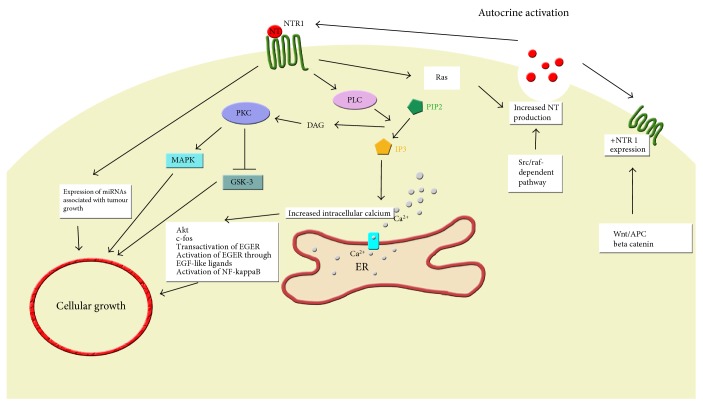
Neurotensin (NTS) is a physiologically occurring hormone which affects the function of the gastrointestinal (GI) tract. In recent years, NTS, acting through its cellular receptors (NTSR), has been implicated in the carcinogenesis of several cancers. In colorectal cancer (CRC), a significant body of evidence, from in vitro and in vivo studies, is available which elucidates the molecular biology of NTS/NTSR signalling and the resultant growth of CRC cells. There is growing clinical data from human studies which corroborate the role NTS/NTSR plays in the development of human CRC. Furthermore, blockade and modulation of the NTS/NTSR signalling pathways appears to reduce CRC growth in cell cultures and animal studies. Lastly, NTS/NTSR also shows potential of being utilised as a diagnostic biomarker for cancers as well as targets for functional imaging. We summarise the existing evidence and understanding of the role of NTS and its receptors in CRC.
Conflict of interest statement
The authors state there are no existing or potential conflicts of interest.
Figures
References
-
- Evers B. M., Townsend C. M., Jr. Molecular Mechanisms in Gastrointestinal Cancer. R.G. Landes Company; 1999. Growth factors, hormones and receptors in GI cancers; pp. 1–196.
-
- Carraway R., Leeman S. E. The isolation of a new hypotensive peptide, neurotensin, from bovine hypothalami. The Journal of Biological Chemistry. 1973;248(19):6854–6861. - PubMed
Publication types
LinkOut - more resources
Full Text Sources
Other Literature Sources
