


Growth Profile and Its Association with Nutrient Intake and Dietary Patterns among Children and Adolescents in Hail Region of Saudi Arabia
- PMID: 28316981
- PMCID: PMC5337866
- DOI: 10.1155/2017/5740851
Growth Profile and Its Association with Nutrient Intake and Dietary Patterns among Children and Adolescents in Hail Region of Saudi Arabia
Abstract
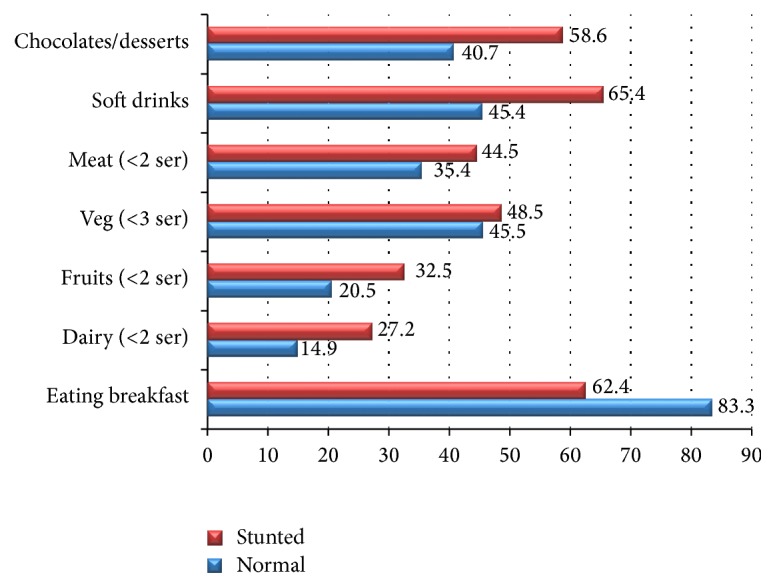
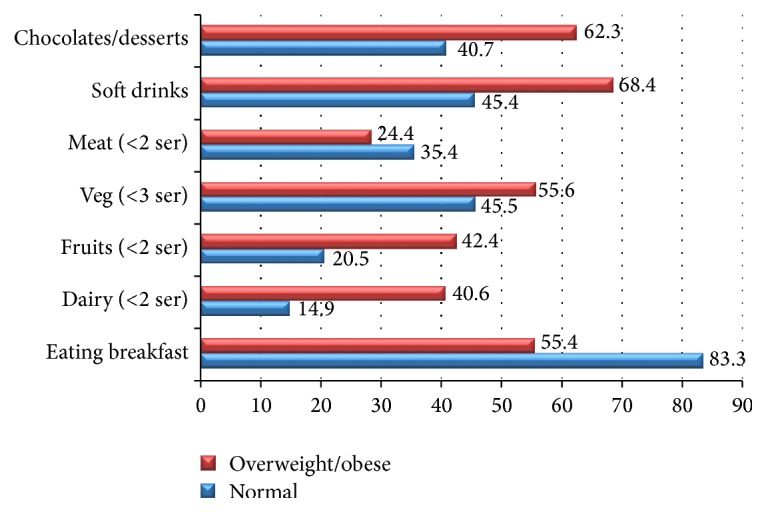
Hail region of Saudi Arabia (KSA) has the highest adult obesity rates in the entire kingdom and limited information is available about the prevalence and patterns of growth markers. Therefore, it is important to monitor the growth trends to implement effective public health preventive strategies for the region. This study aims to estimate the prevalence of growth profile patterns (stunting, wasting, underweight, and overweight) and its associations with nutrient intake and dietary patterns among children and adolescents. A cross-sectional survey was conducted involving 1420 children and adolescents (2-18 years), selected using a multistage stratified random-sampling technique representing both female and male schools from Hail region, KSA. Growth profile z-scores were generated using 2006 and 2007 WHO growth standards. The overall prevalence of 4.73% moderate and 1.54% severe underweight; 6.65% moderate and 2.59% severe stunting; 6.34% moderate and 2.55% severe wasting was present in the study population. Stunting decreased as age progressed with concurrent increase in the prevalence of overweight and obesity. There was a significantly higher prevalence of overweight (18.55% versus 23.05%; P < 0.001) and obesity (8.7% versus 13.85%; P < 0.001) in adolescents than in school-age children with higher prevalence in females as compared to males. Both stunted and overweight/obesity groups had significantly lower mean intakes for critical micronutrients necessary for growth as compared to normal children.
Conflict of interest statement
The authors declare that there is no conflict of interests regarding the publication of this paper.
Figures
References
-
- WHO. The WHO Child Growth Standards Website. 2006. http://www.who.int/childgrowth/en/
MeSH terms
LinkOut - more resources
Full Text Sources
Other Literature Sources
Medical
