


Enhanced biennial variability in the Pacific due to Atlantic capacitor effect
- PMID: 28317857
- PMCID: PMC5364382
- DOI: 10.1038/ncomms14887
Enhanced biennial variability in the Pacific due to Atlantic capacitor effect
Abstract
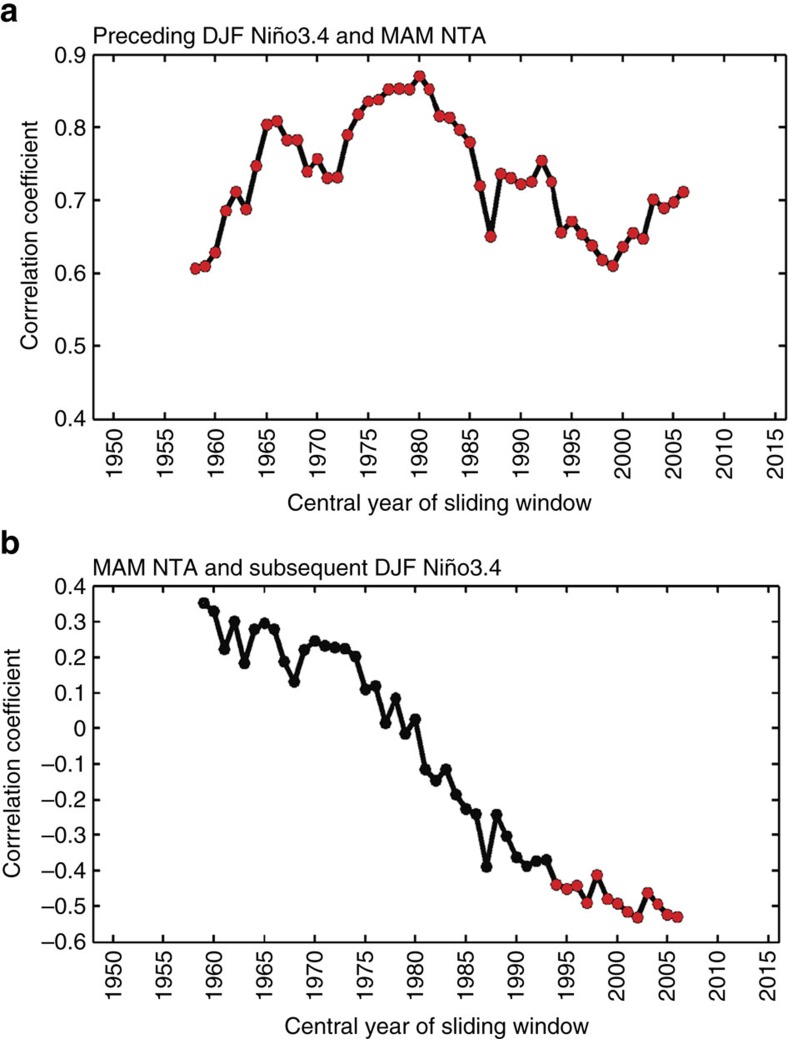
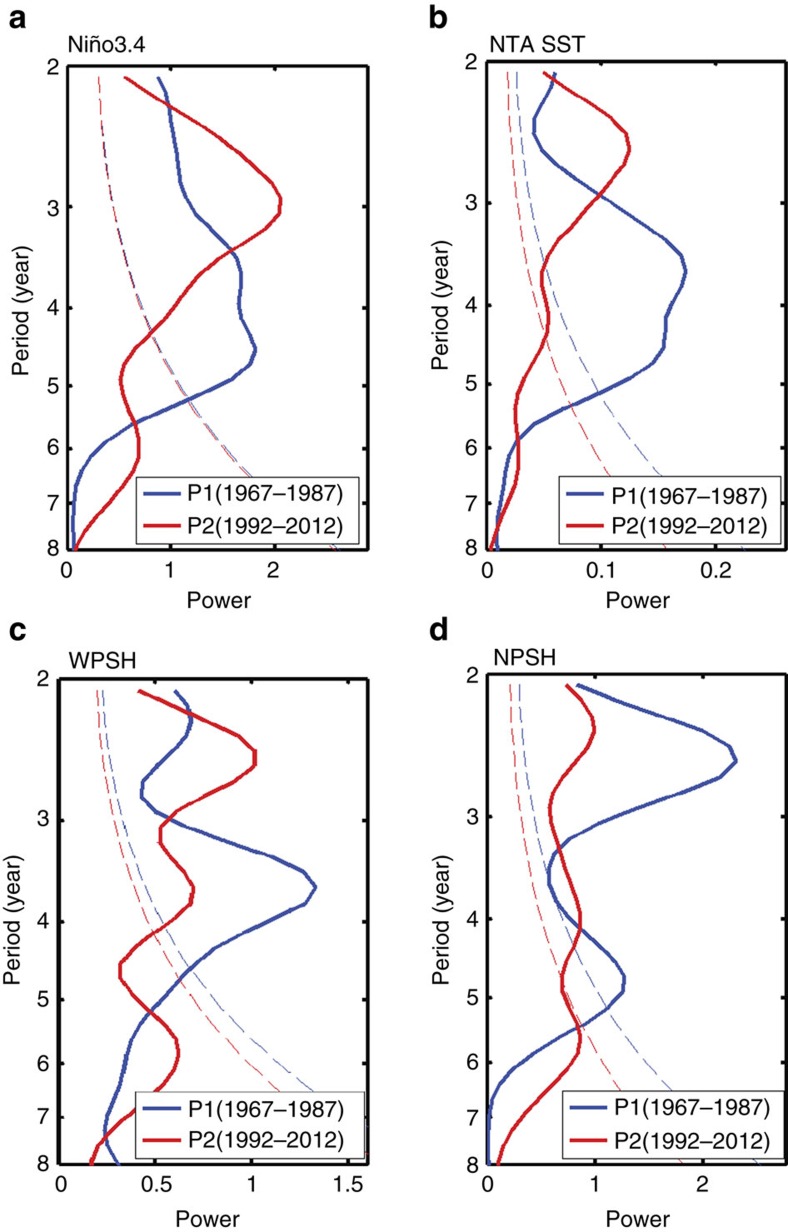
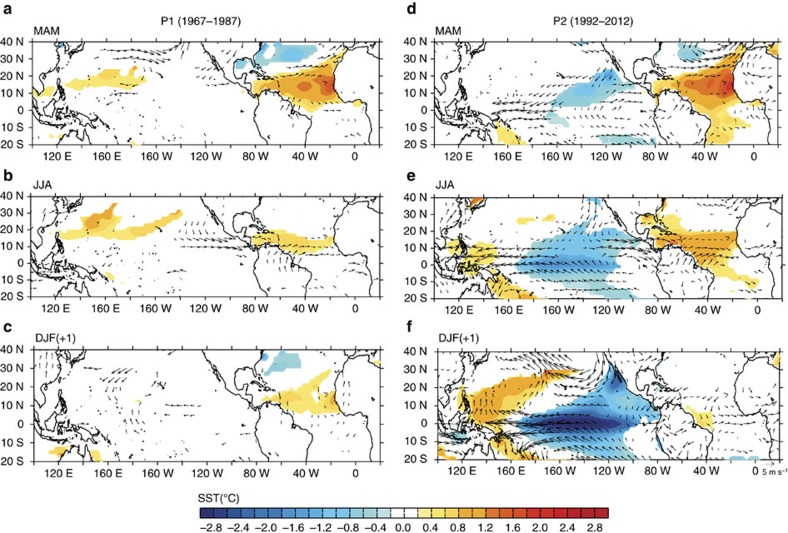
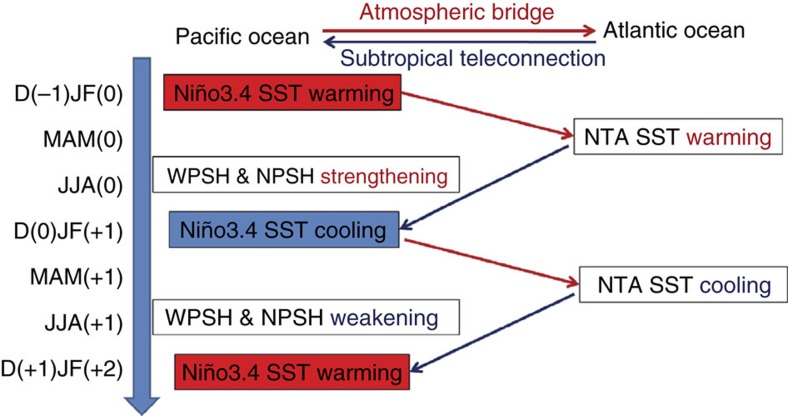
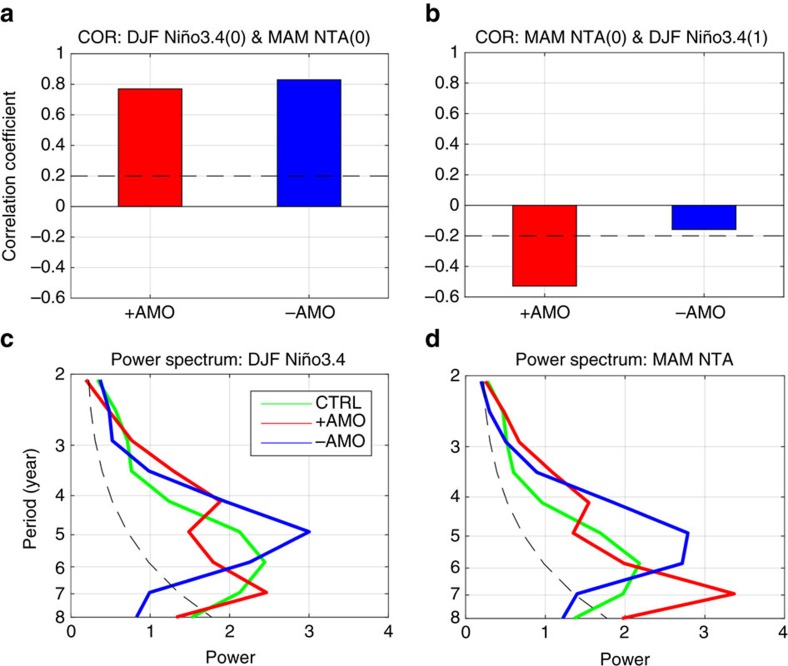
The El Niño-Southern Oscillation (ENSO) and the variability in the Pacific subtropical highs (PSHs) have major impacts on social and ecological systems. Here we present an Atlantic capacitor effect mechanism to suggest that the Atlantic is a key pacemaker of the biennial variability in the Pacific including that in ENSO and the PSHs during recent decades. The 'charging' (that is, ENSO imprinting the North Tropical Atlantic (NTA) sea surface temperature (SST) via an atmospheric bridge mechanism) and 'discharging' (that is, the NTA SST triggering the following ENSO via a subtropical teleconnection mechanism) processes alternate, generating the biennial rhythmic changes in the Pacific. Since the early 1990s, a warmer Atlantic due to the positive phase of Atlantic multidecadal oscillation and global warming trend has provided more favourable background state for the Atlantic capacitor effect, giving rise to enhanced biennial variability in the Pacific that may increase the occurrence frequency of severe natural hazard events.
Conflict of interest statement
The authors declare no competing financial interests.
Figures
References
-
- Dai A., Trenberth K. E. & Karl T. R. Global variations in droughts and wet spells: 1990–1995. Geophys. Res. Lett. 25, 3367–3370 (1998).
-
- Barnard P. L. et al. Coastal vulnerability across the Pacific dominated by El Niño/Southern Oscillation. Nat. Geosci. 8, 801–807 (2015).
-
- Rasmusson E. M., Wang X. & Ropelewski C. F. The biennial component of ENSO variability. J. Mar. Syst. 1, 71–96 (1990).
-
- Barnett T. P. The interaction of multiple time scales in the tropical climate system. J. Clim. 4, 269–285 (1991).
Publication types
LinkOut - more resources
Full Text Sources
Other Literature Sources
