


miRNAs: novel regulators of autoimmunity-mediated pancreatic β-cell destruction in type 1 diabetes
- PMID: 28317889
- PMCID: PMC5518822
- DOI: 10.1038/cmi.2017.7
miRNAs: novel regulators of autoimmunity-mediated pancreatic β-cell destruction in type 1 diabetes
Abstract
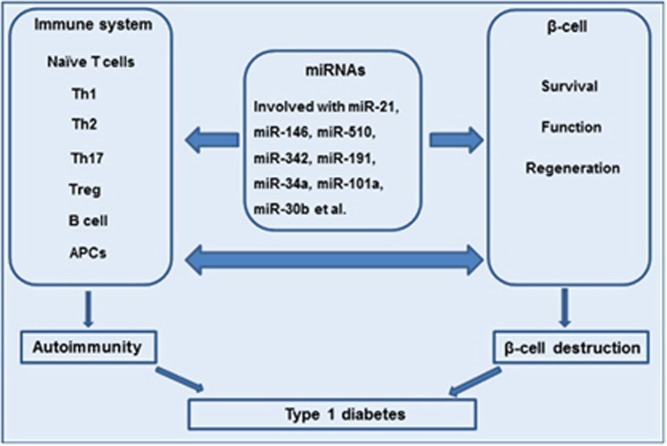
MicroRNAs (miRNAs) are a series of conserved, short, non-coding RNAs that modulate gene expression in a posttranscriptional manner. miRNAs are involved in almost every physiological and pathological process. Type 1 diabetes (T1D) is an autoimmune disease that is the result of selective destruction of pancreatic β-cells driven by the immune system. miRNAs are also important participants in T1D pathogenesis. Herein, we review the most recent data on the potential involvement of miRNAs in T1D. Specifically, we focus on two aspects: the roles of miRNAs in maintaining immune homeostasis and regulating β-cell survival and/or functions in T1D. We also discuss circulating miRNAs as potent biomarkers for the diagnosis and prediction of T1D and investigate potential therapeutic approaches for this disease.
Conflict of interest statement
The authors declare no conflict of interest.
Figures
References
-
- Anaya JM. The diagnosis and clinical significance of polyautoimmunity. Autoimmun Rev 2014; 13: 423–426. - PubMed
-
- Kahaly GJ, Hansen MP. Type 1 diabetes associated autoimmunity. Autoimmun Rev 2016; 15: 644–648. - PubMed
-
- Morran MP, Omenn GS, Pietropaolo M. Immunology and genetics of type 1 diabetes. Mt Sinai J Med 2008; 75: 314–327. - PubMed
-
- Stankov K, Benc D, Draskovic D. Genetic and epigenetic factors in etiology of diabetes mellitus type 1. Pediatrics 2013; 132: 1112–1122. - PubMed
Publication types
MeSH terms
Substances
LinkOut - more resources
Full Text Sources
Other Literature Sources
Medical
