. 2017 Mar;28(1):39-50.
doi: 10.1089/humc.2017.014.

Non-Clinical Study Examining AAV8.TBG.hLDLR Vector-Associated Toxicity in Chow-Fed Wild-Type and LDLR+/- Rhesus Macaques

Affiliations

Non-Clinical Study Examining AAV8.TBG.hLDLR Vector-Associated Toxicity in Chow-Fed Wild-Type and LDLR+/- Rhesus Macaques

Jenny A Greig et al. Hum Gene Ther Clin Dev. 2017 Mar.

Abstract

Vectors based on adeno-associated virus serotype 8 (AAV8) have been evaluated in several clinical trials of gene therapy for hemophilia B with encouraging results. In preparation for a Phase 1 clinical trial of AAV8 gene therapy for the treatment of homozygous familial hypercholesterolemia (HoFH), the safety of the clinical candidate vector, AAV8.TBG.hLDLR, was evaluated in wild-type rhesus macaques and macaques heterozygous for a nonsense mutation in the low-density lipoprotein receptor (LDLR) gene (LDLR+/-). Intravenous infusion of 1.25 × 10¹³ GC/kg of AAV8.TBG.hLDLR expressing the human version of LDLR was well tolerated and associated with only mild histopathology that was restricted to the liver and sporadic, low-level, and transient elevations in transaminases. Some animals developed T cells to both capsid and the hLDLR transgene, although these adaptive immune responses were most evident at the early time points from peripheral blood and in mononuclear cells derived from the liver. This toxicology study supports the safety of AAV8.TBG.hLDLR for evaluation in HoFH patients, and provides some context for evaluating previously conducted clinical trials of AAV8 in patients with hemophilia.

Keywords: AAV; LDLR; familial hypercholesterolemia; gene therapy; low density lipoprotein receptor; toxicology.


Conflict of interest statement

J.M.W. is an advisor to REGENXBIO, Dimension Therapeutics, and Solid Gene Therapy, and is a founder of, holds equity in, and has a sponsored research agreement with REGENXBIO and Dimension Therapeutics. In addition, he is a consultant to several biopharmaceutical companies and is an inventor on patents licensed to various biopharmaceutical companies. No competing financial interests exist for the remaining authors.

Figures
<b>Figure 1.</b>
Figure 1.
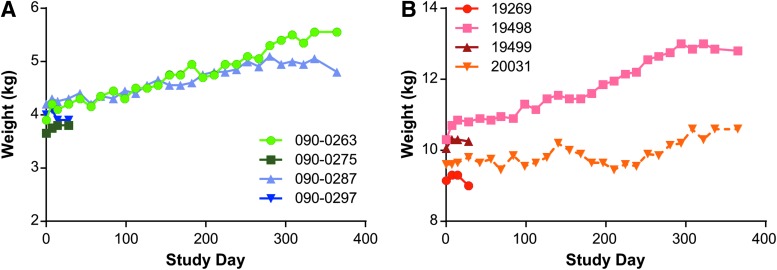
Body weight of rhesus macaques following vector administration. (A) Wild type and (B) LDLR+/− rhesus macaques were injected intravenously (i.v.) with 1.25 × 1013 GC/kg of AAV8.TBG.hLDLR, and weights were measured throughout the study duration.
<b>Figure 2.</b>
Figure 2.
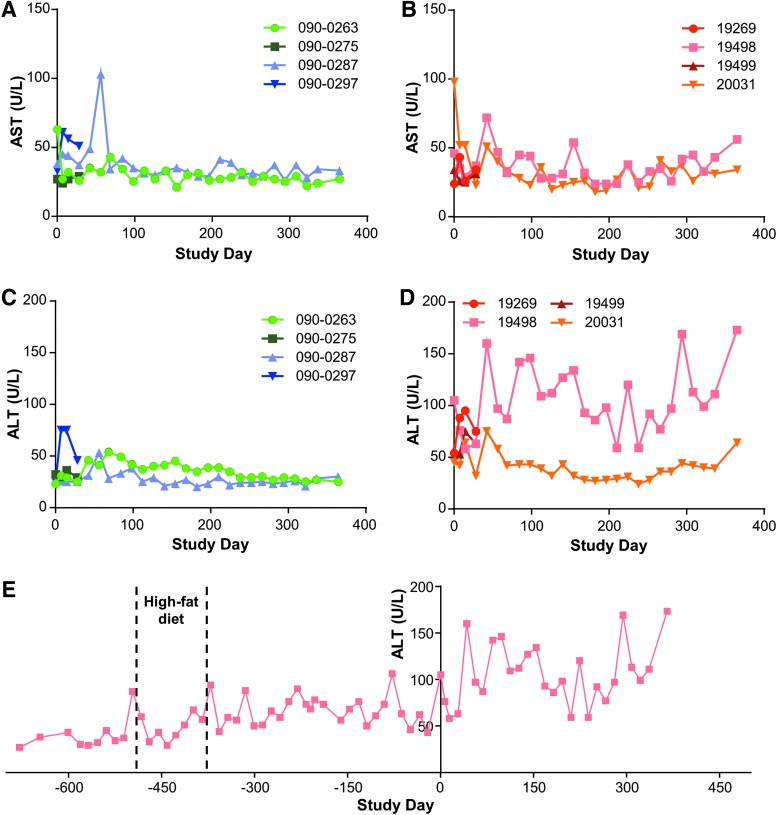
Aspartate aminotransferase AST and (alanine aminotransferase) ALT levels in rhesus macaques injected with vector. Wild-type and LDLR+/− rhesus macaques were injected i.v. with 1.25 × 1013 GC/kg of AAV8.TBG.hLDLR. AST and ALT levels were measured in serum samples taken throughout the study. AST levels for (A) wild-type and (B) LDLR+/− rhesus macaques, and ALT levels for (C) wild-type and (D) LDLR+/− rhesus macaques. (E) LDLR+/− rhesus macaque 19498 was injected i.v. with 1.25 × 1013 GC/kg of AAV8.TBG.hLDLR on study day 0. ALT levels were measured in serum samples taken both during the study and prior to initiation of the study. The animal was fed normal chow, except from day −491 to day −378 pre vector administration when it was on a high-fat diet.
<b>Figure 3.</b>
Figure 3.
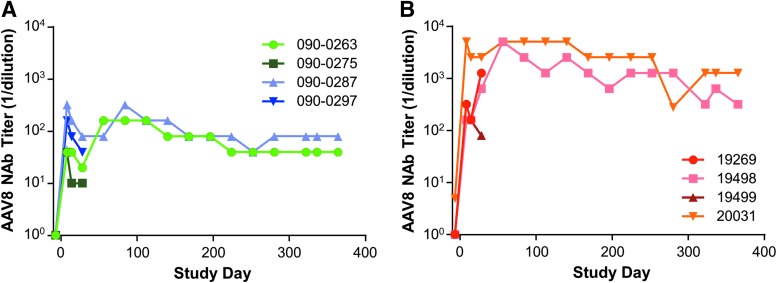
Neutralizing antibody (NAb) levels in rhesus macaques injected with vector. (A) Wild-type and (B) LDLR+/− rhesus macaques were injected i.v. with 1.25 × 1013 GC/kg of AAV8.TBG.hLDLR. NAb levels to the AAV8 capsid were measured in serum samples taken throughout the study duration.
<b>Figure 4.</b>
Figure 4.
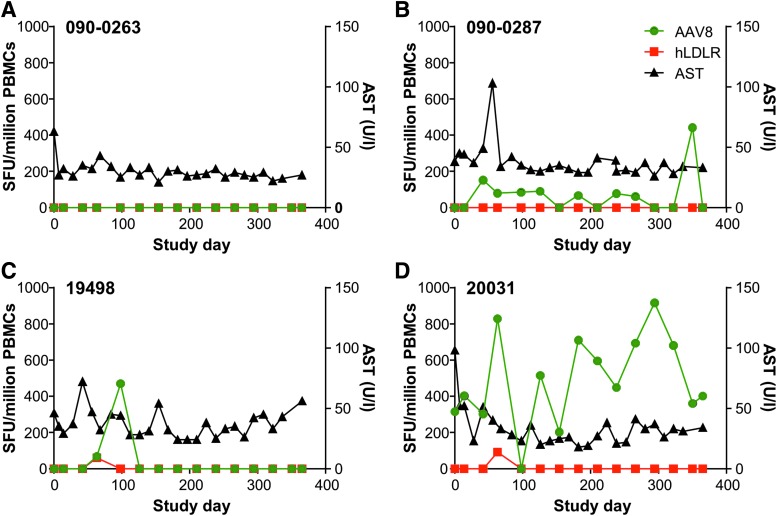
Peripheral T-cell responses in rhesus macaques injected with vector. Peripheral T-cell responses to AAV8 capsid and the hLDLR transgene were measured by interferon-gamma (IFN-γ) enzyme-linked immunospot assay (ELISPOT) following i.v. injection with 1.25 × 1013 GC/kg of AAV8.TBG.hLDLR. Data presented show the time course of T-cell response and AST levels for macaques (A) 090-0263, (B) 090-0287, (C) 19498, and (D) 20031. The plot includes only T-cell responses that met the positive response criteria, defined when the total spot forming units (SFU) when stimulated with antigen per 106 cells is >55 and three times greater than the medium-only negative control value (no stim).
<b>Figure 5.</b>
Figure 5.
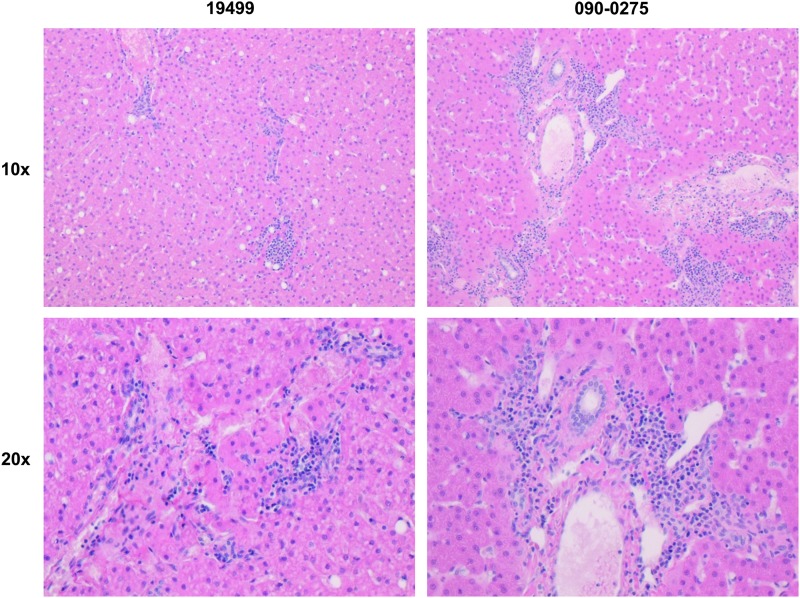
Liver histopathology following vector administration in rhesus macaques. Wild-type and LDLR+/– rhesus macaques were injected i.v. with 1.25 × 1013 GC/kg of AAV8.TBG.hLDLR. Following tissue harvest at necropsy, H&E-stained slides were prepared and examined microscopically. Histopathology readings from sections of the liver of animal 19499 were determined to be minimal (score = 1) and minimal to mild for 090-0275 (score = 1–2).
<b>Figure 6.</b>
Figure 6.
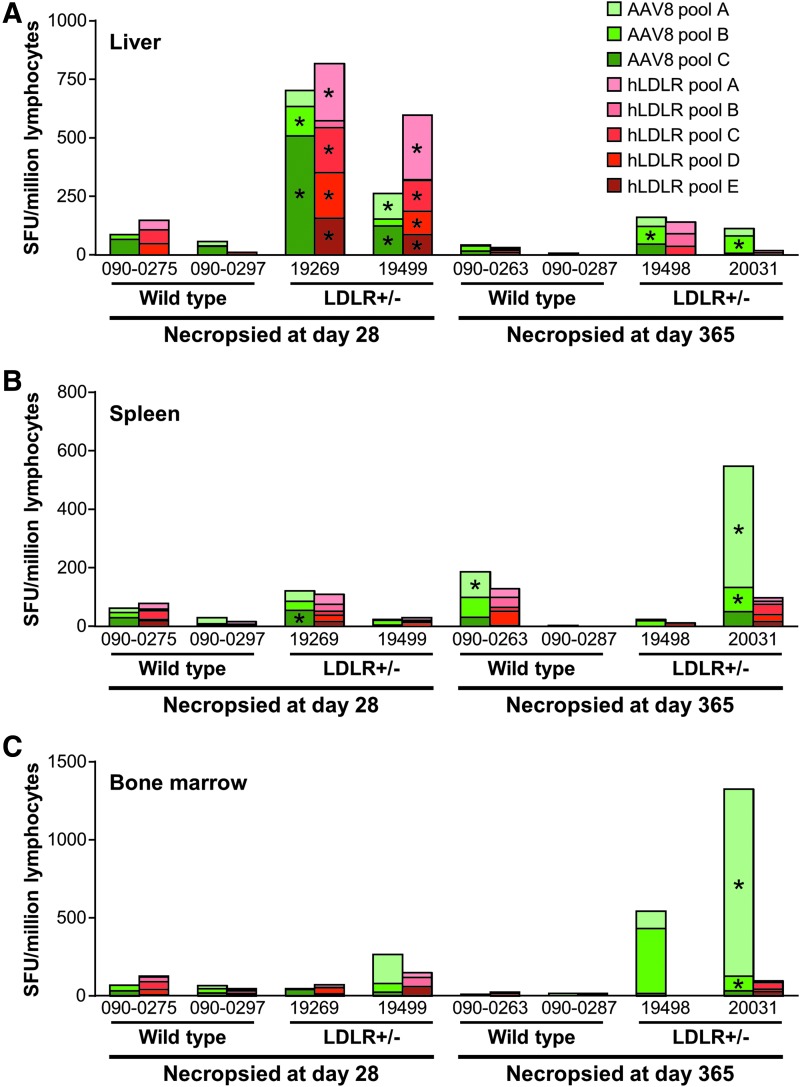
Capsid and hLDLR-specific T cells from tissues. Wild-type and LDLR+/– rhesus macaques were injected i.v. with 1.25 × 1013 GC/kg of AAV8.TBG.hLDLR. Following necropsy at 1 year post vector administration, lymphocytes were isolated from (A) the liver, (B) the spleen, and (C) bone marrow. T-cell responses to AAV8 capsid and the hLDLR transgene were measured by IFN-γ ELISPOT. An asterisk (*) denotes samples that meet positive response criteria, defined when the total SFU when stimulated with antigen per 106 cells is >55 and three times greater than the medium-only negative control value (no stim).

References

    1. Brown MS, Goldstein JL. A receptor-mediated pathway for cholesterol homeostasis. Science 1986;232:34–47 - PubMed
    1. Goldstein JL, Brown JC. Familial hypercholesterolemia, lipoprotein and lipid metabolism disorders. In: Scriver CR, Beaudet AL, Sly WS, et al., eds. Metabolic Basis of Inherited Disease. Volume II New York: McGraw-Hill, 1989:1215–1250
    1. Rader DJ, Cohen J, Hobbs HH. Monogenic hypercholesterolemia: new insights in pathogenesis and treatment. J Clin Invest 2003;111:1795–1803 - PMC - PubMed
    1. Grossman M, Raper SE, Kozarsky K, et al. Successful ex vivo gene therapy directed to liver in a patient with familial hypercholesterolaemia. Nat Genet 1994;6:335–341 - PubMed
    1. Nathwani AC, Reiss UM, Tuddenham EG, et al. Long-term safety and efficacy of factor IX gene therapy in hemophilia B. New Engl J Med 2014;371:1994–2004 - PMC - PubMed

Publication types

MeSH terms